Spiders & Scorpions · Supporting guide
Why Do Scorpions Glow Under UV Light? The Science of Fluorescence
Shine a blacklight into the desert at night and scorpions light up in eerie blue-green, a fluorescence scientists still do not fully understand.
 By Mahmoud OsamaSenior Wildlife Researcher & Editor-in-ChiefPublished 20 November 2025 · Updated 20 November 2025 · 7 min read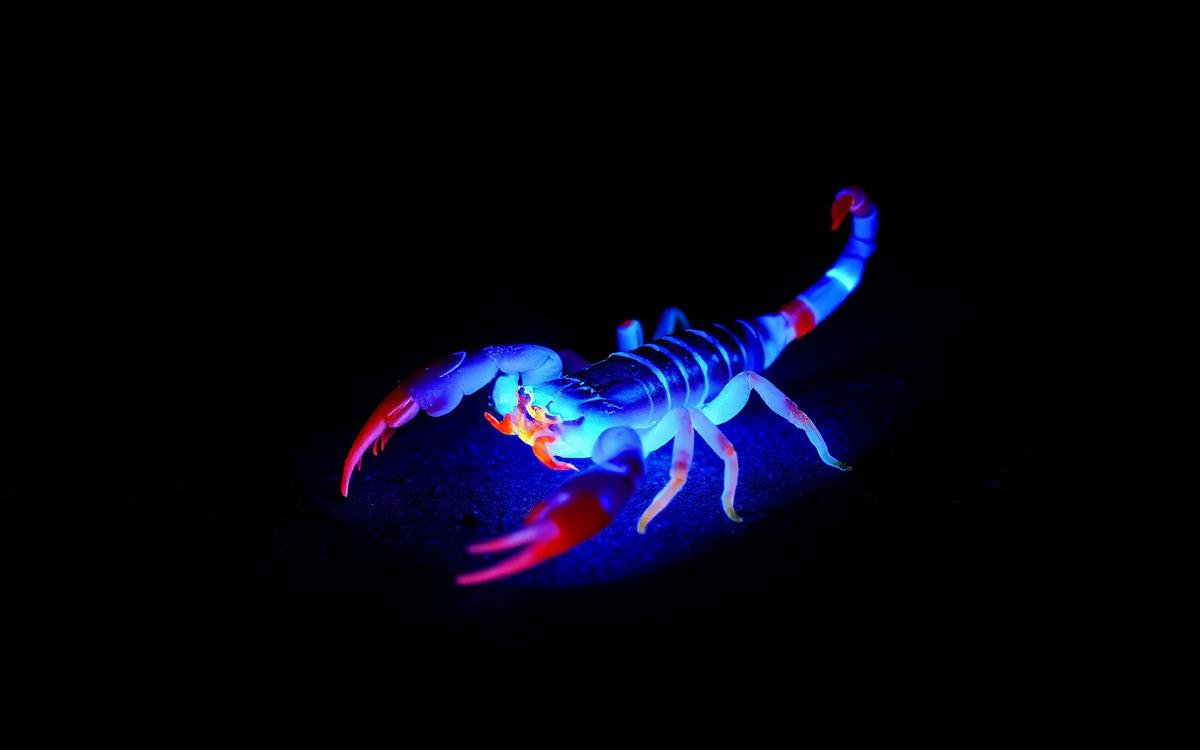
Reviewed against primary toxinology literature and IUCN assessments. This article is educational and is not medical advice — in an emergency contact your local poison centre or emergency services.
One of the strangest facts about scorpions has nothing to do with their sting: nearly every one of the roughly 2,500 known scorpion species glows a vivid blue-green when exposed to ultraviolet light. This fluorescence has become a practical tool for researchers and pest control professionals, who can survey for scorpions at night far more effectively with a UV flashlight than with a standard beam, since even well-camouflaged specimens light up brightly against dark soil or rock.
Despite decades of study, scientists have not settled on a single definitive explanation for why scorpions fluoresce, though several compelling hypotheses have emerged from research into the chemistry of the scorpion exoskeleton and how these animals use light and darkness in their environment.
The Chemistry Behind the Glow
Scorpion fluorescence originates in the hyaline layer of the cuticle, the outermost part of the exoskeleton, which contains compounds called beta-carbolines along with other fluorescent molecules. When ultraviolet light strikes this layer, these compounds absorb the UV wavelengths and re-emit light at a longer, visible wavelength, producing the characteristic blue-green glow.
- The fluorescent compounds are embedded in the outer cuticle layer, not the underlying tissue
- Freshly molted scorpions do not glow until their new exoskeleton hardens and matures
- The glow persists even in dead, dried scorpion specimens for years
- Fluorescence intensity can vary by species, age, and cuticle condition
Why Might Scorpions Have Evolved This Trait?
Several hypotheses attempt to explain the evolutionary purpose, if any, of scorpion fluorescence, though none has been conclusively proven.
Leading theories
- Light-sensing hypothesis: the entire cuticle may act as a giant light-detecting organ, helping scorpions sense moonlight or UV levels and avoid overly bright, exposed conditions during moonlit nights
- Sunscreen hypothesis: fluorescent compounds may help protect scorpions from harmful UV radiation exposure
- Prey or mate attraction hypothesis: less supported, suggesting the glow might play a role in signaling, though scorpions have poor visual acuity
- Incidental byproduct hypothesis: fluorescence might simply be a chemical side effect of cuticle hardening with no direct adaptive purpose
The light-sensing hypothesis has gained the most traction in recent research, since some studies show scorpions modify their surface activity in relation to ambient UV and moonlight levels, suggesting they may use their whole body as a diffuse light sensor even without image-forming eyes involved.
Practical Applications
Blacklight surveys, using a UV flashlight typically in the 365–395 nanometer range, are the standard method for both scientific population surveys and residential pest control inspections in scorpion-endemic regions.
- Pest control technicians use UV flashlights to locate scorpions hiding in cracks, walls, and yards after dark
- Researchers use UV surveys to estimate population density and study scorpion movement patterns
- Homeowners in scorpion-endemic areas can purchase affordable UV flashlights for nighttime inspections
- Museum specimens can be identified and studied even decades after preservation because fluorescence persists
Common Misconceptions
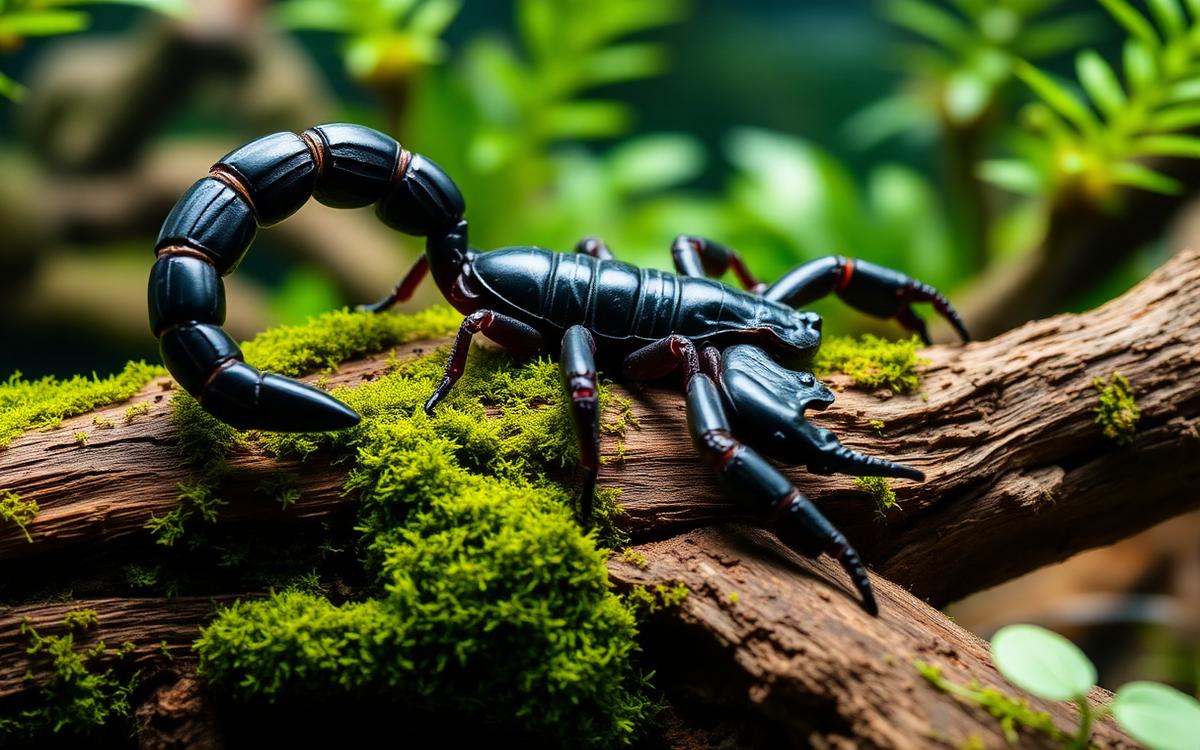
It's a common misconception that only dangerous or unusual scorpion species glow, this trait spans nearly the entire order Scorpiones, from harmless emperor scorpions to medically significant species like the Arizona bark scorpion.
Editor's note: A glowing scorpion under a blacklight tells you nothing about how dangerous its sting is; fluorescence is unrelated to venom potency.
Key takeaways
- Nearly all scorpion species fluoresce blue-green under ultraviolet light due to compounds in their cuticle.
- The glow comes from the hardened outer exoskeleton layer, not internal tissue.
- Leading theories suggest the whole body may function as a light-sensing organ.
- UV flashlights are widely used for pest control and scientific population surveys.
- Fluorescence has no relationship to how dangerous a scorpion's venom is.
Frequently asked questions
Do all scorpions glow under UV light?+
The vast majority of known species do, though newly molted individuals with soft cuticles do not glow until they harden.
What wavelength of UV light works best for finding scorpions?+
Flashlights in the 365–395 nanometer range are standard for scorpion surveys and pest inspections.
Does fluorescence mean a scorpion is more venomous?+
No, fluorescence is unrelated to venom potency and is present in both mild and medically significant species.
Can dead scorpions still glow?+
Yes, dried museum specimens can retain fluorescence for many years or even decades.