Venomous Insects · Cornerstone guide
Tarantula Hawk Wasp Sting: The Most Painful Insect Sting in North America
Tarantula hawks deliver one of the most intense stings on Earth, ranked near the top of the Schmidt Sting Pain Index, though the venom itself is rarely dangerous.
 By Mahmoud OsamaSenior Wildlife Researcher & Editor-in-ChiefPublished 4 September 2025 · Updated 4 September 2025 · 8 min read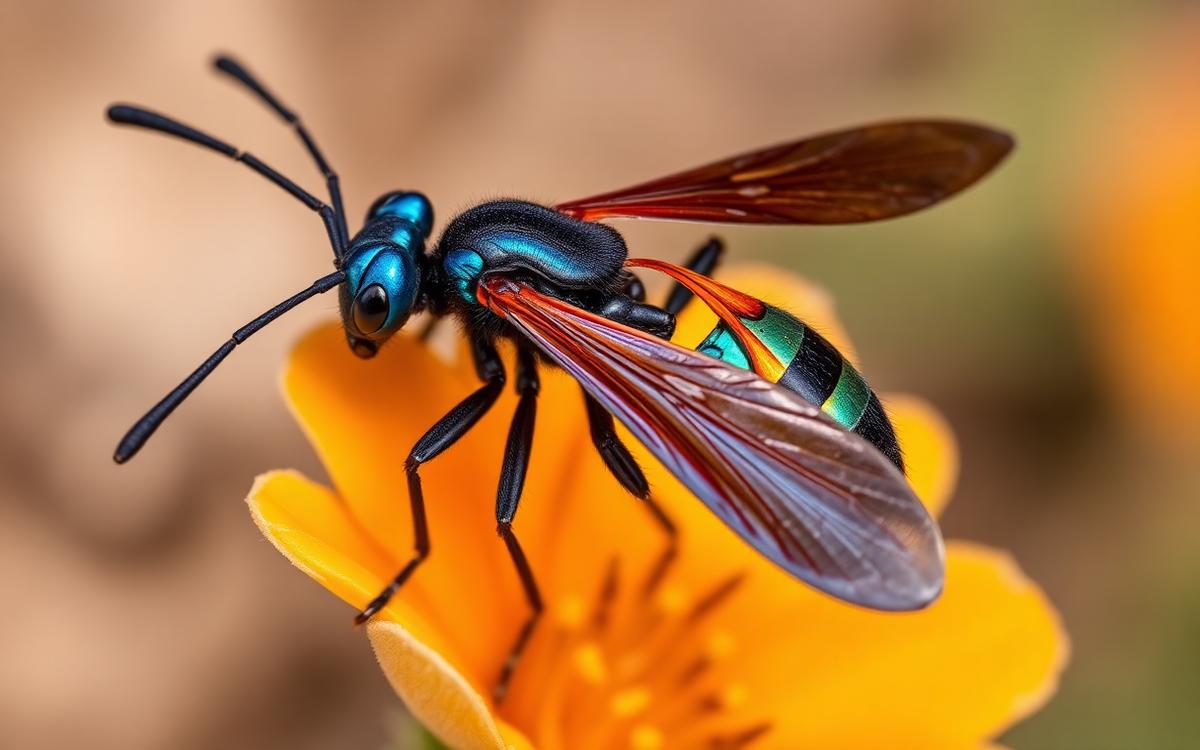
Reviewed against primary toxinology literature and IUCN assessments. This article is educational and is not medical advice — in an emergency contact your local poison centre or emergency services.
Tarantula hawks are enormous spider wasps in the genus Pepsis and Hemipepsis, found across the southwestern United States, Mexico, and South America. Females hunt tarantulas, paralyzing them with a sting to provision a single larva, but that same stinger can be turned on a person who steps too close to a nest site or accidentally handles one. Entomologist Justin Schmidt, who created the Schmidt Sting Pain Index by voluntarily subjecting himself to dozens of insect stings, rated the tarantula hawk a 4 out of 4 — the maximum score, shared only with the bullet ant.
Despite the reputation, a tarantula hawk sting is a medical curiosity more than a medical emergency for most healthy adults. The pain is instantaneous, blinding, and often described as an electric jolt that travels up the limb, but it typically fades within three to five minutes if the person can simply endure it. This article explains what causes the pain, how to tell a normal reaction from a dangerous one, and what first aid actually helps.
What Happens When You Get Stung
The sting itself is delivered through a stinger that can reach roughly 7mm long on the largest females, injecting a venom cocktail that overwhelms pain receptors almost immediately. Victims commonly report an involuntary scream, a drop to the ground, or a temporary inability to use the affected limb — not because of paralysis, but because the pain is so overwhelming that voluntary movement becomes difficult.
Unlike many stinging insects, the intensity does not build over time; it peaks within seconds and is often described as far worse than a bee or wasp sting from a common species. The good news is that the venom, while excruciating, has not been shown to cause the kind of tissue-destroying or systemic damage associated with some other venoms.
Why It Hurts So Much
Researchers believe tarantula hawk venom works primarily as a pain-inducing deterrent rather than a tissue-damaging toxin. The peptides in the venom appear to directly and powerfully activate pain-sensing neurons, essentially maximizing the ouch factor to make a predator drop the wasp instantly, rather than causing lasting injury.
Symptom Timeline
- 0–5 minutes: Sharp, intense, often described as searing or electric pain at the sting site
- 5–30 minutes: Pain rapidly subsides to a dull ache or throbbing
- 1–24 hours: Localized redness, swelling, and warmth at the sting site
- 1–3 days: Residual tenderness and itching as the site heals
Most people are back to normal function within the hour, even though the sting site may look angry and swollen for a day or two afterward.
Treatment and First Aid
There is no antivenom for tarantula hawk stings because it is rarely necessary. The primary goal of first aid is comfort during the acute pain window and standard wound care afterward.
- Stay calm and sit or lie down if the pain causes dizziness or the urge to fall
- Apply a cold compress or ice pack wrapped in cloth to slow venom spread and numb the area
- Take an over-the-counter pain reliever such as ibuprofen or acetaminophen
- Wash the site with soap and water once the acute pain passes
- Watch for signs of an allergic reaction over the following hour
Editor's note: Seek emergency care immediately if you notice difficulty breathing, swelling of the face or throat, hives spreading beyond the sting site, or dizziness that does not resolve — these suggest an allergic reaction rather than a typical venom response.
Who Is Actually At Risk
The people most likely to be stung are gardeners, hikers, and landscapers working in the wasp's preferred desert and scrubland habitat during summer months, when females are actively hunting tarantulas. The wasps are not aggressive and rarely sting unless handled, stepped on, or cornered.
As with any stinging insect, individuals with a known history of anaphylaxis to insect venom should carry an epinephrine auto-injector and treat any unfamiliar sting as a potential emergency, regardless of species.
Avoiding a Sting
- Wear closed-toe shoes when walking through desert or scrub terrain in summer
- Do not attempt to handle, swat, or photograph a tarantula hawk at close range
- Give a wide berth to milkweed and other flowering plants where males and females feed on nectar
- Teach children that the wasp's bright orange wings and metallic blue-black body are a warning signal, not an invitation
Key takeaways
- Tarantula hawk stings rank at the top of the Schmidt Sting Pain Index alongside the bullet ant
- Pain peaks almost immediately and typically subsides within 5 to 30 minutes
- The venom is not known to cause lasting tissue damage in most healthy adults
- Cold compresses and OTC pain relievers are the main first-aid tools
- Allergic reactions, though rare, require immediate emergency care regardless of species
Frequently asked questions
Can a tarantula hawk sting kill you?+
For most healthy people, no — the sting is extremely painful but not considered life-threatening. Death would only be a realistic risk in the case of a severe, rare allergic reaction (anaphylaxis), which applies to almost any stinging insect.
How long does tarantula hawk pain last?+
The peak, blinding pain generally lasts only a few minutes, though residual soreness, redness, and swelling at the site can persist for one to three days.
Are tarantula hawks aggressive toward humans?+
No, they are generally docile and only sting when directly threatened, grabbed, or stepped on. They spend most of their time hunting tarantulas and feeding on flower nectar.
Do tarantula hawks die after stinging, like honey bees?+
No, their stinger is not barbed in a way that causes fatal disembowelment, so a tarantula hawk can sting more than once if provoked repeatedly.
What does tarantula hawk venom actually do to a tarantula?+
On its intended prey, the venom paralyzes rather than kills, allowing the female wasp to drag the still-living spider to a burrow where her larva feeds on it after hatching.