Spiders & Scorpions · Supporting guide
Sydney Funnel-Web Spider: Australia's Most Dangerous Spider
The Sydney funnel-web spider's venom can kill within hours, yet no one has died from a confirmed bite since antivenom was introduced.
 By Mahmoud OsamaSenior Wildlife Researcher & Editor-in-ChiefPublished 2 October 2025 · Updated 2 October 2025 · 7 min read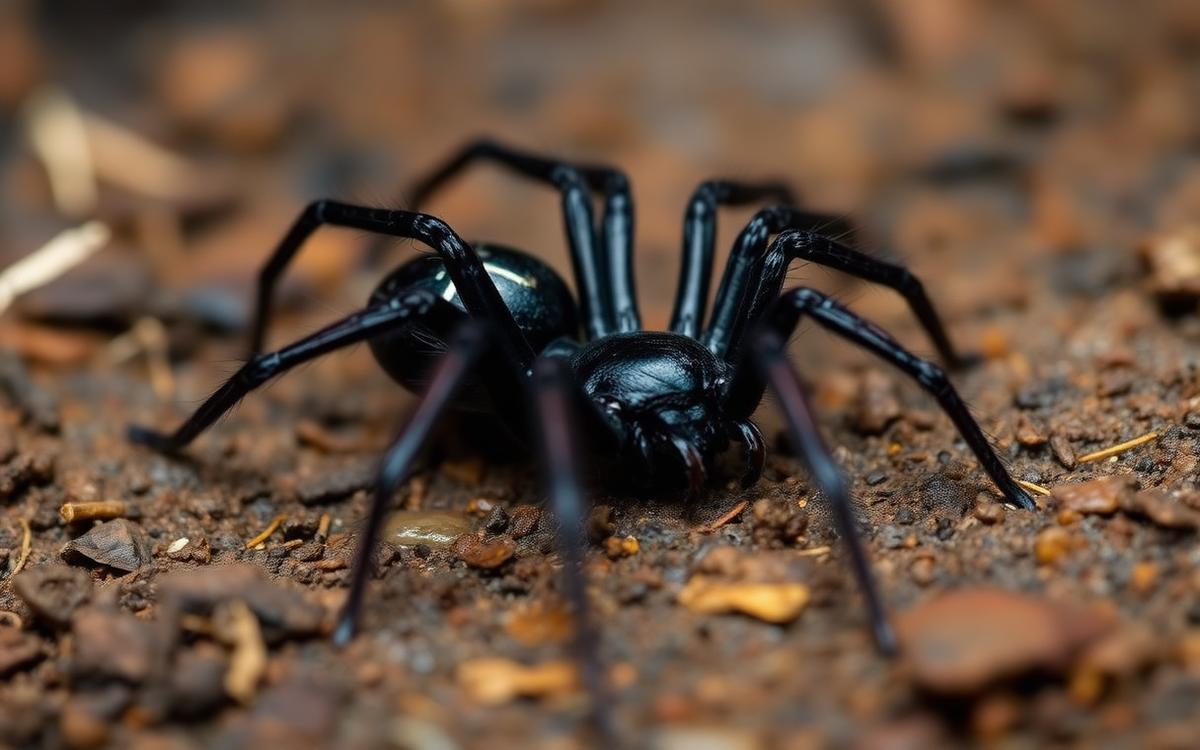
Reviewed against primary toxinology literature and IUCN assessments. This article is educational and is not medical advice — in an emergency contact your local poison centre or emergency services.
The Sydney funnel-web spider (Atrax robustus) has a fearsome reputation, and for good reason: its venom is among the fastest-acting of any spider affecting humans. Native to the Sydney basin in New South Wales, Australia, it is frequently cited by toxinologists as the medically most significant spider in the world.
Despite this, the story of the funnel-web is ultimately one of medical success. Since a specific antivenom was introduced in 1981, there have been no confirmed deaths from its bite, transforming a once-lethal encounter into a treatable medical emergency.
Identification and habitat
Male funnel-webs, which are more dangerous to humans than females due to a more potent venom profile, are glossy black to dark brown with a hard, shiny carapace and prominent fangs that can pierce fingernails and thin footwear.
- Found in the greater Sydney region and parts of coastal New South Wales
- Live in burrows lined with silk funnel-shaped webs, often in moist, sheltered soil
- Males wander in search of mates, especially after rain in warmer months, increasing human encounters
Why the venom is so dangerous
Funnel-web venom contains a peptide called delta-hexatoxin (formerly known as robustoxin), which targets sodium channels in the nervous system. In humans, it can cause a rapid and severe reaction; in most other mammals, effects are far milder, which is an evolutionary quirk since the toxin appears aimed at insect prey.
Recognizing severe envenomation
- Immediate, intense pain at the bite site
- Profuse sweating and salivation
- Muscle twitching and spasms
- Racing heart, high blood pressure, and difficulty breathing in severe cases
Untreated severe bites can progress to unconsciousness and respiratory failure within one to three hours, which is unusually fast for a spider envenomation.
First aid and treatment
The recommended first aid for a suspected funnel-web bite is the pressure immobilization technique: firmly bandaging the entire bitten limb from the fingers or toes upward, then splinting it to prevent movement, which slows venom movement through the lymphatic system.
Editor's note: Do not wash the bite site if possible; residual venom on the skin can help identify the correct antivenom, and always call emergency services immediately.
Funnel-web antivenom, first developed in the early 1980s, is highly effective when administered promptly and has been credited with eliminating fatalities from confirmed bites since its introduction.
Antivenom production and citizen involvement
Australian antivenom programs rely partly on venom milked from spiders donated by the public, particularly in Sydney where residents are encouraged to safely capture funnel-webs and hand them to collection points at zoos and museums.
This community participation has directly increased venom supply for antivenom manufacturing, an unusual and effective model of public health cooperation.
Putting the risk in perspective
Despite the frightening biology, funnel-web bites are uncommon, and severe envenomation is even rarer since most bites are 'dry' or deliver limited venom. No confirmed fatality has been recorded since 1981.
- Avoid handling spiders found in gardens, sheds, or pools in funnel-web territory
- Wear gloves and shoes when gardening in known habitat
- Keep pool areas checked, since funnel-webs sometimes fall in and can survive submerged for hours
Key takeaways
- The Sydney funnel-web spider has one of the fastest-acting venoms known in spiders affecting humans.
- Male funnel-webs are more dangerous to humans than females and wander more often, especially after rain.
- Pressure immobilization first aid and prompt antivenom have eliminated confirmed fatalities since 1981.
- Community-donated spiders help supply venom for antivenom production in Australia.
- Severe bites remain uncommon since many bites deliver little or no venom.
Frequently asked questions
Has anyone died from a funnel-web spider bite recently?+
No confirmed deaths have occurred since antivenom was introduced in 1981, though bites are still medical emergencies requiring immediate treatment.
Are female funnel-webs dangerous too?+
Yes, but their venom is generally considered less potent to humans than that of males, which also roam more and are encountered more often.
What should I do if bitten?+
Apply pressure immobilization bandaging to the limb, keep the person still, and call emergency services immediately; do not attempt to suck out venom or cut the wound.
Where are funnel-web spiders found?+
Primarily in the Sydney basin and surrounding coastal areas of New South Wales, Australia, in burrows in moist soil.
Why is human venom sensitivity unusual for this spider?+
Its toxin appears to specifically affect primate nervous systems strongly while having much milder effects on many other mammals, an evolutionary coincidence rather than a targeted adaptation.