Spiders & Scorpions · Supporting guide
Huntsman Spiders: Big, Fast, and Almost Harmless
Huntsman spiders can span a dinner plate and move startlingly fast, but their bite is mild and they help control household pests.
 By Mahmoud OsamaSenior Wildlife Researcher & Editor-in-ChiefPublished 6 November 2025 · Updated 6 November 2025 · 6 min read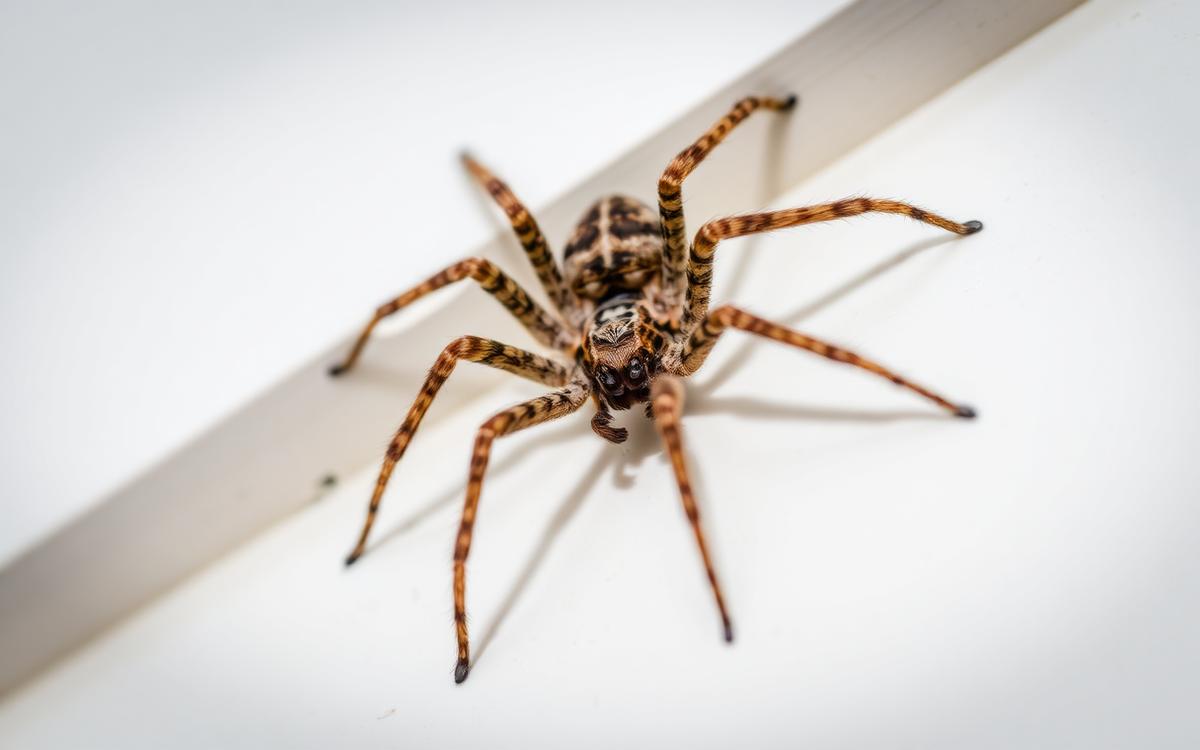
Reviewed against primary toxinology literature and IUCN assessments. This article is educational and is not medical advice — in an emergency contact your local poison centre or emergency services.
Huntsman spiders (family Sparassidae) are famous for their intimidating size, flattened bodies, and startling burst of speed when disturbed. Found across warmer regions of the world, particularly Australia, Southeast Asia, and parts of the Americas, they regularly appear in horrified viral videos and social media posts.
Despite the reaction they provoke, huntsman spiders are not medically dangerous to humans. Their bite is generally mild, and their presence in and around homes is arguably beneficial, since they prey heavily on cockroaches, flies, and other pest insects.
Size, speed, and identification
Huntsman spiders can have a leg span exceeding 10 to 12 inches (25 to 30 centimeters) in some large species, making them among the largest spiders by leg span in the world, even though their bodies are relatively light.
- Flattened bodies allow them to squeeze into narrow crevices, tree bark, and behind wall hangings
- Legs are oriented crab-like, extending forward and to the sides rather than under the body
- Extremely fast, sudden movement is a defensive escape response, not aggression
What a bite actually causes
Huntsman spiders are not aggressive and bites are uncommon, generally occurring only when a spider is trapped against skin, such as inside clothing or bedding.
Documented bite effects
- Localized pain similar to a bee sting
- Mild swelling and redness at the bite site
- Occasionally minor nausea or headache
- No documented cases of severe systemic illness or death
There is no medically significant venom effect reported in the toxinology literature comparable to that of widow or recluse spiders.
Why huntsman spiders are good to have around
Huntsman spiders are active hunters rather than web-builders, roaming at night to catch insects, including cockroaches, moths, and other spiders. In agricultural settings in Australia, some species are valued for helping control crop pests in vineyards and orchards.
Many pest control experts recommend simply relocating a huntsman found indoors with a container and piece of card rather than killing it, both because it is harmless and because it provides free pest control.
Living alongside huntsman spiders
Their sudden movements are startling largely because of contrast: a huntsman sitting motionless on a wall can look almost artificial until it darts several feet in under a second, a reflex that has more to do with startling predators than threatening humans.
- If one lands on you, resist swatting; gently brushing it off usually avoids a defensive bite
- Check car sun visors and mirrors in warm climates, a favorite huntsman hiding spot
- Seal gaps around doors and windows to reduce indoor encounters if desired
Key takeaways
- Huntsman spiders can have leg spans over a foot but are not medically dangerous to humans.
- Bites are rare and cause only mild, localized pain similar to a bee sting.
- Their fast movement is a defensive escape reflex, not aggression toward people.
- They provide natural pest control by hunting cockroaches, flies, and other insects.
- Relocating rather than killing a huntsman is a reasonable, low-risk choice.
Frequently asked questions
Are huntsman spiders poisonous?+
Their venom is not considered medically significant to humans; bites cause only mild, temporary local pain in documented cases.
Why do huntsman spiders move so fast?+
Speed is a defensive escape response to avoid predators, not a sign of aggression toward humans.
Can huntsman spiders jump?+
They do not jump like jumping spiders, but their rapid sideways scuttling can appear jump-like at a glance.
Should I remove a huntsman spider from my house?+
It is optional; they are harmless and help control pests, but you can safely relocate one outdoors if you prefer.
How big do huntsman spiders get?+
Some species reach leg spans of 10 to 12 inches, though body size is much smaller than the leg span suggests.