Rare & Endangered Animals · Supporting guide
Sumatran Tiger: The Last Island Tiger's Fight for Survival
Fewer than 400 Sumatran tigers remain in the wild, isolated in shrinking forest fragments and threatened by poaching and palm oil expansion.
 By Mahmoud OsamaSenior Wildlife Researcher & Editor-in-ChiefPublished 20 September 2025 · Updated 20 September 2025 · 7 min read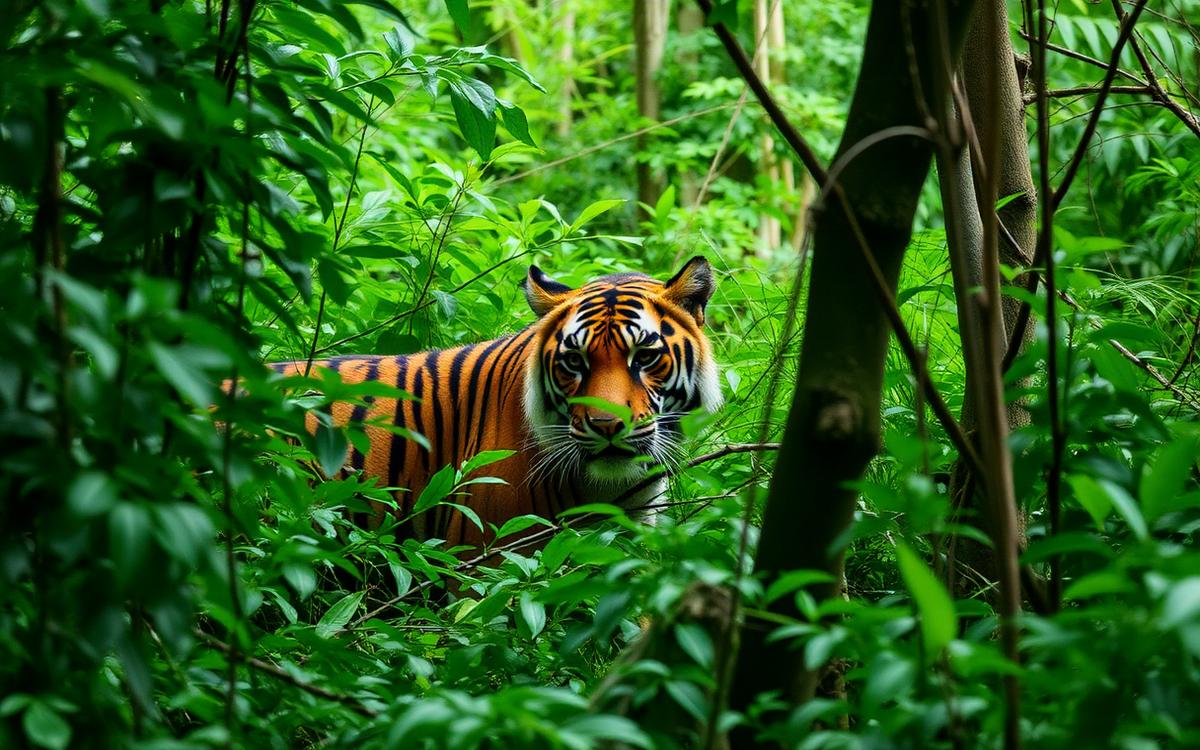
Reviewed against primary toxinology literature and IUCN assessments. This article is educational and is not medical advice — in an emergency contact your local poison centre or emergency services.
The Sumatran tiger is the smallest living tiger subspecies and the only one left on any Indonesian island — the Javan and Bali tigers were both hunted and habitat-destroyed into extinction in the 20th century. Fewer than 400 Sumatran tigers are thought to remain, scattered across fragmented forest blocks on the island of Sumatra.
Their decline mirrors a pattern seen across the tropics: rapid deforestation for agriculture, especially oil palm and pulpwood plantations, combined with persistent poaching for the illegal wildlife trade. Without intervention, biologists warn Sumatra's tiger could follow its island relatives into extinction within a few generations.
Current Population and Range
Camera-trap surveys and landscape modeling put the wild population at roughly 350 to 400 individuals, spread across a handful of protected areas including Kerinci Seblat, Gunung Leuser, and Bukit Barisan Selatan National Parks. Many of these populations are small and increasingly isolated from one another.
- Kerinci Seblat National Park — largest remaining tiger stronghold
- Gunung Leuser National Park — part of a UNESCO World Heritage rainforest complex
- Bukit Barisan Selatan National Park — smaller, more fragmented population
Primary Threats
Habitat loss is the single largest driver of decline. Sumatra has lost vast areas of lowland rainforest to oil palm, rubber, and pulp plantations over the past three decades, fragmenting tiger territory into disconnected patches too small to support viable breeding populations.
Poaching pressure
Tigers are also killed directly for their skins, bones, and other body parts destined for illegal wildlife markets, and are sometimes caught in snares set for other animals. Human-tiger conflict increases as forest fragmentation pushes tigers into farmland and villages, occasionally resulting in retaliatory killings.
Conservation Response
Indonesian park authorities, in partnership with international conservation groups, run ranger patrol units specifically tasked with removing snares and monitoring tiger movements using camera traps. Landscape-level planning efforts aim to maintain forest corridors linking isolated tiger populations.
- Snare removal patrols in key national parks
- Camera-trap population monitoring
- Community-based conflict mitigation programs
- Certification schemes pushing for deforestation-free palm oil supply chains
Genetic Bottlenecks
Small, isolated tiger populations face heightened risk of inbreeding, which can reduce fertility and immune resilience over generations. Conservation geneticists monitor genetic diversity within surviving groups and, in some cases, support translocations to maintain healthy gene flow between fragmented subpopulations.
Outlook
The Sumatran tiger's fate depends heavily on whether remaining forest blocks can be protected and reconnected before populations shrink further. Conservationists point to stabilizing trends in well-patrolled parks as evidence that focused protection can work, but they caution that continued deforestation for agriculture remains the central unresolved threat.
Key takeaways
- The Sumatran tiger is the last surviving Indonesian island tiger subspecies.
- Fewer than 400 individuals remain, fragmented across a handful of national parks.
- Deforestation for palm oil and pulpwood is the leading cause of habitat loss.
- Poaching and snaring for illegal wildlife trade continue despite legal protections.
- Maintaining forest corridors between populations is critical to avoid genetic bottlenecks.
Frequently asked questions
How many Sumatran tigers are left?+
Current estimates suggest roughly 350 to 400 individuals remain in the wild, though precise counts are difficult due to their elusive, low-density distribution.
What happened to the Javan and Bali tigers?+
Both were separate Indonesian island subspecies that were driven to extinction in the 20th century through hunting and habitat destruction, leaving the Sumatran tiger as the region's last surviving tiger.
What is the biggest threat to Sumatran tigers today?+
Habitat loss from oil palm, rubber, and pulpwood plantation expansion is generally considered the largest ongoing threat, closely followed by poaching.
Can Sumatran tigers be reintroduced to former range areas?+
Reintroduction is theoretically possible but requires large, well-protected, prey-rich forest areas, which are increasingly scarce on Sumatra.