Rare & Endangered Animals · Cornerstone guide
The Pangolin Trafficking Crisis: Why the World's Most Trafficked Mammal Is Vanishing
Millions of pangolins have been snatched from forests across Asia and Africa for their scales and meat, pushing all eight species toward extinction.
 By Mahmoud OsamaSenior Wildlife Researcher & Editor-in-ChiefPublished 5 September 2025 · Updated 5 September 2025 · 8 min read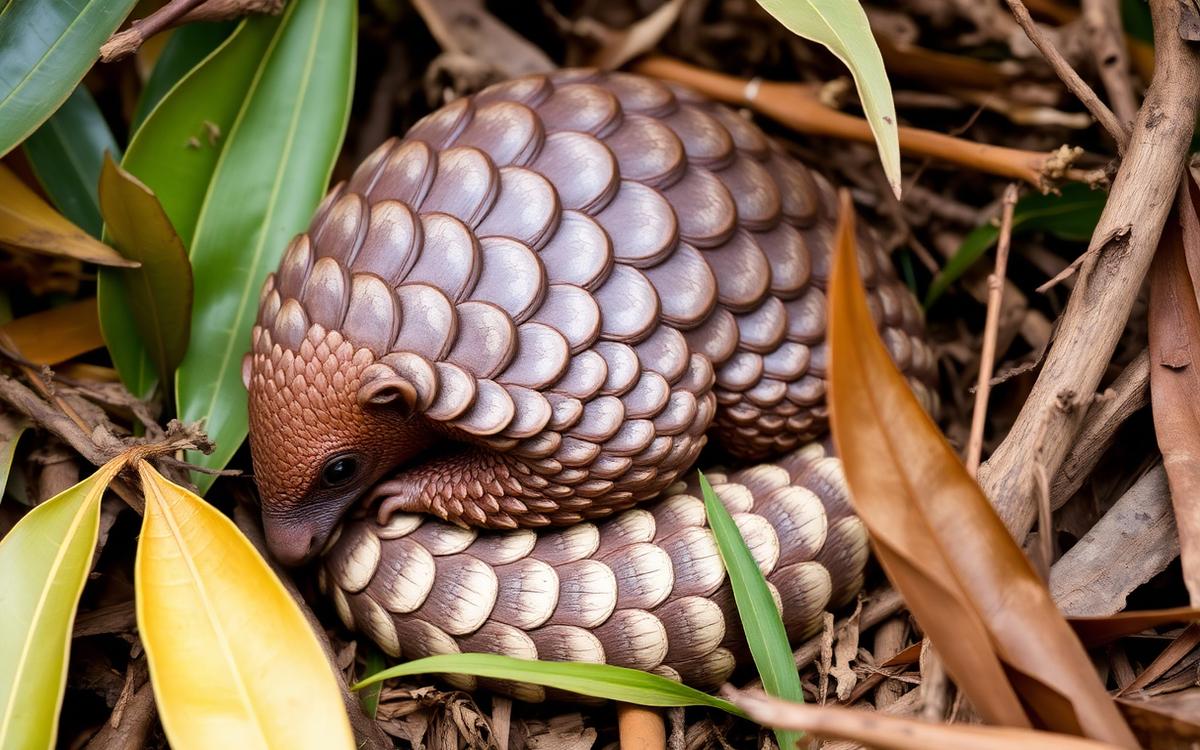
Reviewed against primary toxinology literature and IUCN assessments. This article is educational and is not medical advice — in an emergency contact your local poison centre or emergency services.
Pangolins are unassuming, scale-covered mammals that curl into a ball when threatened, a defense that works well against big cats but is useless against a poacher with a sack. That single vulnerability has made them the most heavily trafficked wild mammal in the world, with an estimated hundreds of thousands taken from the wild every year for their scales and meat.
All eight pangolin species — four in Asia and four in Africa — are now listed as threatened, and three are Critically Endangered. Understanding how the trade operates, and why it has proven so difficult to stop, is essential to any realistic hope of saving them.
Why Pangolins Are Targeted
Pangolin scales are made of keratin, the same protein found in human fingernails, yet they are prized in some traditional Asian medicine markets for supposed (and scientifically unsupported) healing properties. Scales are ground into powder or used in tonics, despite no clinical evidence they treat any ailment.
Pangolin meat is also considered a luxury dish in parts of China and Vietnam, and live animals or frozen carcasses are trafficked alongside the scales. A single seizure can involve several tons of scales, representing thousands of individual animals.
- Scales used in traditional medicine powders and tonics
- Meat served as a status-symbol delicacy
- Fetuses and blood sometimes sold as tonics
- Live animals occasionally kept for exotic pet trade
The Scale of the Trade
Customs seizure data compiled by wildlife trade monitors suggest that well over a million pangolins were trafficked in the decade after 2010, though the true number is almost certainly higher because most shipments are never intercepted.
Trafficking routes
Scales are typically sourced from Central and West Africa, shipped through transit hubs in Southeast Asia and Nigeria, and ultimately smuggled into China and Vietnam, often hidden inside legitimate cargo such as timber or frozen seafood.
Editor's note: A single large seizure in 2019 involved roughly 14 tons of pangolin scales in one shipment, representing an estimated 36,000 animals.
Asia's Vanishing Pangolins
The Chinese pangolin and Sunda pangolin are both Critically Endangered, having been hunted so intensively across China, Vietnam, and Indonesia that traffickers now rely increasingly on African populations to meet demand. Their numbers in the wild are difficult to estimate precisely because pangolins are nocturnal and solitary, but surveys indicate steep, sustained declines.
Loss of forest habitat compounds the pressure from poaching, leaving fragmented populations that struggle to recover even where enforcement has improved.
African Pangolins Under New Pressure
As Asian pangolin populations collapsed, trafficking networks pivoted to Africa's four species — the giant, white-bellied, black-bellied, and Temminck's ground pangolin. Seizure volumes from African ports have risen sharply since the mid-2010s, a pattern conservationists describe as a classic shift to a new supply source once the original one is depleted.
- Giant pangolin — largest species, found in Central and West Africa
- White-bellied pangolin — most frequently seized in trade data
- Black-bellied pangolin — arboreal, poorly studied
- Temminck's ground pangolin — southern and eastern Africa
Protection Efforts and Legal Framework
All eight pangolin species were moved to CITES Appendix I in 2017, banning all international commercial trade. Several range countries have since strengthened domestic penalties, and China removed pangolin scales from its official list of approved traditional medicine ingredients in 2020, a symbolically important step.
Conservation groups now combine anti-poaching patrols, rescue-and-rehabilitation centers, demand-reduction campaigns, and community-based monitoring to protect remaining populations, though enforcement gaps and corruption along trade routes remain major obstacles.
Key takeaways
- Pangolins are believed to be the most trafficked wild mammal on Earth by volume.
- Scales are used in traditional medicine despite no proven medicinal benefit; the meat is a luxury food.
- All eight species are threatened, with several classified as Critically Endangered.
- Trafficking has shifted from depleted Asian populations toward African source countries.
- A 2017 CITES Appendix I listing bans international commercial trade in all pangolin species.
Frequently asked questions
Are pangolin scales medicinally effective?+
No. Pangolin scales are made of keratin, identical in composition to human fingernails and hair, and there is no clinical evidence supporting their use in traditional medicine.
How many pangolin species exist?+
There are eight recognized species, four native to Asia and four to Africa, all currently listed as threatened with extinction.
Why are pangolins easy to poach?+
Their main defense — rolling into a tight, armored ball — protects them from predators but makes them trivially easy for a human poacher to pick up and carry away.
Is international trade in pangolins legal?+
No. Since 2017, all eight species have been listed on CITES Appendix I, which prohibits commercial international trade.
Can pangolins be bred in captivity to reduce poaching pressure?+
Pangolins are notoriously difficult to keep and breed in captivity due to specialized diets and high stress sensitivity, so captive breeding is not currently a viable solution at scale.