Rare & Endangered Animals · Cornerstone guide
Red Wolf Recovery: America's Most Endangered Canid
Once declared extinct in the wild, the red wolf survives today through a fragile captive breeding and reintroduction program centered in North Carolina.
 By Mahmoud OsamaSenior Wildlife Researcher & Editor-in-ChiefPublished 20 November 2025 · Updated 20 November 2025 · 8 min read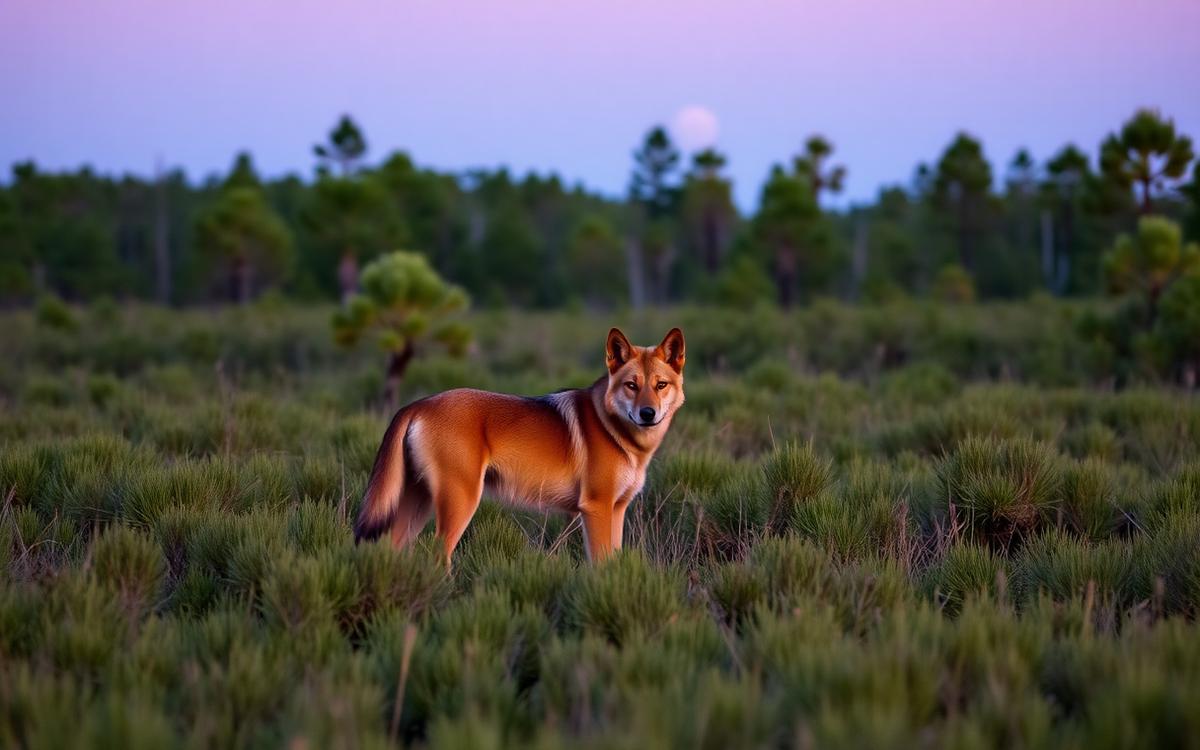
Reviewed against primary toxinology literature and IUCN assessments. This article is educational and is not medical advice — in an emergency contact your local poison centre or emergency services.
The red wolf is one of the rarest canids on the planet, and among the most endangered mammals in North America. Once common across the southeastern United States, it was declared extinct in the wild in 1980 after decades of habitat loss, predator-control campaigns, and interbreeding with expanding coyote populations diluted its genetic identity.
A small captive population, carefully selected from the last wild-caught individuals, became the foundation for a reintroduction program in eastern North Carolina that remains, decades later, the species' only wild population — and one that has repeatedly come close to collapse.
From Extinction in the Wild to Reintroduction
Red wolves once ranged across the southeastern United States, from Texas to the Atlantic coast. Bounty hunting, habitat conversion for agriculture, and predator-control programs targeting wolves and coyotes alike drove the population to the brink by the mid-20th century. As remaining wolves became scarce, they increasingly interbred with expanding coyote populations, threatening to erase the species genetically even before it disappeared physically.
In the late 1970s, biologists captured the last known pure red wolves from coastal Texas and Louisiana. After screening for hybridization, only 14 were deemed suitable founders for a captive breeding program, and the red wolf was declared extinct in the wild in 1980.
Reintroduction in North Carolina
In 1987, the U.S. Fish and Wildlife Service released captive-bred red wolves into the Alligator River National Wildlife Refuge in eastern North Carolina, the first-ever reintroduction of a species previously extinct in the wild anywhere in the world. The population grew to well over 100 wolves by the early 2000s, spread across several counties of the Albemarle Peninsula.
- First release: 1987, Alligator River National Wildlife Refuge
- Peak wild population: estimated at 120-130 wolves around 2006
- Population later collapsed due to poaching, vehicle strikes, and reduced management support
- By the late 2010s, fewer than 20 wild wolves remained
Population Collapse and Renewed Effort
Despite early success, the wild population declined sharply after the mid-2000s. Gunshot mortality — much of it linked to wolves being mistaken for coyotes, which can legally be hunted in the region — became the leading cause of death. Funding and management changes in the mid-2010s further reduced monitoring and enforcement, and by decade's end only a handful of wild red wolves remained.
Renewed reintroductions
Following legal challenges and renewed conservation pressure, wildlife officials resumed releasing captive-bred wolves into the wild population beginning in 2021, aiming to bolster numbers and genetic diversity in the last remaining wild group.
The Coyote Hybridization Challenge
Because red wolves and coyotes can interbreed and produce fertile offspring, maintaining a genetically distinct red wolf population requires active management, including sterilizing coyotes that hold territory adjacent to wolf packs to prevent hybrid litters from diluting the wolf gene pool — a technique known as 'coyote placeholder' management.
- Red wolves and coyotes can produce fertile hybrid offspring
- Sterilized coyotes are used as territorial placeholders to block hybridization
- Genetic testing tracks ancestry within the wild and captive populations
- Roughly 200-250 red wolves exist in captive breeding programs across North America
Outlook
The red wolf remains critically dependent on a single small wild population in North Carolina, making it acutely vulnerable to disease outbreaks, storms, or renewed poaching pressure. Conservationists have proposed establishing a second wild population elsewhere in the historic range to reduce this risk, though finding suitable habitat with public and political support remains difficult.
Key takeaways
- The red wolf was declared extinct in the wild in 1980 before being reintroduced in North Carolina in 1987.
- The wild population peaked around 120-130 wolves in the mid-2000s before collapsing to fewer than 20.
- Gunshot mortality, often from wolves mistaken for coyotes, is the leading cause of wild wolf deaths.
- Interbreeding with coyotes threatens the species' genetic identity, requiring active hybridization management.
- Roughly 200-250 red wolves exist in captive breeding programs, serving as a genetic reserve for the wild population.
Frequently asked questions
Are red wolves still extinct in the wild?+
No. A reintroduced population has existed in eastern North Carolina since 1987, though it remains extremely small and vulnerable, with roughly a few dozen wild individuals today.
How is a red wolf different from a coyote?+
Red wolves are generally larger than coyotes with longer legs and a more robust build, but because the two species can interbreed and produce fertile hybrids, genetic testing is often needed to reliably distinguish them, especially in areas where their ranges overlap.
Why do coyotes threaten red wolf survival?+
Because the species can interbreed, unmanaged coyote populations near red wolf territory risk diluting the red wolf's distinct genetics through hybridization, which is why wildlife managers sterilize territorial coyotes near wolf packs.
Where can wild red wolves be found today?+
The only wild population exists on the Albemarle Peninsula in eastern North Carolina, primarily around the Alligator River National Wildlife Refuge.
How many red wolves exist in total?+
Roughly 200-250 red wolves exist in captive breeding facilities across North America, while the wild population numbers only in the dozens.