Rare & Endangered Animals · Supporting guide
Spix's Macaw: Bringing Back a Parrot Extinct in the Wild
Made famous by the animated film 'Rio,' the Spix's macaw vanished from the wild entirely before a captive breeding program began returning it to Brazil's forests.
 By Mahmoud OsamaSenior Wildlife Researcher & Editor-in-ChiefPublished 8 December 2025 · Updated 8 December 2025 · 7 min read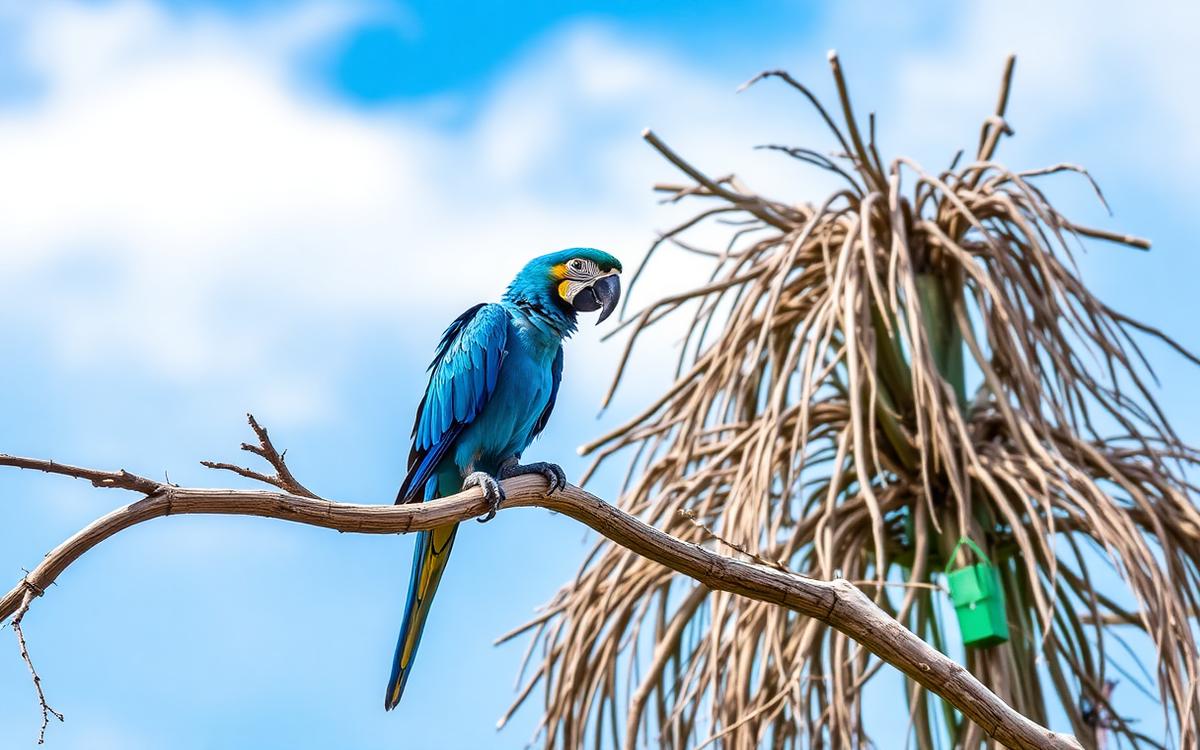
Reviewed against primary toxinology literature and IUCN assessments. This article is educational and is not medical advice — in an emergency contact your local poison centre or emergency services.
The Spix's macaw is a small, striking blue parrot that became internationally famous as the inspiration for the animated film 'Rio' — a bittersweet bit of timing, since by the time the film's sequel released, the species had already been declared extinct in the wild. The last confirmed wild individual disappeared from Brazil's caatinga scrubland around 2000.
Unlike many extinct-in-the-wild species, the Spix's macaw survived only because private aviculturists and zoos, sometimes controversially, had kept small numbers in captivity for decades. Those scattered captive birds became the unlikely foundation for one of the most notable parrot reintroduction efforts in conservation history.
A Rapid, Recent Extinction in the Wild
Spix's macaws historically lived in a narrow band of gallery forest along seasonal rivers within Brazil's caatinga, a dry scrubland ecosystem. Habitat destruction from cattle ranching and agriculture reduced their specialized nesting trees, while illegal capture for the pet trade — driven by the species' rarity and beauty — accelerated the decline dramatically in the 1970s through 1990s.
By the late 1980s, only a handful of wild individuals remained. A single known wild male persisted alone in the Melância Creek area of Bahia state into the late 1990s, briefly paired with a captive-bred female released to join him, before disappearing entirely by around 2000.
Survival Through Private and Institutional Collections
At the time of the species' disappearance from the wild, a small number of Spix's macaws survived scattered across private collections and a few zoos worldwide, some obtained legally, others through the illegal parrot trade that had helped drive the species to extinction in the first place.
- Around 60-80 individuals existed in scattered collections by the early 2000s
- Genetic bottleneck traced to a handful of founder birds
- Coordination among private breeders and institutions was essential to consolidate a viable population
- Brazilian and German conservation organizations led coordinated breeding efforts
Consolidating a Breeding Program
Bringing together birds from disparate, sometimes distrustful private owners required years of diplomacy and legal negotiation. A dedicated breeding center in Germany, working with Brazilian authorities and international partners, eventually consolidated a substantial share of the global population, applying careful genetic management to maximize diversity from a founder population that had already passed through a severe bottleneck.
Building toward release
By the late 2010s, the captive population had grown large enough to plan reintroductions, with birds selected for genetic diversity and natural behaviors before undergoing pre-release conditioning to build flight stamina and foraging skills.
Return to the Caatinga
The first Spix's macaws were released back into protected caatinga habitat in Brazil in 2022, marking the species' return to the wild after roughly two decades of complete absence. Released birds are fitted with tracking devices, and supplemental feeding stations support them as they adjust to foraging independently.
- First reintroduction release: 2022, Curaçá region of Bahia, Brazil
- Released birds monitored via radio and satellite tracking
- Habitat protection and reforestation of nesting trees run alongside releases
- Small wild breeding attempts have since been documented among released birds
Outlook
The Spix's macaw reintroduction is still in its early stages, and success is not guaranteed — reestablishing wild behaviors and breeding in a species with no living wild-born individuals to learn from is a slow, uncertain process. Continued habitat protection in the caatinga, combined with sustained captive-breeding support, will determine whether the species can maintain a self-sustaining wild population over the coming decades.
Key takeaways
- Spix's macaw was declared extinct in the wild around 2000, after decades of habitat loss and illegal capture.
- The species survived only because of scattered captive populations held by private breeders and zoos.
- Consolidating birds from private collections into a coordinated breeding program took years of negotiation.
- The first wild reintroductions occurred in 2022 in Brazil's caatinga scrubland.
- Released birds are monitored closely, and early wild breeding attempts have already been documented.
Frequently asked questions
Is the Spix's macaw still extinct in the wild?+
It was extinct in the wild from around 2000 until reintroductions began in 2022; small numbers now live in protected habitat in Brazil, though the population remains fragile.
Why did Spix's macaw disappear from the wild?+
A combination of habitat destruction in its narrow caatinga range and illegal capture for the international pet trade drove the wild population to zero by around 2000.
How did the species survive at all?+
Small numbers survived in private collections and zoos worldwide, some legally held and others originating from the illegal trade, and these birds became the genetic foundation for later breeding programs.
Was the film 'Rio' based on this species?+
Yes, the animated film 'Rio' features a Spix's macaw character, and its release drew public attention to the real species' dire conservation status.