Marine Venomous Life · Supporting guide
Stonefish Stings: Why the World's Most Venomous Fish Demands Fast Action
Camouflaged perfectly against rock and coral, the stonefish delivers one of the most painful stings in the ocean through 13 needle-sharp dorsal spines.
 By Mahmoud OsamaSenior Wildlife Researcher & Editor-in-ChiefPublished 18 September 2025 · Updated 18 September 2025 · 7 min read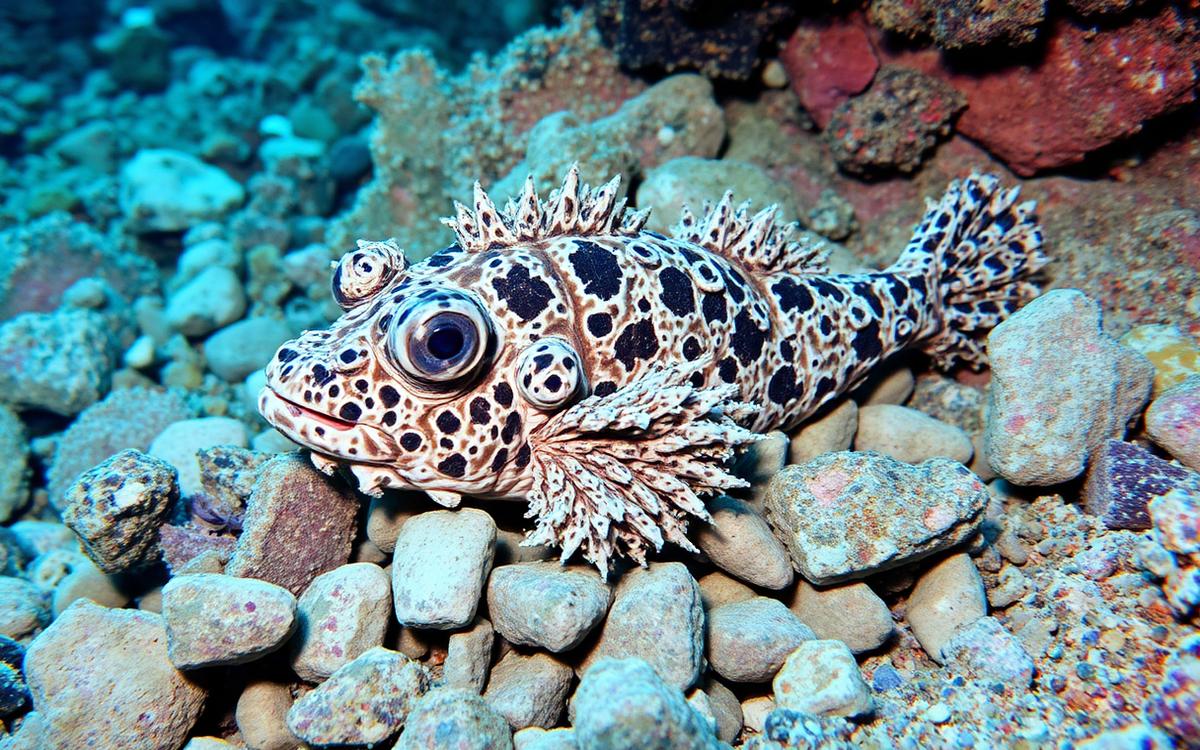
Reviewed against primary toxinology literature and IUCN assessments. This article is educational and is not medical advice — in an emergency contact your local poison centre or emergency services.
The stonefish earns its reputation as the world's most venomous fish not through aggression but through disguise. Lying motionless on rubble, sand, or coral, its mottled, wart-covered body is nearly indistinguishable from the seafloor, and most stings happen when someone steps on one without ever seeing it.
Along its back run thirteen dorsal spines, each connected to venom glands that release toxin under pressure. A stonefish sting is often described as the most intense pain a person has ever experienced, and while fatalities are uncommon with modern treatment, the injury requires urgent, specific first aid to manage effectively.
A Master of Camouflage
Stonefish (genus Synanceia) live in shallow tropical and subtropical waters across the Indo-Pacific, often resting in seagrass beds, tide pools, or reef rubble where their skin texture and coloring blend seamlessly with the surrounding rock.
They rarely move and will not flee when approached, relying entirely on camouflage rather than escape. This makes accidental contact, especially stepping on one barefoot, the most common cause of stings.
How the Venom Works
Each of the stonefish's thirteen dorsal spines is sheathed and connected to a pair of venom glands. Pressure on the spine, such as a foot stepping down, forces venom up the spine and into the wound.
- Immediate, severe, throbbing pain at the sting site
- Swelling and discoloration around the wound
- Nausea, vomiting, and sweating in significant envenomations
- Muscle weakness, and in rare severe cases, cardiovascular effects
Editor's note: The venom contains cardiotoxic and cytotoxic proteins that break down under heat, which is the basis for hot water first aid.
Hot Water Immersion: The Core First Aid Response
Step-by-Step Response
- Get the person out of the water and call for emergency medical help
- Immerse the affected limb in water as hot as can be tolerated without burning, typically around 42-45°C (108-113°F)
- Maintain immersion for 30-90 minutes, or until pain is controlled
- Continue monitoring for signs of shock, breathing difficulty, or worsening symptoms
- Seek hospital care for wound cleaning, tetanus check, and possible antivenom
Hot water works because many fish venom proteins, including stonefish toxin, are heat-labile and denature at temperatures the skin can tolerate, which helps break down the venom and ease pain.
When Antivenom Is Needed
A specific stonefish antivenom exists and is used in cases of severe pain unresponsive to hot water, significant swelling, or systemic symptoms. It is most commonly available in Australia, where stonefish envenomations are relatively frequent.
Hospitals will also assess the wound for retained spine fragments, clean it thoroughly to prevent infection, and provide pain management and tetanus prophylaxis as needed.
Avoiding a Sting in the First Place
- Wear reef shoes or sturdy water shoes when wading in tropical shallows
- Shuffle your feet along the sandy bottom to disturb rather than step on hidden animals
- Avoid touching rocks or rubble that could conceal a resting stonefish
- Be extra cautious in areas known for stonefish, such as parts of the Indo-Pacific and northern Australia
Key takeaways
- Stonefish rely on camouflage and stillness, making accidental stings common
- Thirteen venomous dorsal spines deliver intensely painful toxin on contact
- Hot water immersion around 42-45°C is the primary field first aid measure
- Antivenom is available for severe cases, especially in Australia
- Reef shoes and careful foot placement greatly reduce sting risk
Frequently asked questions
Is a stonefish sting fatal?+
Death is rare with prompt treatment, but the pain is extreme and severe envenomations can cause cardiovascular complications, so emergency care should always be sought.
Why does hot water help a stonefish sting?+
Stonefish venom proteins are heat-sensitive and break down at temperatures the skin can tolerate, which helps relieve pain and reduce venom activity.
Where are stonefish commonly found?+
They live in shallow tropical and subtropical waters across the Indo-Pacific, often camouflaged among rocks, coral rubble, or seagrass.
Can you see a stonefish before stepping on it?+
It is difficult; their skin texture and coloring closely mimic rock and coral, which is why most stings happen from unseen contact.
Is antivenom always necessary?+
Not always. Mild stings often respond well to hot water immersion alone, but antivenom may be given for severe pain or systemic symptoms.