Marine Venomous Life · Cornerstone guide
Stingray Injuries: What to Do When the Barb Strikes
Most stingray injuries happen when someone steps on a ray buried in sand, triggering a defensive strike from a venomous barbed tail.
 By Mahmoud OsamaSenior Wildlife Researcher & Editor-in-ChiefPublished 10 December 2025 · Updated 10 December 2025 · 8 min read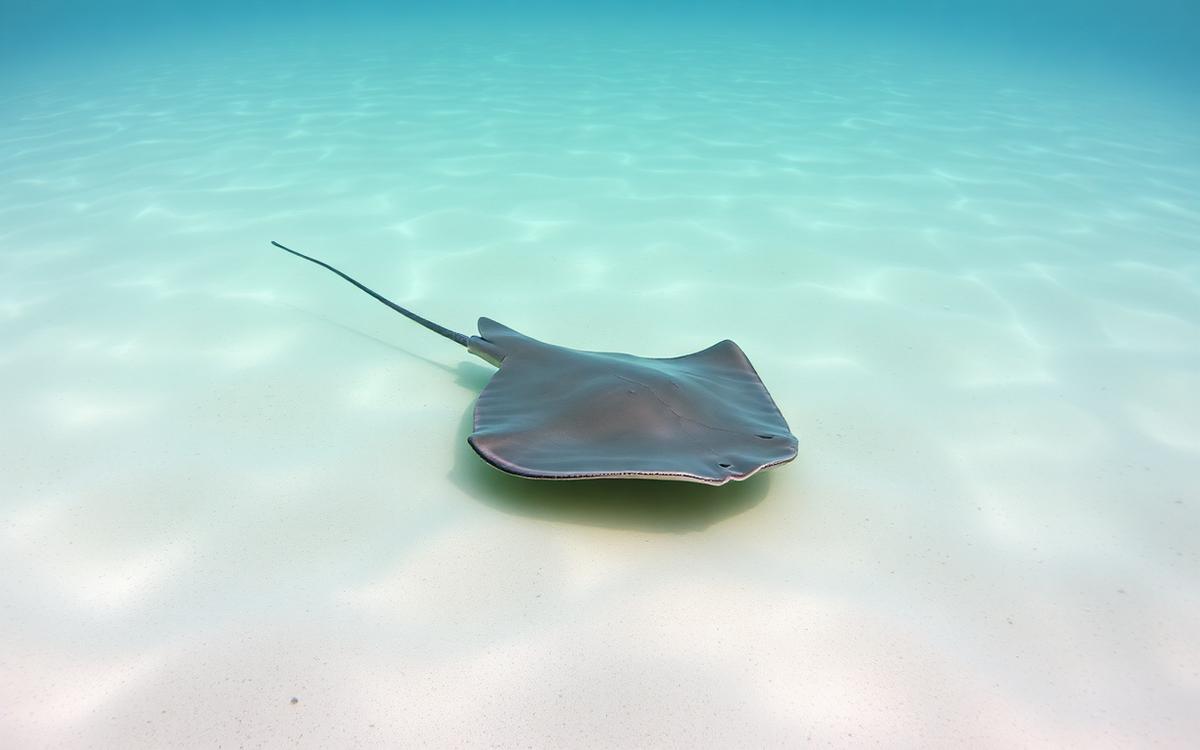
Reviewed against primary toxinology literature and IUCN assessments. This article is educational and is not medical advice — in an emergency contact your local poison centre or emergency services.
Stingrays are generally shy, bottom-dwelling animals that would rather glide away than confront a person. But when someone steps directly on a ray resting camouflaged in sand, its defensive reflex kicks in: a rapid upward whip of the tail that drives a serrated, venom-coated barb into the intruder's foot or lower leg.
The result is a combination of physical trauma and venom effect, a barbed puncture wound plus a toxin that causes intense pain, swelling, and sometimes systemic symptoms. Understanding the right first aid, especially the well-established value of hot water immersion, can make a significant difference in comfort and recovery, and a simple habit known as the 'stingray shuffle' can prevent the injury from happening at all.
Why Most Stingray Injuries Are Accidental
Stingrays often rest partially buried in sand in shallow coastal waters, using camouflage to avoid predators and ambush prey. They are not aggressive and typically swim away when they sense a person approaching through vibrations in the water.
Injuries almost always occur when a swimmer or wader steps directly on top of a ray without warning, triggering an instinctive defensive strike rather than a predatory attack.
- Most injuries affect the feet, ankles, or lower legs
- The barb is a serrated, venom-coated spine near the base of the tail
- Injuries can also occur to hands and arms when handling caught rays
The Barb: Trauma Plus Toxin
A Two-Part Injury
A stingray injury is unusual among marine envenomations because it combines mechanical trauma with venom exposure. The serrated barb causes a jagged puncture or laceration, and the venom released along the barb's grooves triggers intense localized pain, swelling, and sometimes systemic reactions.
The venom itself contains a mix of proteins that affect local tissue and blood vessels, contributing to the immediate, often described as excruciating, pain that follows a strike.
Recognizing a Stingray Injury
- Immediate, severe pain at the wound site, often worse than the visible injury suggests
- Bleeding and a jagged or torn puncture wound
- Swelling, redness, and warmth around the area
- Nausea, weakness, or dizziness in more significant envenomations
- Retained barb fragments in the wound in some cases
Editor's note: Rare deaths from stingray injuries, most famously involving direct chest or abdominal punctures, are due to physical trauma to vital structures rather than venom toxicity alone.
First Aid Steps
- Control any bleeding with direct pressure
- Immerse the wound in hot water, around 42-45°C, for 30-90 minutes to ease pain and help break down venom proteins
- Carefully check for and remove any visible barb fragments if possible
- Clean the wound thoroughly to reduce infection risk
- Seek medical care for wound assessment, tetanus prophylaxis, and antibiotics if needed
Wounds to the torso, chest, or abdomen, or any injury involving heavy bleeding or signs of deep tissue damage, require emergency medical evaluation rather than field first aid alone.
The Stingray Shuffle
The single most effective way to avoid a stingray injury is a simple habit: shuffling your feet along the sandy bottom instead of taking normal steps when wading in shallow coastal waters where rays may be present.
This 'stingray shuffle' creates vibrations that alert a buried ray to your approach, giving it time to swim away before contact occurs, and it is widely recommended by lifeguards and marine safety programs in ray-prone areas.
Key takeaways
- Most stingray injuries happen when someone steps directly on a buried ray
- The barb causes both a jagged wound and a venom reaction, unlike many pure-toxin stings
- Hot water immersion around 42-45°C is the primary first aid measure
- Torso or chest injuries require emergency care due to trauma risk beyond venom
- Shuffling your feet in shallow water, the 'stingray shuffle,' prevents most injuries
Frequently asked questions
Are stingray injuries usually fatal?+
No, fatalities are extremely rare and generally involve direct trauma to the chest or abdomen rather than the venom itself.
What is the stingray shuffle?+
It's a technique of sliding your feet along the sandy bottom rather than stepping normally, which alerts buried rays to move away before you make contact.
Should you remove a stingray barb yourself?+
Superficial fragments can sometimes be removed carefully, but deep or embedded barbs, especially near the torso, should be handled by medical professionals.
Why does hot water help a stingray wound?+
The venom's proteins are heat-sensitive, and immersing the wound in hot tolerable water helps denature the venom and significantly reduce pain.
Do all stingrays have venomous barbs?+
Most stingray species have one or more venomous barbed spines near the base of the tail, though barb size and venom potency vary by species.