Marine Venomous Life · Supporting guide
Lionfish Stings: Beautiful, Invasive, and Venomous
Lionfish combine striking beauty with a set of venomous spines, and their explosive spread through the Atlantic and Caribbean has made stings increasingly common.
 By Mahmoud OsamaSenior Wildlife Researcher & Editor-in-ChiefPublished 25 November 2025 · Updated 25 November 2025 · 7 min read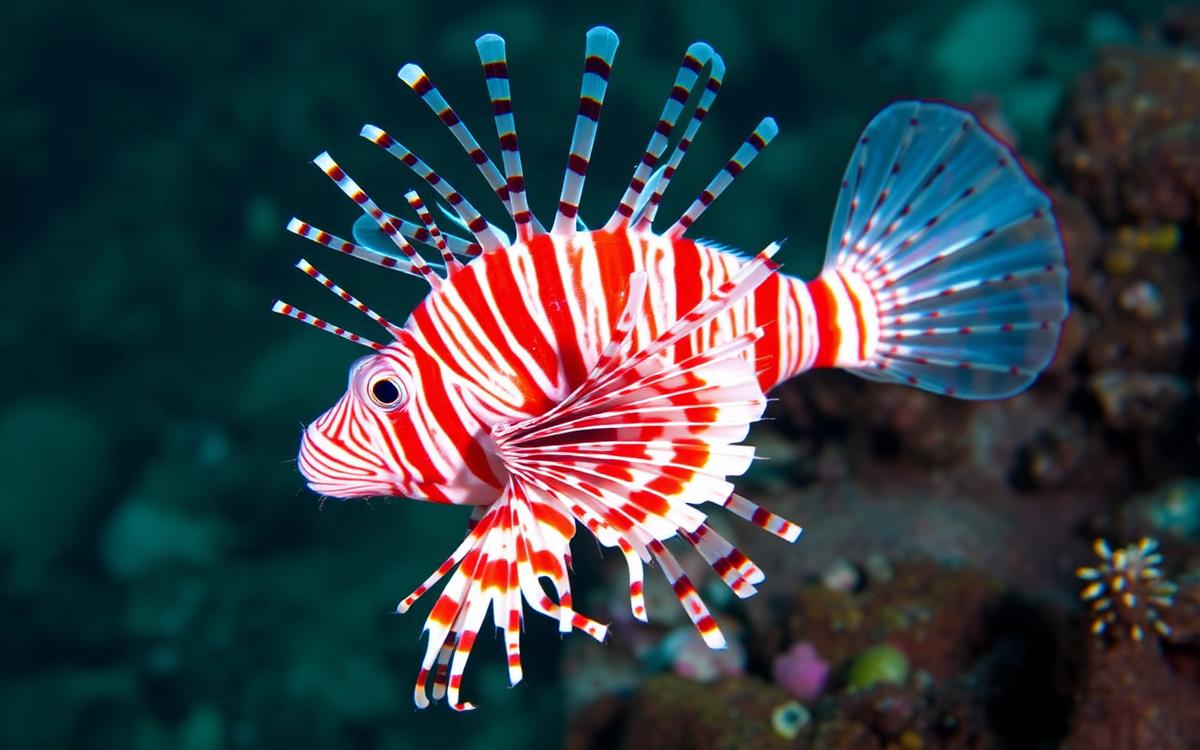
Reviewed against primary toxinology literature and IUCN assessments. This article is educational and is not medical advice — in an emergency contact your local poison centre or emergency services.
Lionfish are among the most recognizable reef fish in the world, with dramatic striped bodies and fan-like fins that make them popular in aquariums. But those same fins conceal up to eighteen venomous spines, and in the past few decades lionfish have become a major invasive species problem across the western Atlantic, Caribbean, and Gulf of Mexico, dramatically increasing human encounters and stings.
A lionfish sting is rarely life-threatening but can cause severe pain, swelling, and in some cases systemic symptoms, particularly in people who are stung multiple times or who have underlying health conditions. Understanding proper first aid matters both for divers and snorkelers and for the growing number of people involved in lionfish removal and consumption programs meant to control the invasion.
Venomous Spines and an Invasive Success Story
Lionfish (primarily Pterois volitans and Pterois miles) are native to the Indo-Pacific but were introduced to Atlantic waters, likely through aquarium releases, beginning in the 1980s. With no natural predators in their new range and prolific reproduction, they have spread rapidly across reefs from the southeastern United States through the Caribbean.
Up to 18 venomous spines run along the dorsal, pelvic, and anal fins. Each spine is covered by an integumentary sheath that, when compressed by contact, ruptures and forces venom along grooves into the wound.
- Native range: Indo-Pacific reefs
- Invasive range: southeastern US Atlantic coast, Gulf of Mexico, and Caribbean
- Considered one of the most damaging marine invasive species due to voracious predation on native reef fish
What the Venom Does
Protein Toxins and Immediate Pain
Lionfish venom contains a mix of proteins that trigger intense localized pain, thought to work partly through effects on nerve endings and local blood vessels, causing swelling and tissue reaction at the sting site.
Unlike stonefish, lionfish envenomation is rarely severe enough to be life-threatening on its own, but the pain can be significant and disproportionate to the visible wound.
Recognizing a Lionfish Sting
- Immediate, intense, throbbing pain that can last for hours
- Redness, swelling, and warmth around the puncture site
- Sweating, nausea, or dizziness in more significant stings
- Rarely, more severe systemic reactions in sensitive individuals
Editor's note: Multiple spine punctures at once, common when handling a lionfish incorrectly, can intensify both local and systemic symptoms.
First Aid and When to Seek Care
As with stonefish and many other venomous fish, hot water immersion is the standard first-line treatment because it helps break down the heat-sensitive proteins in the venom.
- Immerse the affected area in hot (not scalding) water, generally 42-45°C, for 30-90 minutes
- Clean the wound thoroughly and remove any visible spine fragments
- Take over-the-counter pain relief as needed for residual discomfort
- Seek medical attention for signs of infection, spreading redness, or systemic symptoms
Lionfish Removal and Safe Handling
Because lionfish threaten native reef ecosystems by consuming huge numbers of small fish and invertebrates, many coastal regions run organized removal and 'eat the invasion' programs encouraging divers to hunt and harvest lionfish for food.
Proper handling tools, such as puncture-resistant gloves and specialized clipping shears, are essential to avoid stings during capture and cleaning, since the venom remains active even after the fish is dead.
Key takeaways
- Lionfish carry up to 18 venomous spines along their dorsal, pelvic, and anal fins
- Stings cause intense localized pain but are rarely life-threatening
- Hot water immersion around 42-45°C is the standard first aid response
- Lionfish are a major invasive species in the Atlantic and Caribbean
- Venom remains active in dead fish, so protective gear is essential during handling
Frequently asked questions
Are lionfish stings dangerous?+
They are very painful but rarely life-threatening for healthy adults, though people with allergies or health conditions can experience more severe reactions.
What is the best first aid for a lionfish sting?+
Immerse the affected area in hot water tolerable to the skin, generally 42-45°C, for 30 to 90 minutes to help break down the venom and ease pain.
Can a dead lionfish still sting you?+
Yes, the venom in the spines can remain active even after the fish has died, so protective gloves and tools should be used when handling one.
Why are lionfish considered invasive?+
They were introduced to Atlantic and Caribbean waters outside their native Indo-Pacific range, where they have no natural predators and consume large numbers of native reef fish.
Is it safe to eat lionfish?+
Yes, the flesh is not venomous and is considered safe and tasty to eat once the venomous spines are carefully removed during cleaning.