Marine Venomous Life · Cornerstone guide
Cone Snail Conotoxins: The Ocean's Precision Venom
Cone snails deliver one of the most chemically sophisticated venoms in nature, a cocktail of conotoxins so precise it has inspired new painkillers.
 By Mahmoud OsamaSenior Wildlife Researcher & Editor-in-ChiefPublished 5 September 2025 · Updated 5 September 2025 · 8 min read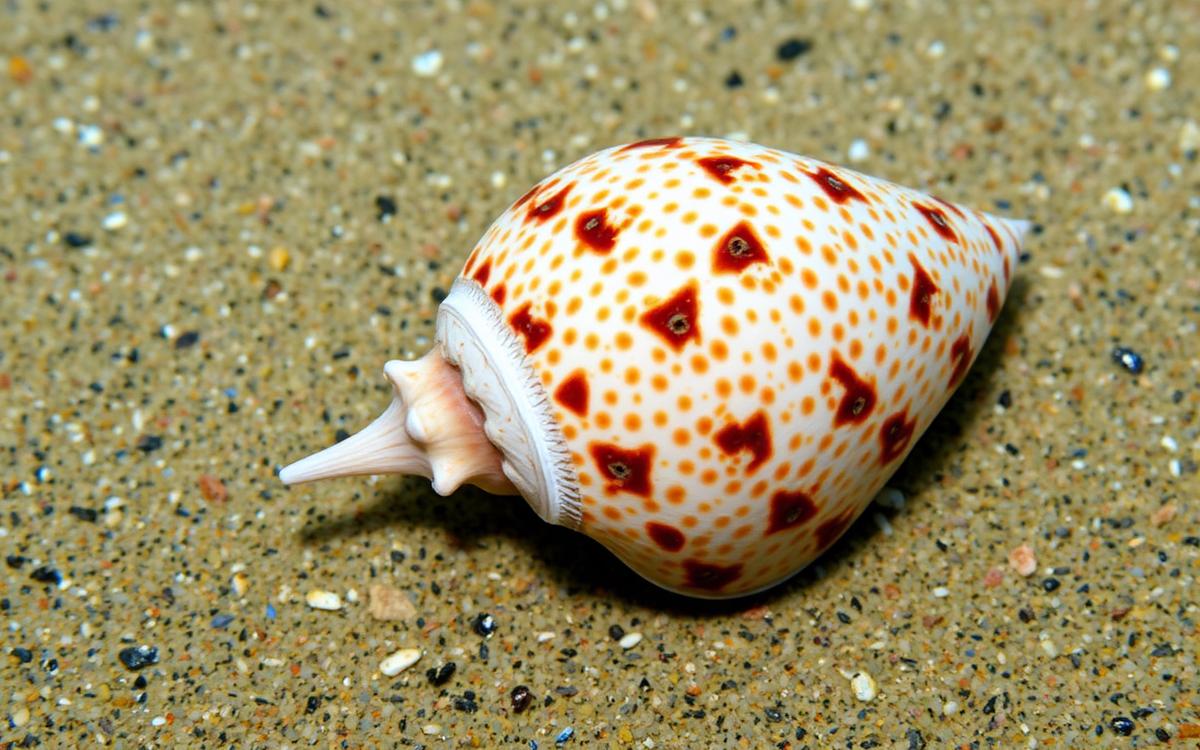
Reviewed against primary toxinology literature and IUCN assessments. This article is educational and is not medical advice — in an emergency contact your local poison centre or emergency services.
Cone snails look like harmless, beautifully patterned shells scattered across tide pools and reef flats, but they are ambush predators armed with one of the most pharmacologically complex venoms known. Instead of a single toxin, each species produces a unique cocktail of dozens to hundreds of small peptides called conotoxins, each tuned to jam a specific nerve or muscle receptor.
That precision has made cone snails a magnet for both toxinologists and drug developers. A conotoxin from Conus magus became the basis for ziconotide, a non-opioid painkiller. But the same chemistry that fascinates researchers can be dangerous in the wild, and a handful of species have caused human deaths, earning some the nickname 'cigarette snails' for the idea that you have just enough time to smoke one before symptoms escalate.
A Harpoon Built From a Tooth
Cone snails hunt using a radula tooth modified into a hollow, barbed harpoon. The snail extends a flexible proboscis, fires the harpoon into prey, and injects venom through the hollow shaft in a fraction of a second.
Fish-hunting species use fast-acting toxins that can paralyze prey almost instantly, a necessity since a fish could otherwise swim away with the harpoon still attached. Worm- and mollusk-hunting species tend to use slower venom cocktails suited to less mobile prey.
- Over 700 recognized cone snail species live in tropical and subtropical waters
- Each species' venom contains a distinct mixture of conotoxins
- Venom composition can shift with prey type, age, or hunting context
Why Conotoxins Are So Selective
Small Peptides, Big Targets
Conotoxins are short peptide chains, often 10 to 30 amino acids, stabilized by disulfide bonds that lock them into rigid three-dimensional shapes. This rigidity lets them bind with extreme selectivity to specific ion channels or receptors in nerve and muscle tissue.
Some conotoxins block sodium channels to halt nerve signaling, others target calcium or potassium channels, and still others interfere with acetylcholine receptors at the neuromuscular junction. Combined, a single sting can attack the nervous system on multiple fronts simultaneously.
What a Sting Does to People
Most cone snail stings in humans happen when someone picks up a live shell, often while shell collecting or wading in shallow reef flats. The sting itself may feel like a sharp prick, sometimes barely noticeable at first.
- Localized pain, swelling, and numbness at the sting site
- Tingling that can spread outward from the wound
- Muscle weakness or difficulty swallowing in serious cases
- Respiratory paralysis in the most severe, fish-hunting species stings
Editor's note: Species in the genus Conus with piscivorous (fish-eating) diets, such as the geography cone and textile cone, are responsible for the most serious documented human envenomations.
First Aid and Medical Response
There is no commercial antivenom for cone snail stings, so treatment is entirely supportive. Anyone stung should be moved from the water, kept as still as possible to slow venom spread, and monitored closely for breathing difficulty.
- Call emergency services immediately after any cone snail sting
- Keep the affected limb still and below heart level if possible
- Be prepared for the possibility of respiratory support or ventilation
- Do not apply tight tourniquets; use pressure immobilization only if trained
From Venom to Medicine
The same selectivity that makes conotoxins dangerous also makes them valuable drug leads. Ziconotide, derived from a Conus magus toxin, blocks N-type calcium channels involved in pain signaling and is used for severe chronic pain when other treatments fail.
Researchers continue screening conotoxin libraries for candidates targeting epilepsy, cardiac arrhythmia, and other conditions where precise ion channel control matters.
Key takeaways
- Cone snails inject venom through a modified, harpoon-like radula tooth
- Each species produces a unique cocktail of dozens of conotoxin peptides
- Fish-hunting cone snail species pose the greatest risk to humans
- There is no antivenom; treatment is supportive with close respiratory monitoring
- Conotoxin research has already produced the pain medication ziconotide
Frequently asked questions
Can a cone snail sting kill you?+
Yes, though rarely. Fish-hunting species like the geography cone have caused documented human deaths from respiratory paralysis, though most stings are not fatal.
Is there an antivenom for cone snail stings?+
No commercial antivenom exists. Treatment focuses on supportive care, including monitoring breathing and providing ventilation support if needed.
Why do cone snails have such varied venom?+
Different species hunt different prey, fish, worms, or other mollusks, and their venom cocktails have evolved to subdue those specific targets efficiently.
Are all cone snails dangerous to humans?+
No. Many smaller, worm-hunting species pose little threat to people, but any live cone snail should be handled with extreme caution or not at all.
How did cone snail venom lead to a medicine?+
A single conotoxin from Conus magus was isolated, synthesized, and developed into ziconotide, a calcium channel blocker used to treat severe chronic pain.