Spiders & Scorpions · Cornerstone guide
Scorpion Antivenom Around the World: Access, Gaps, and Progress
Effective scorpion antivenoms exist for most medically significant species, but access remains deeply uneven between wealthy and low-resource regions.
 By Mahmoud OsamaSenior Wildlife Researcher & Editor-in-ChiefPublished 5 December 2025 · Updated 5 December 2025 · 8 min read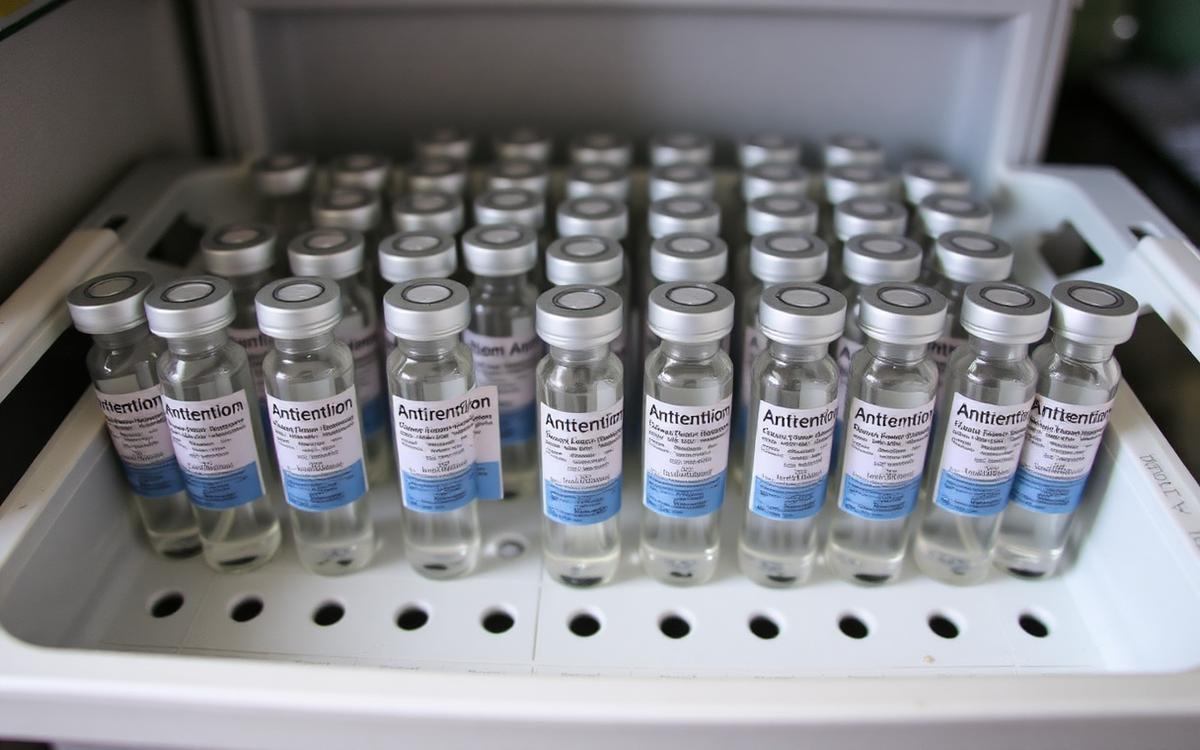
Reviewed against primary toxinology literature and IUCN assessments. This article is educational and is not medical advice — in an emergency contact your local poison centre or emergency services.
Of the roughly 2,500 known scorpion species worldwide, only about two dozen are considered medically significant enough to cause severe or potentially fatal envenomation in humans. For these species, antivenom has proven to be one of the most effective tools for reducing deaths and severe complications, particularly in children. Yet global access to scorpion antivenom remains starkly uneven, shaped by where the manufacturing facilities exist, how well-funded regional health systems are, and how remote sting victims live from the nearest treatment center.
This piece surveys how scorpion antivenom is produced, which regions have relatively strong access, where major gaps persist, and what public health experts are doing to close them.
How Scorpion Antivenom Is Made
Scorpion antivenoms are typically produced by immunizing horses or sheep with small, controlled doses of venom, then harvesting and purifying the antibodies these animals produce. This process, largely unchanged in principle for over a century, remains the standard method used by major producers worldwide.
- Venom is collected from scorpions, often via electrical stimulation, in specialized facilities
- Animals are immunized with gradually increasing venom doses to build antibody response
- Plasma is collected, purified, and processed into F(ab')2 or whole IgG antivenom products
- Products undergo quality testing before being distributed to hospitals and clinics
Because venom composition varies significantly even within the same genus, antivenoms are often only effective against the specific species or closely related species used to produce them, complicating global standardization.
Regional Availability
Access to scorpion antivenom correlates closely with both the local burden of medically significant species and the strength of regional health infrastructure.
Where antivenom is relatively accessible
- United States: Anascorp, FDA-approved in 2011, is used for Arizona bark scorpion stings and stocked in Southwestern hospitals
- Mexico: multiple antivenoms are produced domestically for Centruroides species and widely distributed through public health systems
- North Africa: Algeria, Tunisia, and Morocco produce and distribute antivenoms against Androctonus and related genera through national health ministries
- India: antivenom for Hottentotta tamulus is manufactured domestically and paired with prazosin therapy in hospital protocols
Persistent Access Gaps
Despite these successes, significant gaps remain, particularly in rural and low-income regions where the burden of scorpion stings is often highest.
- Distribution logistics: rural clinics in Sub-Saharan Africa and parts of South Asia often lack cold-chain storage needed to keep antivenom viable
- Cost: antivenom production and import costs can place treatment out of reach for under-resourced public health systems
- Species mismatch: antivenom developed for one region's scorpion species may have limited effectiveness against related species elsewhere
- Awareness gaps: rural communities may not seek care quickly enough for antivenom to be most effective, since timing after envenomation matters significantly
Editor's note: The WHO has flagged scorpion envenoming, alongside snakebite, as a neglected public health issue in several low-resource regions where treatment access lags well behind medical need.
Progress and Research Directions
Researchers are pursuing several strategies to improve global antivenom access, including recombinant antivenom production that does not rely on live animal immunization, broader-spectrum antivenoms effective against multiple related species, and improved thermostable formulations that reduce cold-chain dependency.
International collaborations between universities, national health ministries, and organizations like the WHO have also focused on improving rural clinic stocking and training healthcare workers to recognize and triage scorpion sting cases quickly, which has measurably reduced fatality rates in several pilot programs.
Key takeaways
- Antivenom exists for most of the roughly two dozen medically significant scorpion species worldwide.
- Production still primarily relies on immunizing horses or sheep with venom to harvest antibodies.
- Access is strongest in the US, Mexico, North Africa, and India, where domestic production exists.
- Rural and low-income regions face cold-chain, cost, and awareness barriers to timely treatment.
- Recombinant and thermostable antivenom research aims to close global access gaps.
Frequently asked questions
Is scorpion antivenom available everywhere in the world?+
No, access varies significantly by region, with the strongest availability in areas with domestic production such as the US, Mexico, North Africa, and India.
How is scorpion antivenom made?+
It is typically produced by immunizing horses or sheep with venom and then purifying the antibodies from their plasma.
Why doesn't one antivenom work for all scorpion species?+
Venom composition varies significantly between species and even regional populations, so antivenoms are often only effective against closely related species.
What is being done to improve antivenom access in rural areas?+
Research into thermostable formulations, recombinant production, and improved rural clinic training and stocking programs are underway in several countries.
Does antivenom guarantee survival after a severe scorpion sting?+
It significantly reduces the risk of severe complications and death but works best when administered promptly alongside supportive medical care.