Reptiles & Amphibians · Supporting guide
Does the Komodo Dragon Have Venom? The Ongoing Debate
For decades, scientists assumed Komodo dragons killed prey with bacteria-laden mouths. Newer research suggests venom glands play a real role too.
 By Mahmoud OsamaSenior Wildlife Researcher & Editor-in-ChiefPublished 1 November 2025 · Updated 10 January 2026 · 7 min read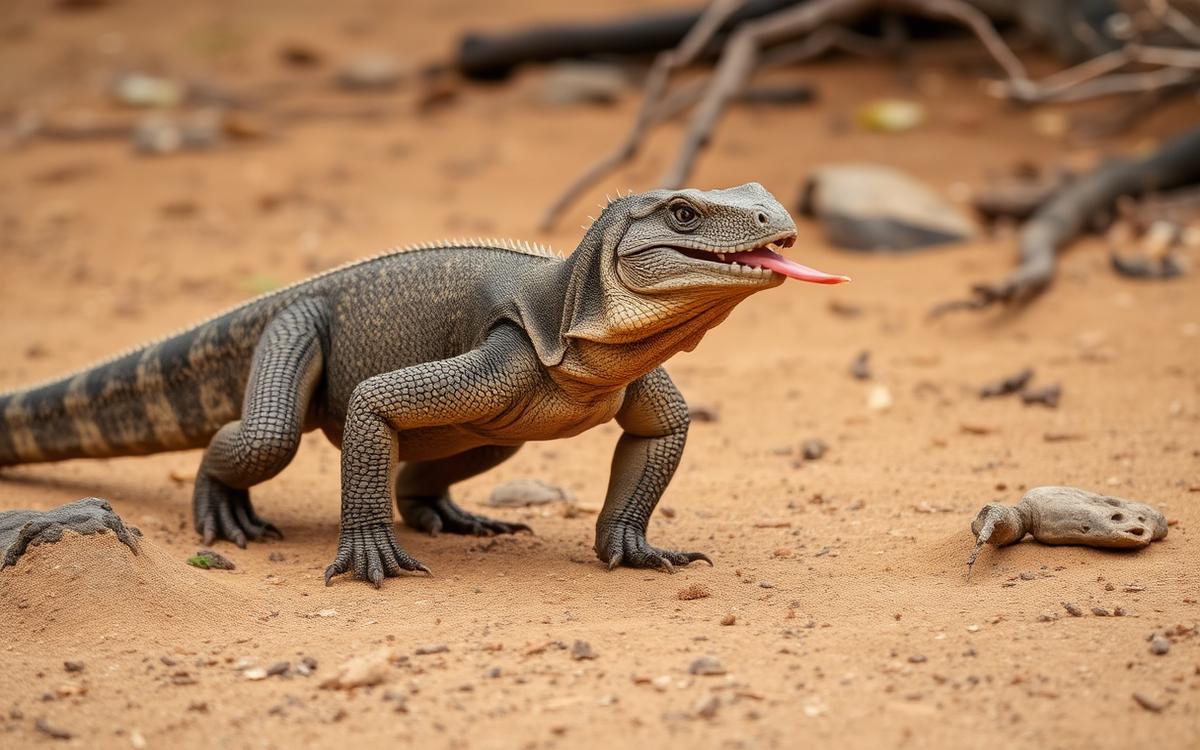
Reviewed against primary toxinology literature and IUCN assessments. This article is educational and is not medical advice — in an emergency contact your local poison centre or emergency services.
The Komodo dragon (Varanus komodoensis), the world's largest living lizard, has long fascinated scientists over exactly how it kills prey as large as water buffalo. For decades the dominant theory held that its bite introduced dangerous bacteria from decaying meat in its mouth, causing fatal sepsis in bitten prey over the following days. That theory was long taught as settled fact.
A 2009 study changed the conversation by identifying venom glands in the Komodo dragon's lower jaw, secreting compounds that inhibit blood clotting and lower blood pressure, similar to venom systems in some snakes. The debate over how much venom actually contributes to a kill, versus blood loss from the dragon's serrated teeth and raw physical trauma, continues among researchers today.
The Bacteria Theory
For much of the 20th century, researchers believed Komodo dragons relied on over 50 strains of virulent bacteria living in their saliva, which would infect a bitten animal and lead to fatal septicemia within days, allowing the dragon to track and finish off weakened prey using its powerful sense of smell.
This theory was popularized in nature documentaries and textbooks, but more recent studies of Komodo dragon mouths found bacterial loads similar to those of other wild carnivores, casting doubt on bacteria being the primary killing mechanism.
Discovery of Venom Glands
In 2009, researchers led by Bryan Fry published findings identifying venom glands in the lower jaws of Komodo dragons, containing compounds that prevent blood clotting, lower blood pressure, and induce shock, functionally similar to venom systems documented in some monitor lizards and snakes.
- Venom compounds identified: anticoagulants and hypotension-inducing proteins
- Effect on prey: excessive bleeding and shock following a bite
- Combined with serrated teeth causing significant blood loss
How a bite likely works
Current understanding suggests the Komodo dragon's serrated teeth create deep, bleeding wounds, and venom secretions may then impair clotting and blood pressure, weakening large prey like deer or water buffalo over hours or days until the dragon or a group of dragons can finish it off.
The Scientific Debate Today
Not all researchers agree on how significant venom is compared to mechanical trauma and blood loss from the bite itself. Some argue the primary killing mechanism is still blood loss and shock from the wound, with venom playing a secondary, amplifying role rather than being the sole cause of death.
This is a case where the science is genuinely still being refined, and cautious language ('appears to,' 'may contribute to') is more accurate than definitive claims about exactly how much venom matters in the wild.
Risk to Humans
Komodo dragon attacks on humans are rare but documented, mostly occurring on Komodo and Rindja islands in Indonesia where the species is endemic. Bites can cause severe bleeding, and both potential venom effects and infection risk make prompt medical treatment essential.
- Native range: Komodo, Rinca, Flores, and a few nearby Indonesian islands
- IUCN status: Endangered, with a shrinking wild population
- Estimated wild population: roughly 3,000-3,700 individuals
Key takeaways
- Komodo dragons were long believed to kill with bacteria-laden bites alone.
- 2009 research identified venom glands producing anticoagulant compounds.
- Scientists still debate how much venom versus blood loss drives a kill.
- Bites combine deep, serrated wounds with possible venom effects.
- The species is Endangered, restricted to a few Indonesian islands.
Frequently asked questions
Do Komodo dragons actually have venom?+
Research has identified venom glands producing anticoagulant and blood-pressure-lowering compounds, though its exact role in kills is still debated.
Did scientists disprove the bacteria theory?+
Studies found Komodo dragon mouth bacteria are not unusually dangerous compared to other carnivores, weakening but not entirely eliminating the older theory.
Can a Komodo dragon kill a human?+
Yes, rare attacks have caused human deaths, primarily on the Indonesian islands where the species lives.
How endangered are Komodo dragons?+
The IUCN lists them as Endangered, with an estimated wild population of a few thousand individuals.