Reptiles & Amphibians · Cornerstone guide
King Cobra: The World's Longest Venomous Snake
The king cobra is the longest venomous snake on Earth, a specialist snake-eater whose neurotoxic bite and dramatic hood display have made it a symbol of both fear and fascination.
 By Mahmoud OsamaSenior Wildlife Researcher & Editor-in-ChiefPublished 10 September 2025 · Updated 2 November 2025 · 8 min read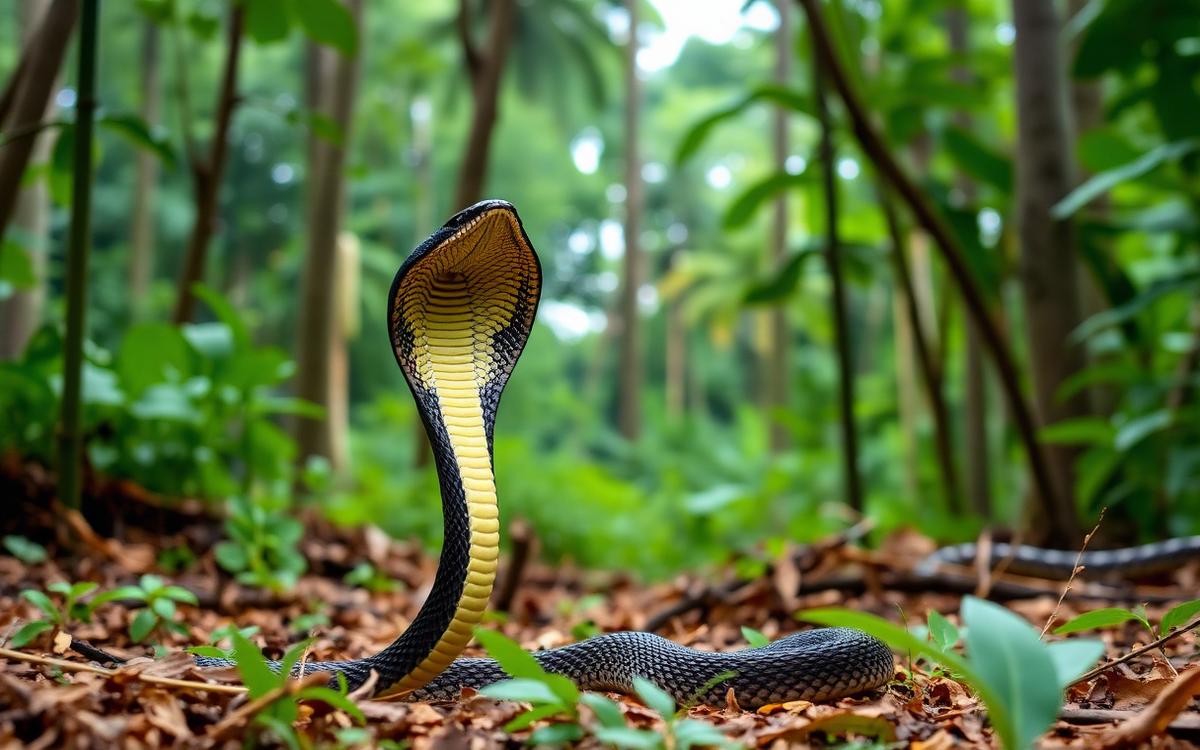
Reviewed against primary toxinology literature and IUCN assessments. This article is educational and is not medical advice — in an emergency contact your local poison centre or emergency services.
The king cobra (Ophiophagus hannah) is not a true cobra of genus Naja but a genus unto itself, and it earns its royal name honestly: individuals can exceed 5.5 meters, making it the longest venomous snake in the world. Found across the forests of India, Southeast Asia, and southern China, the king cobra is a shy, wide-ranging predator that feeds almost exclusively on other snakes, including venomous species like kraits and even smaller cobras.
Its venom is a potent cocktail of neurotoxins and cardiotoxins delivered in large volumes, capable of killing an adult elephant in reports from local folklore, though such claims are difficult to verify. What is well documented is that untreated bites can cause respiratory paralysis within hours, and the species is responsible for a small but serious share of snakebite fatalities in parts of Asia. This guide covers its biology, venom effects, and the conservation pressures now shrinking its range.
Biology and Identification
King cobras are olive, brown, or black with faint yellowish crossbands, and they are distinguished from true cobras by the pair of large scales (occipitals) behind their eyes. They are unique among snakes in building nests of leaf litter for their eggs, which the female guards fiercely until hatching.
- Average length: 3–4 meters, with verified records above 5.5 meters
- Diet: almost exclusively other snakes, occasionally monitor lizards
- Habitat: dense forest, bamboo thickets, and mangrove swamps
- Lifespan: up to 20 years in the wild
Hood display and defensive behavior
When threatened, a king cobra can lift a third of its body vertically, spread a narrow hood, and produce a distinctive low growl-like hiss, audible at a lower frequency than most snake hisses. Despite this dramatic warning, king cobras generally avoid confrontation and will retreat if given the chance.
Venom Composition and Clinical Effects
King cobra venom is primarily neurotoxic, containing three-finger toxins and phospholipase A2 enzymes that block neuromuscular transmission, alongside cardiotoxic components that can affect heart function. A single bite can deliver a very large venom yield compared to most other venomous snakes.
- Early symptoms: pain, swelling, drowsiness, blurred vision
- Progression: ptosis (drooping eyelids), difficulty swallowing, slurred speech
- Severe cases: respiratory paralysis requiring mechanical ventilation
- Onset: symptoms can progress within 30 minutes to a few hours
Editor's note: Bites from king cobras are medical emergencies; specific antivenom exists in India, Thailand, and Vietnam and should be sought immediately.
Range and Habitat
King cobras range from the Indian subcontinent through Southeast Asia to southern China and the Philippines, favoring dense, humid forest close to water. They are excellent swimmers and climbers, and their large home ranges make them sensitive to habitat fragmentation.
As forests are cleared for agriculture and plantations, king cobras increasingly turn up in villages and farmland, raising the risk of human encounters even though the species prefers to avoid people whenever possible.
Conservation Status
The IUCN currently lists the king cobra as Vulnerable, with populations declining due to deforestation, persecution, and collection for the skin and traditional medicine trade. Its low population density and large territory requirements make it especially vulnerable to habitat loss.
- Major threats: deforestation, road mortality, retaliatory killing
- Protected under CITES Appendix II
- Ecological role: controls populations of other snakes, including venomous species
Human Interactions and Safety
Despite its fearsome reputation, the king cobra causes relatively few human fatalities compared to other Asian venomous snakes, largely because it is shy and its habitat overlaps less with densely populated areas. Snake charmers and religious traditions in parts of India have long revered the species, complicating conservation messaging.
Anyone working or hiking in king cobra range should wear sturdy footwear, use a flashlight at night, and never attempt to handle or corner the snake, since a threatened individual defending a nest can become highly aggressive.
Key takeaways
- The king cobra is the world's longest venomous snake, reaching over 5.5 meters.
- It is the only snake known to build a nest for its eggs.
- Its venom is highly neurotoxic and can cause respiratory paralysis.
- It feeds almost exclusively on other snakes, including venomous species.
- The IUCN lists it as Vulnerable due to habitat loss and persecution.
Frequently asked questions
Is the king cobra the most venomous snake?+
No. Its venom is not the most toxic drop-for-drop, but it delivers a very large volume, making bites extremely dangerous.
Can a king cobra kill an elephant?+
Historical anecdotes describe elephant deaths from king cobra bites, but this is unverified and likely rare; the venom volume theoretically could affect large animals over time.
Where do king cobras live?+
They range across India, Southeast Asia, southern China, and the Philippines in dense forest habitats.
Is antivenom available for king cobra bites?+
Yes, specific antivenoms are produced in India, Thailand, and Vietnam, and rapid treatment greatly improves survival.
Do king cobras attack humans unprovoked?+
Rarely. They are shy and prefer to flee, but a nesting female or cornered individual can be defensive.