Reptiles & Amphibians · Supporting guide
Black Mamba: Speed, Venom, and Myth
The black mamba's reputation for speed and lethal venom is partly myth and partly hard biological fact, and separating the two matters for safety and conservation alike.
 By Mahmoud OsamaSenior Wildlife Researcher & Editor-in-ChiefPublished 24 September 2025 · Updated 10 November 2025 · 7 min read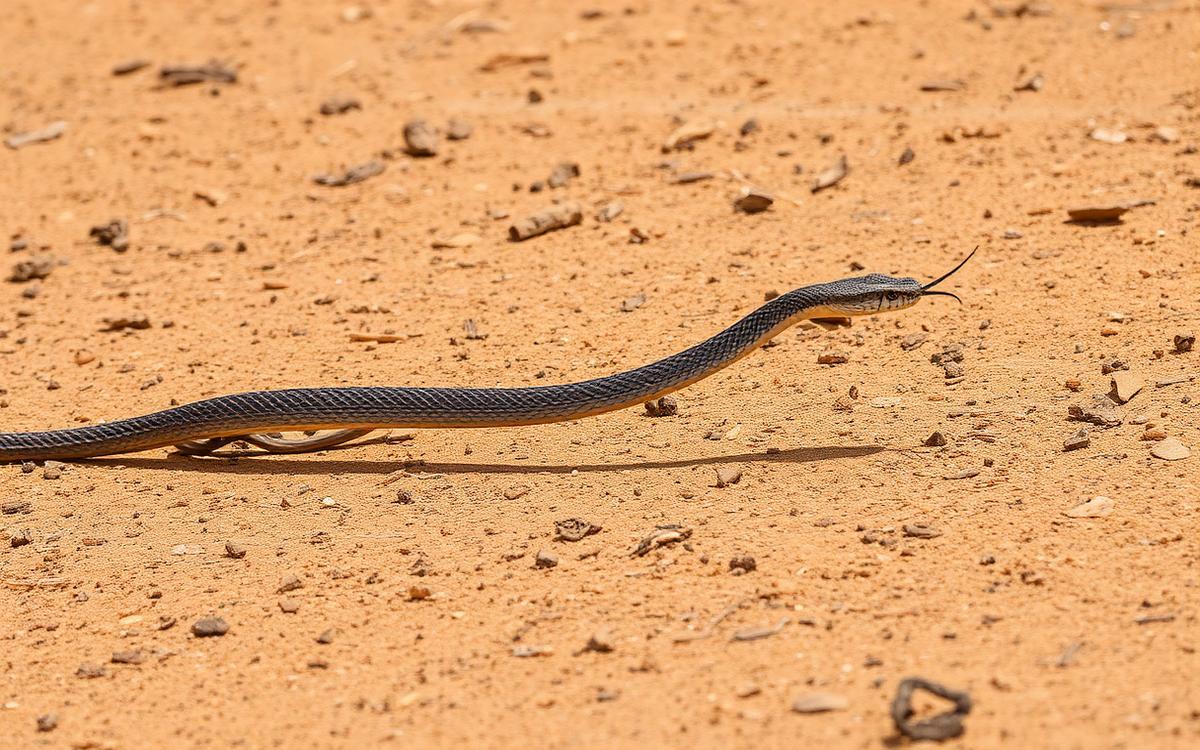
Reviewed against primary toxinology literature and IUCN assessments. This article is educational and is not medical advice — in an emergency contact your local poison centre or emergency services.
Few snakes carry as much folklore as the black mamba (Dendroaspis polylepis). Native to savanna and rocky hills across sub-Saharan Africa, it is often described as the fastest snake on Earth and one of the deadliest without treatment. Its actual color ranges from olive to gunmetal gray; the name comes from the blue-black lining of its mouth, displayed as a warning when threatened.
Untreated black mamba bites have historically carried an extremely high fatality rate due to fast-acting neurotoxins that can cause respiratory failure within hours. Modern antivenom has changed that outlook dramatically where it is available, but access gaps in rural Africa mean the snake remains a serious public health concern. This article separates the myths from the biology.
How Fast Is a Black Mamba, Really?
Black mambas are frequently cited as capable of speeds up to 20 km/h (about 12 mph) over short bursts on open ground, which is genuinely fast for a snake but far slower than the exaggerated claims of it outrunning a horse. Most encounters end with the snake fleeing toward cover rather than pursuing a person.
- Documented burst speed: roughly 11-20 km/h (7-12 mph)
- Prefers to escape rather than confront
- Highly alert and reactive to vibration and movement
Venom and Bite Symptoms
Black mamba venom contains dendrotoxins and other neurotoxic components that rapidly impair nerve signaling, along with cardiotoxic effects. Without antivenom, symptoms can progress from local tingling to full paralysis in a matter of hours.
- Early signs: metallic taste, tingling around mouth, dizziness
- Progression: drooping eyelids, difficulty breathing, excessive salivation
- Without treatment: respiratory failure can occur within 7-15 hours
Editor's note: Immobilize the bitten limb, keep the person calm, and get to a hospital with antivenom as fast as possible; do not cut, suck, or apply a tourniquet.
Habitat and Behavior
Black mambas favor savanna, woodland, and rocky outcrops across eastern, central, and southern Africa, often occupying a fixed den or retreat that they return to repeatedly. They are diurnal hunters, feeding on small mammals and birds, and are excellent climbers despite their largely ground-dwelling habits.
Defensive posture
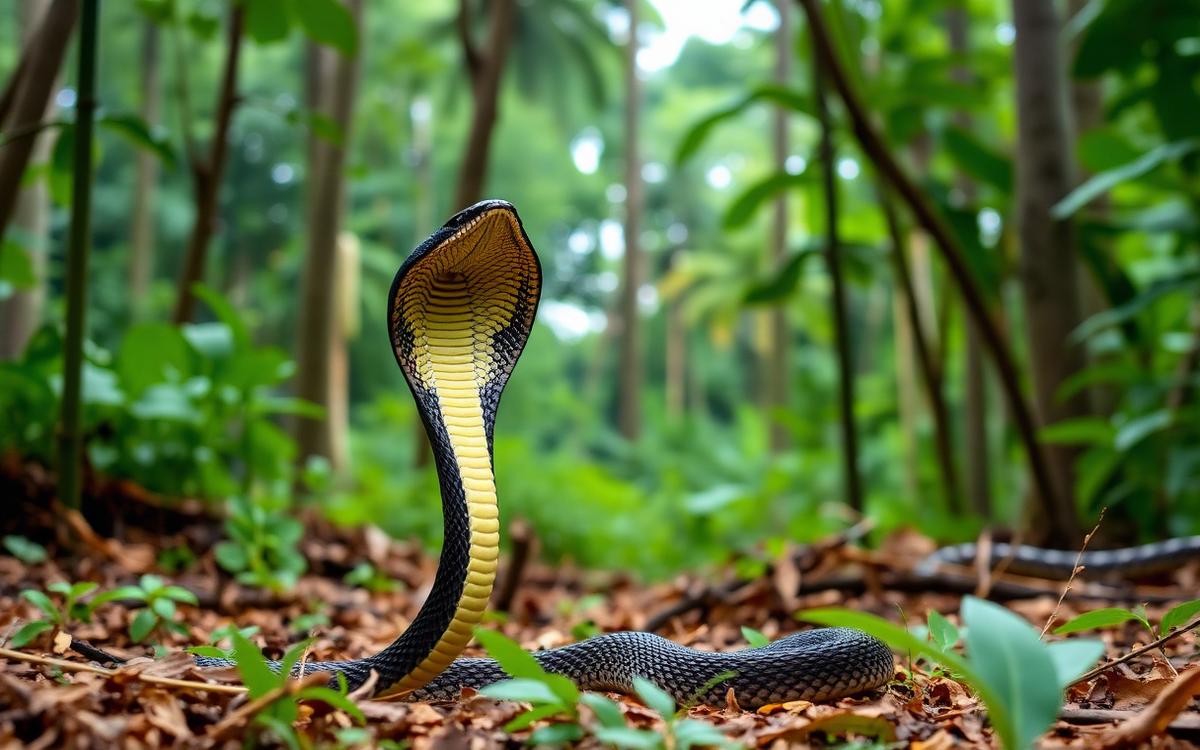
When cornered, a black mamba raises its head, spreads a narrow hood, opens its mouth to show the black interior, and may hiss loudly before striking. This display is a last warning rather than an act of aggression.
Conservation and Coexistence
The black mamba is not currently classified as threatened, and populations remain relatively stable across much of its range, though habitat conversion to farmland is increasing encounter rates in some regions. Community education programs in South Africa and Kenya focus on snake identification and safe removal to reduce retaliatory killing.
- Not IUCN-listed as threatened; considered Least Concern
- Threats: habitat loss, road mortality, killing out of fear
- Snake removal organizations relocate mambas found near homes
Key takeaways
- The black mamba is named for its black mouth lining, not its skin color.
- It can move up to roughly 20 km/h in short bursts, fast but not as fast as myths claim.
- Its venom is fast-acting and neurotoxic, historically with very high untreated fatality rates.
- Antivenom greatly improves survival when administered promptly.
- The species is not currently considered threatened.
Frequently asked questions
Is the black mamba the deadliest snake in the world?+
It is among the most feared due to potent, fast-acting venom, but 'deadliest' depends on metrics like bite fatality rate, venom toxicity, or total human deaths, where other species like the saw-scaled viper cause more deaths overall.
Can a black mamba outrun a human?+
It can move faster than an average human sprint over short distances, but it will almost always flee rather than chase.
What color is a black mamba?+
Its body is typically olive, gray, or brownish; only the inside of its mouth is black.
How quickly do symptoms appear after a bite?+
Symptoms can begin within 10-15 minutes and progress to severe paralysis within hours without treatment.