Rare & Endangered Animals · Cornerstone guide
Kakapo: New Zealand's Flightless Parrot and Its Slow Comeback
The world's heaviest parrot, flightless and nocturnal, the kakapo dropped to just over 50 birds before an intensive, individually managed recovery program brought numbers past 250.
 By Mahmoud OsamaSenior Wildlife Researcher & Editor-in-ChiefPublished 18 October 2025 · Updated 18 October 2025 · 9 min read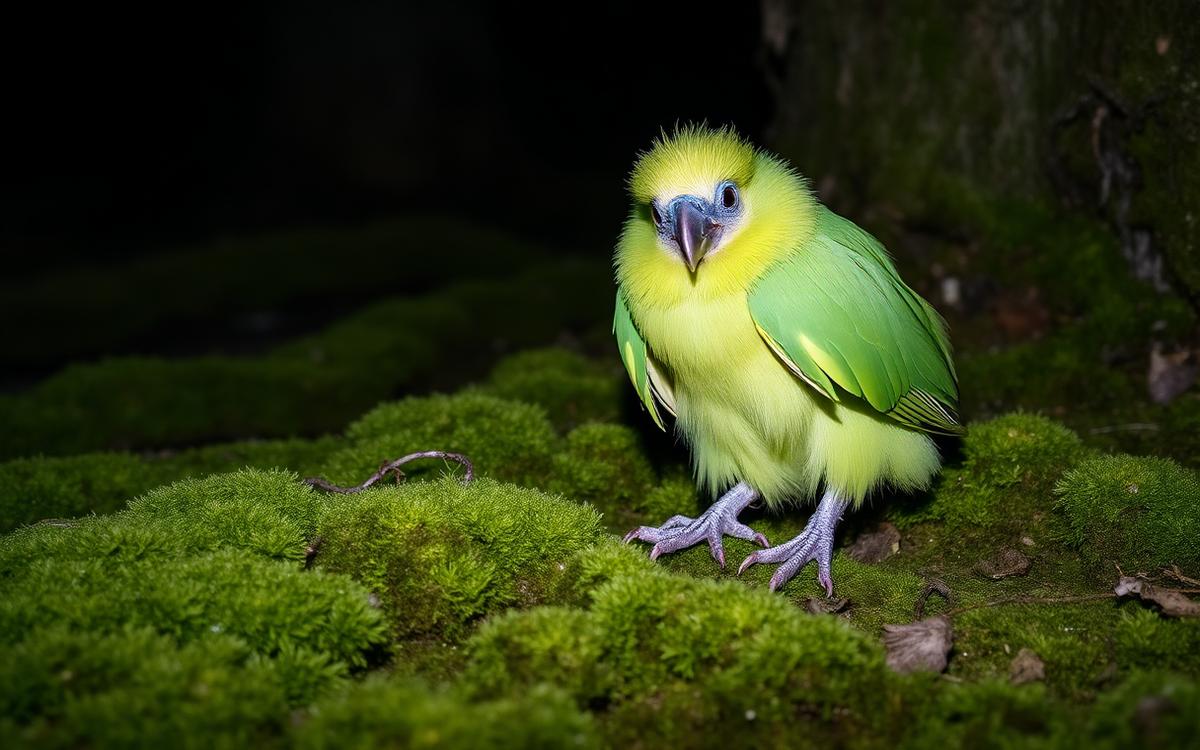
Reviewed against primary toxinology literature and IUCN assessments. This article is educational and is not medical advice — in an emergency contact your local poison centre or emergency services.
The kakapo (Strigops habroptilus) is a large, flightless, nocturnal parrot found only in New Zealand, notable for being the world's heaviest parrot species and one of its longest-lived, with individuals potentially reaching 60 years or more. Having evolved in an environment historically free of land mammal predators, the kakapo has no effective defense against introduced cats, rats, and stoats, a mismatch that pushed the species to the edge of extinction after European settlement.
By the 1990s the entire known kakapo population had fallen to just over 50 birds. Every individual is now known by name, tracked with radio transmitters, and managed under New Zealand's Kakapo Recovery Programme, one of the most intensive single-species conservation efforts in the world. As of recent counts, the population has climbed past 250 birds, almost all living on predator-free offshore islands, marking a genuine but still fragile recovery.
An Unusual Parrot
Kakapo are flightless, relying on strong legs to walk and climb rather than fly, and are almost entirely nocturnal, foraging on the ground and in trees for fruit, seeds, and plant material. Males use a unique low-frequency booming call during breeding displays, audible over long distances, to attract females to traditional display arenas called leks.
Breeding tied to rare masting events
Kakapo breeding is closely linked to the fruiting cycle of the rimu tree, which masts (produces abundant fruit) only every two to four years. This means kakapo often do not breed at all in most years, a natural constraint that makes population recovery inherently slow regardless of protection level.
Decline and Recovery
- Population low point: roughly 51 known individuals by 1995
- Current population: over 250 birds as of recent Kakapo Recovery Programme counts
- All birds now live on predator-free islands including Whenua Hou and Anchor Island
- Every individual bird is named, radio-tagged, and individually monitored
- Species found nowhere else in the world outside New Zealand
The recovery has relied on translocating all birds to predator-free islands, supplementary feeding to encourage more frequent breeding, artificial insemination in some cases, and hand-rearing of chicks when needed to boost survival rates.
Ongoing Threats
Introduced predators, particularly stoats, rats, and feral cats, remain the primary historical threat and the reason kakapo now live only on islands cleared of these species. Low genetic diversity within the surviving population also raises fertility and disease susceptibility concerns, illustrated dramatically by a 2019 aspergillosis fungal disease outbreak that killed multiple birds despite intensive veterinary intervention.
Editor's note: The kakapo is classified as Critically Endangered by the IUCN Red List.
Intensive Management
The Kakapo Recovery Programme, run by New Zealand's Department of Conservation alongside Ngāi Tahu and conservation partners, represents a model of individual-level wildlife management rarely matched elsewhere: nest cameras, health checks, genetic pairing decisions, and supplementary feeding stations are all used to maximize the survival and reproduction of what is still a small, closely related population.
Key takeaways
- The kakapo dropped to roughly 51 known birds in 1995 before recovering to over 250 today.
- It is the world's only flightless, nocturnal parrot and among the longest-lived bird species.
- Breeding is tied to rare rimu tree masting events, naturally limiting reproduction frequency.
- All surviving kakapo live on predator-free New Zealand islands under intensive individual monitoring.
- The IUCN lists the kakapo as Critically Endangered despite its numerical recovery.
Frequently asked questions
How many kakapo are left?+
As of recent Kakapo Recovery Programme counts, the population exceeds 250 birds, all living on predator-free islands in New Zealand.
Why can't kakapo fly?+
Kakapo evolved in an environment without land mammal predators, so they lost the need for flight over time, developing strong legs for walking and climbing instead.
Why is kakapo breeding so infrequent?+
Breeding is closely tied to the masting cycle of the rimu tree, which produces abundant fruit only every two to four years, limiting how often birds breed.
Where do kakapo live today?+
All kakapo now live on a small number of predator-free offshore islands in New Zealand, including Whenua Hou and Anchor Island.