Rare & Endangered Animals · Supporting guide
Hainan Gibbon: The World's Rarest Primate
Confined to a single forest reserve on Hainan Island, China, the Hainan gibbon has recovered from as few as nine individuals to roughly 35–40, still the lowest count of any primate species.
 By Mahmoud OsamaSenior Wildlife Researcher & Editor-in-ChiefPublished 20 November 2025 · Updated 20 November 2025 · 7 min read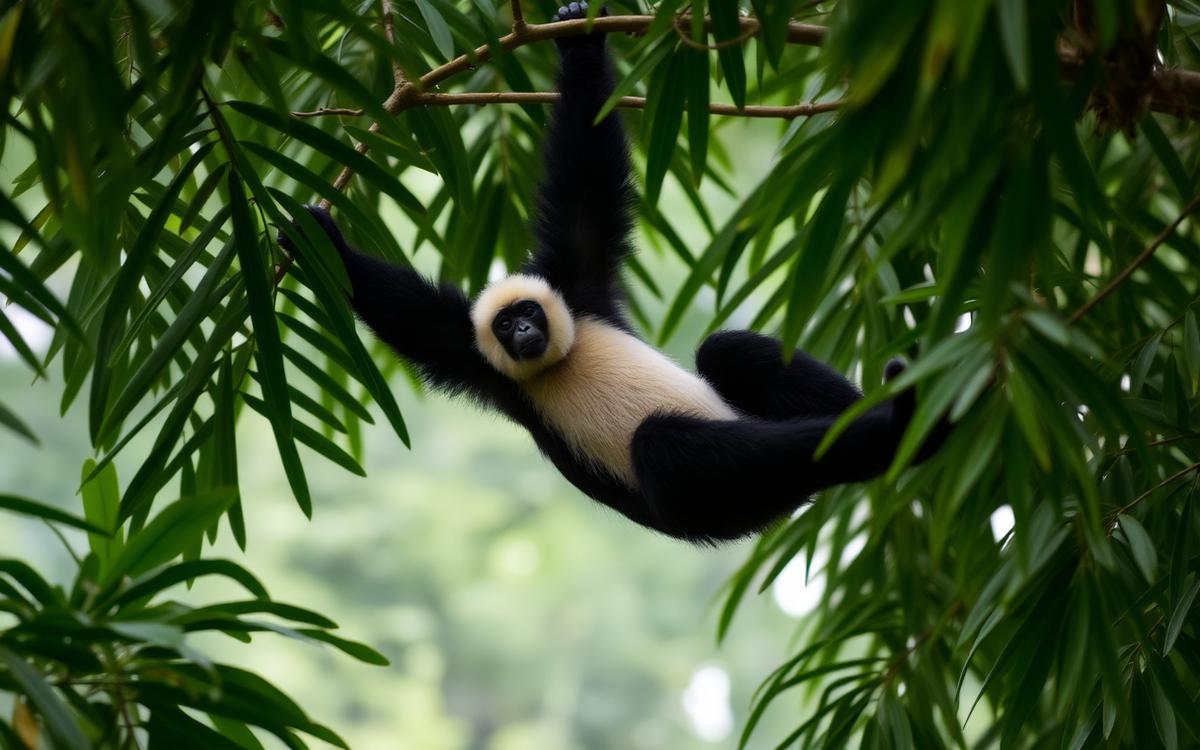
Reviewed against primary toxinology literature and IUCN assessments. This article is educational and is not medical advice — in an emergency contact your local poison centre or emergency services.
The Hainan gibbon (Nomascus hainanus) is widely regarded as the rarest primate on Earth, and quite possibly the rarest mammal species overall. It survives in a single remaining population within Bawangling National Nature Reserve on Hainan Island, off the southern coast of China. Once found across the island and into mainland China, the species was reduced by hunting and large-scale deforestation to as few as an estimated seven to nine individuals by the early 1980s.
Since then, protection efforts have allowed a slow recovery. Long-term monitoring by conservation groups and Chinese researchers puts the current population at roughly 35 to 40 individuals across a small number of family groups, still an extraordinarily small number for any primate species and one that leaves the Hainan gibbon perpetually vulnerable to any disturbance to its remaining forest habitat.
Biology and Social Structure
Hainan gibbons are arboreal, canopy-dwelling apes that rarely descend to the ground, moving through the forest by brachiation, swinging hand over hand between branches. They live in small family groups typically consisting of one adult male, one or two adult females, and their offspring, and are known for loud, coordinated morning calls used to defend territory and reinforce pair bonds.
One of very few island endemic apes
As an island endemic found only on Hainan, the species has an unusually restricted natural range even compared to other rare gibbon species on the Southeast Asian mainland, compounding the risk posed by its small population size.
From Near-Extinction to Slow Recovery
- Population low point: an estimated 7–9 individuals by the early 1980s
- Current population: approximately 35–40 individuals across a handful of family groups
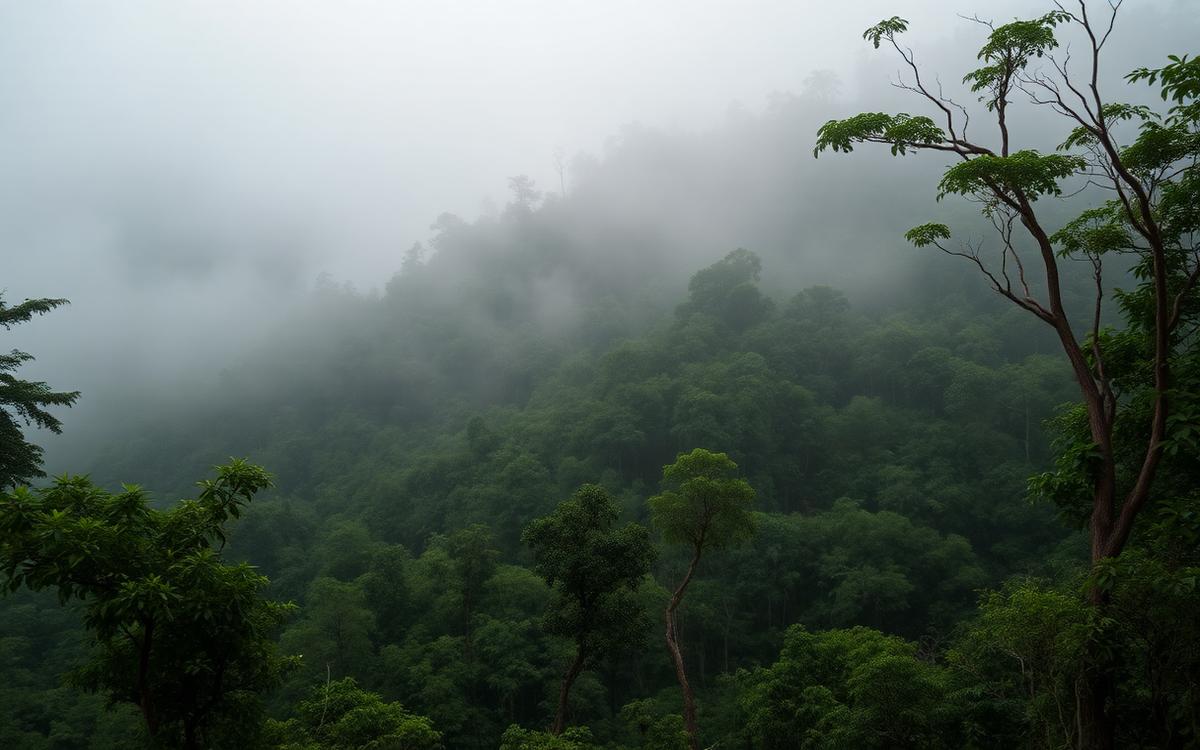
- Entire range confined to Bawangling National Nature Reserve, Hainan Island, China
- Recovery attributed largely to a multi-decade logging ban and habitat protection
A ban on commercial logging within Bawangling, combined with anti-poaching enforcement and habitat restoration including the construction of a rope bridge to reconnect fragmented canopy areas after a landslide, has supported the gradual population increase observed since the 1980s.
Ongoing Threats
Habitat fragmentation remains the central concern: with the entire species confined to one reserve, even localized forest loss, road construction, or natural disturbances such as landslides and typhoons could disproportionately affect the population. Genetic diversity is also a long-term concern given how few founding individuals contributed to today's population.
Editor's note: The IUCN Red List classifies the Hainan gibbon as Critically Endangered, and it is frequently cited by primatologists as the rarest primate species in the world.
Conservation Measures
Conservation groups including the Kadoorie Farm and Botanic Garden and Chinese forestry authorities have supported habitat restoration, ranger patrols, and monitoring of family groups by call surveys and direct observation. Expanding forest corridors to allow gibbon groups to disperse and potentially establish new territories is viewed as an important next step for long-term viability.
Key takeaways
- The Hainan gibbon is widely considered the rarest primate species on Earth.
- Population recovered from an estimated 7–9 individuals in the early 1980s to roughly 35–40 today.
- The entire species survives in Bawangling National Nature Reserve on Hainan Island, China.
- A multi-decade logging ban was central to enabling the population's slow recovery.
- The IUCN lists the species as Critically Endangered, citing habitat fragmentation as the main ongoing risk.
Frequently asked questions
How many Hainan gibbons are left?+
Current monitoring suggests approximately 35 to 40 individuals survive, all within Bawangling National Nature Reserve on Hainan Island, China.
Why is the Hainan gibbon considered the rarest primate?+
Its confirmed population is lower than that of any other recognized primate species, and its entire range is limited to a single nature reserve.
What helped the Hainan gibbon population recover?+
A ban on commercial logging within its core habitat, combined with anti-poaching patrols and habitat restoration efforts, allowed numbers to slowly climb from single digits.
What is the biggest ongoing risk to the species?+
Because the entire population lives in one reserve, habitat fragmentation, natural disasters, or disease could disproportionately affect the whole species at once.