Rare & Endangered Animals · Supporting guide
Wild Axolotls: A Popular Pet Species Vanishing From Its Only Home
Millions of axolotls exist in aquariums and laboratories worldwide, yet the wild population, confined to a shrinking canal system in Mexico City, may now number only in the hundreds.
 By Mahmoud OsamaSenior Wildlife Researcher & Editor-in-ChiefPublished 2 November 2025 · Updated 2 November 2025 · 7 min read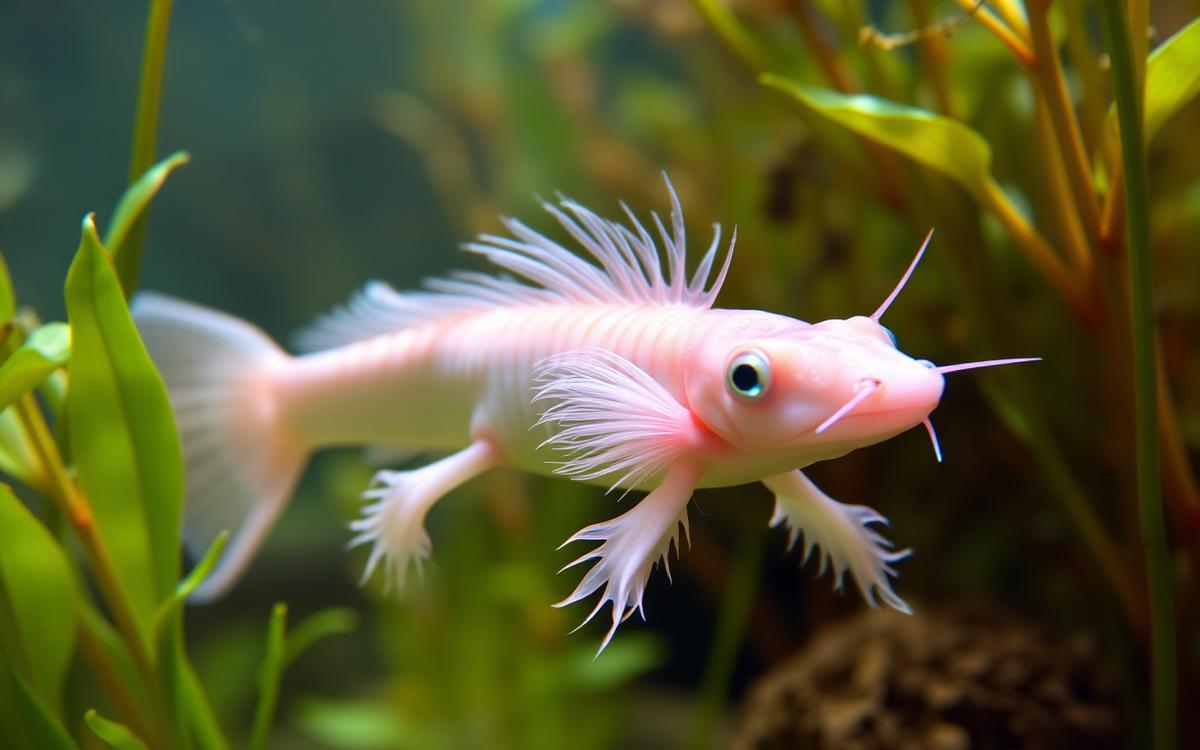
Reviewed against primary toxinology literature and IUCN assessments. This article is educational and is not medical advice — in an emergency contact your local poison centre or emergency services.
The axolotl (Ambystoma mexicanum) is a neotenic salamander famous for retaining juvenile, gilled features into adulthood and for its remarkable capacity to regenerate limbs, tissue, and even portions of its spinal cord and brain, a trait that has made it a mainstay of biomedical research and, increasingly, of the exotic pet trade. Millions of axolotls exist in labs, aquariums, and homes worldwide, creating a striking paradox: a species that is common in captivity while critically imperiled in the wild.
In the wild, axolotls survive only in the remaining canals and wetlands of Xochimilco, on the southern edge of Mexico City, the last vestige of the vast lake system the Aztecs once built their chinampa farming systems around. Systematic surveys by Mexican researchers have tracked a dramatic decline in wild density over recent decades, with some surveys finding population estimates that have fallen from thousands per square kilometer in the 1990s to figures suggesting only a few hundred to a few thousand individuals may remain across the entire wild range, and possibly fewer.
A Unique Biology
Unlike most amphibians, axolotls typically remain in their aquatic larval form throughout their lives, retaining external feathery gills and an aquatic lifestyle rather than metamorphosing fully into a terrestrial adult, a condition called neoteny. This, combined with their extraordinary regenerative abilities, has made them one of the most studied vertebrates in developmental and regenerative biology.
A Steep Wild Decline
- 1998 survey estimate: roughly 6,000 axolotls per square kilometer in Xochimilco waterways
- 2014 survey estimate: closer to 35 axolotls per square kilometer, a roughly 99% density decline
- Range now limited entirely to the Xochimilco and Chalco canal remnants in Mexico City
- Millions of individuals exist in captivity worldwide, contrasting sharply with wild scarcity
Researchers at Mexico's National Autonomous University (UNAM) have led long-term monitoring of the Xochimilco population, and while exact current wild numbers are difficult to pin down precisely, the consistent direction of the data points to continued severe decline.
Threats
Urban expansion of Mexico City has steadily drained and polluted the historic lake system, while water diverted for the metropolitan area has reduced canal flow and quality. Introduced fish species, particularly tilapia and carp, prey on axolotl eggs and juveniles and compete for food, compounding pollution pressures from agricultural runoff and untreated wastewater.
Editor's note: The axolotl is classified as Critically Endangered on the IUCN Red List, reflecting its wild status independent of its abundance in captivity.
Conservation Responses
Conservation efforts include the creation of axolotl refuges, or 'chinamperías,' within Xochimilco where local farmers maintain water quality and exclude invasive fish under partnerships with UNAM researchers, alongside broader restoration work aimed at improving canal water quality and reducing pollution inflow. Public engagement campaigns, buoyed by the axolotl's popularity as a cultural and pet-trade icon, have also helped raise funding and awareness for on-the-ground restoration work in Xochimilco.
Key takeaways
- Wild axolotls survive only in the Xochimilco canal system of Mexico City.
- Density surveys suggest a roughly 99% decline in wild population density between 1998 and 2014.
- Millions of axolotls exist in captivity for research and the pet trade, unlike the critically endangered wild population.
- Pollution, urban water diversion, and invasive fish are the primary threats to wild survival.
- The species is IUCN Red List Critically Endangered in the wild despite captive abundance.
Frequently asked questions
Are axolotls endangered if they're common pets?+
Yes. Wild axolotls are Critically Endangered and restricted to Mexico City's Xochimilco canals, even though millions of captive-bred individuals exist worldwide for research and as pets.
Where do wild axolotls live?+
The only wild population survives in the remaining canals and wetlands of Xochimilco, on the southern edge of Mexico City, Mexico.
Why are wild axolotl numbers dropping so fast?+
Urban water diversion, pollution from agricultural and wastewater runoff, and predation or competition from invasive fish like tilapia and carp have driven a steep decline in wild density.
Can captive breeding save wild axolotls?+
Captive populations do not directly restore wild numbers; conservationists instead focus on restoring Xochimilco's water quality and habitat, since reintroduction into a degraded environment would likely fail.