Rare & Endangered Animals · Cornerstone guide
Javan Rhino: Inside the World's Rarest Rhinoceros Species
Confined to one national park in Indonesia, the Javan rhino is arguably the rarest large mammal on Earth, with a population that has never topped 100 animals in living memory.
 By Mahmoud OsamaSenior Wildlife Researcher & Editor-in-ChiefPublished 5 September 2025 · Updated 5 September 2025 · 8 min read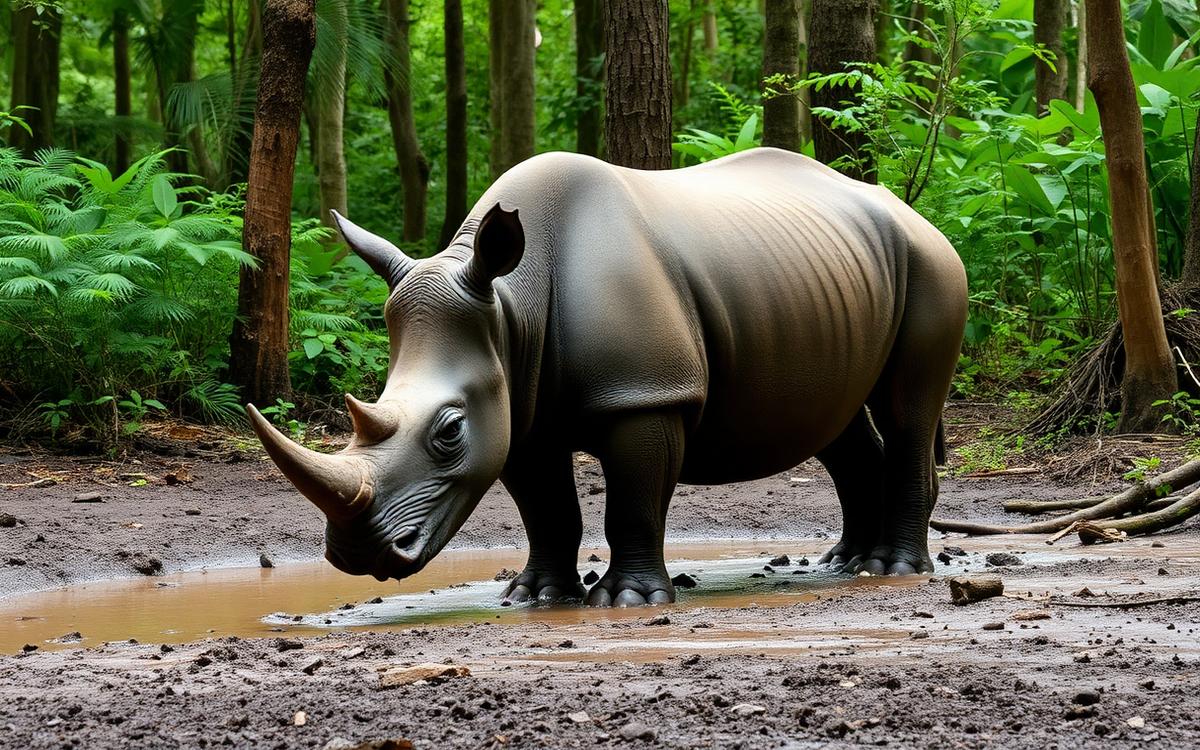
Reviewed against primary toxinology literature and IUCN assessments. This article is educational and is not medical advice — in an emergency contact your local poison centre or emergency services.
The Javan rhinoceros (Rhinoceros sondaicus) is, by most credible counts, the rarest of the world's five rhino species and among the rarest large mammals alive. The entire known population lives in a single protected area, Ujung Kulon National Park on the western tip of Java, Indonesia, after the species was declared extinct in Vietnam in 2010. Camera-trap surveys conducted by Indonesian authorities and conservation partners have estimated the population at roughly 74 to 82 individuals in recent years, though such small, single-site populations are inherently fragile and figures should be read as informed estimates rather than precise censuses.
Unlike the more widely known black and white rhinos of Africa, the Javan rhino is a solitary, secretive forest dweller rarely seen by researchers directly; most of what is known about it comes from camera traps, footprints, wallows, and dung. Its single small horn, smaller than in other rhino species, has done little to protect it from historical poaching pressure, though today the greater risks are arguably disease, genetic bottlenecking, and the catastrophic vulnerability of having every individual within reach of a single tsunami, disease outbreak, or volcanic event from the nearby Krakatoa complex.
Biology and Habitat
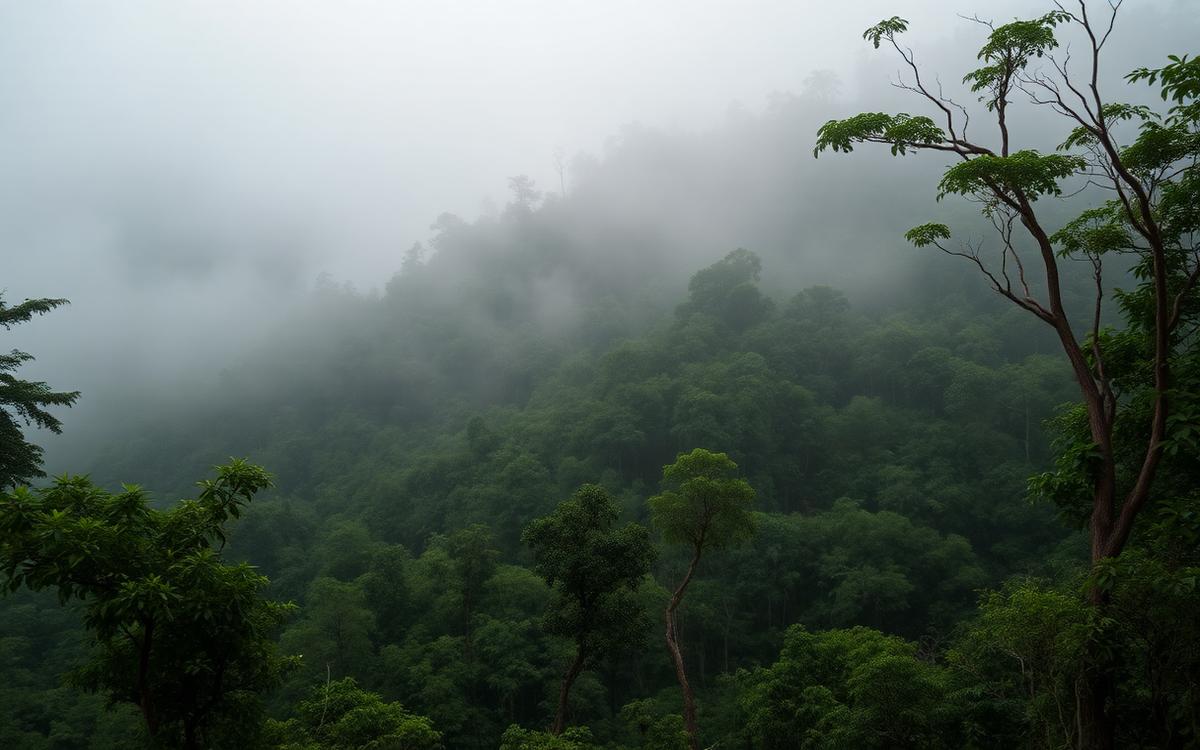
The Javan rhino is a browsing herbivore of lowland tropical rainforest, favoring dense secondary growth, mud wallows, and areas near fresh water. Adults typically weigh 900 to 2,300 kilograms, somewhat smaller than the Indian rhino it closely resembles in armored, plated-looking skin.
A single-population species
Every confirmed wild Javan rhino lives within Ujung Kulon's roughly 120 square kilometers of core habitat. This geographic concentration is unusual even among critically endangered megafauna and is the central fact driving conservation strategy for the species.
- Estimated wild population: approximately 74–82 individuals (Indonesian government and IUCN-linked monitoring)
- Single wild location: Ujung Kulon National Park, Java, Indonesia
- No individuals currently held in captivity anywhere in the world
- Closely related to the Indian rhinoceros, though smaller and more solitary
Threats to Survival
Historic threats to the Javan rhino were dominated by hunting and horn poaching, which eliminated mainland populations across Southeast Asia during the 19th and 20th centuries. Today, direct poaching pressure inside Ujung Kulon is comparatively low thanks to intensive ranger patrols, but the species faces a different set of risks tied to its small size and isolation.
- Genetic bottleneck effects from a small founding population reducing fertility and disease resistance
- Competition with the invasive Arenga palm, which can crowd out native food plants
- Vulnerability to a single catastrophic event such as tsunami, disease outbreak, or volcanic activity
- Limited habitat area preventing natural population growth beyond current carrying capacity
Because the population is capped by available habitat, conservation groups including the WWF and Indonesia's Ministry of Environment and Forestry have pursued habitat expansion, including a proposed second habitat area within Ujung Kulon, to reduce the single-site risk.
Conservation Efforts
Conservation of the Javan rhino centers on intensive protection rather than captive breeding, since no individuals exist outside the wild. Ranger patrol units, camera-trap grids, and habitat management to control invasive plants form the backbone of the program.
Editor's note: The Javan rhino is classified as Critically Endangered by the IUCN Red List, its most severe wild-population category short of extinction in the wild.
Efforts to establish a second, geographically separate population within Indonesia have been discussed for years as insurance against a single disaster wiping out the entire species, but progress has been slow given funding and site-selection challenges.
Why This Species Matters
As a large browsing herbivore, the Javan rhino helps shape forest structure and seed dispersal in Ujung Kulon, functions that ripple through the wider ecosystem. Its survival is also a bellwether for whether intensive, single-site conservation can work for megafauna with vanishingly small populations.
Key takeaways
- The Javan rhino survives only in Ujung Kulon National Park, Java, with an estimated 74–82 individuals.
- No Javan rhinos exist in captivity anywhere in the world.
- The species is IUCN Red List Critically Endangered.
- A single catastrophic event could threaten the entire species given its one-location range.
- Conservation focuses on ranger protection, habitat management, and exploring a second population site.
Frequently asked questions
How many Javan rhinos are left?+
Recent camera-trap monitoring suggests roughly 74 to 82 individuals survive, all within Ujung Kulon National Park in Indonesia.
Are there any Javan rhinos in zoos?+
No. The species has no captive population anywhere; every known individual lives wild in Ujung Kulon.
Why does the Javan rhino live in only one place?+
Historical hunting eliminated populations across mainland Asia, including the last individual in Vietnam confirmed extinct around 2010, leaving Java as the sole refuge.
What is being done to help the species?+
Intensive ranger patrols, camera-trap monitoring, invasive plant control, and long-discussed plans for a second habitat area to spread population risk.