Venomous Insects · Cornerstone guide
Honey Bee Sting Anaphylaxis: Recognizing and Responding to a Life-Threatening Reaction
For most people a honey bee sting is a brief annoyance, but for those with a venom allergy it can trigger anaphylaxis within minutes — a true medical emergency.
 By Mahmoud OsamaSenior Wildlife Researcher & Editor-in-ChiefPublished 20 October 2025 · Updated 1 November 2025 · 9 min read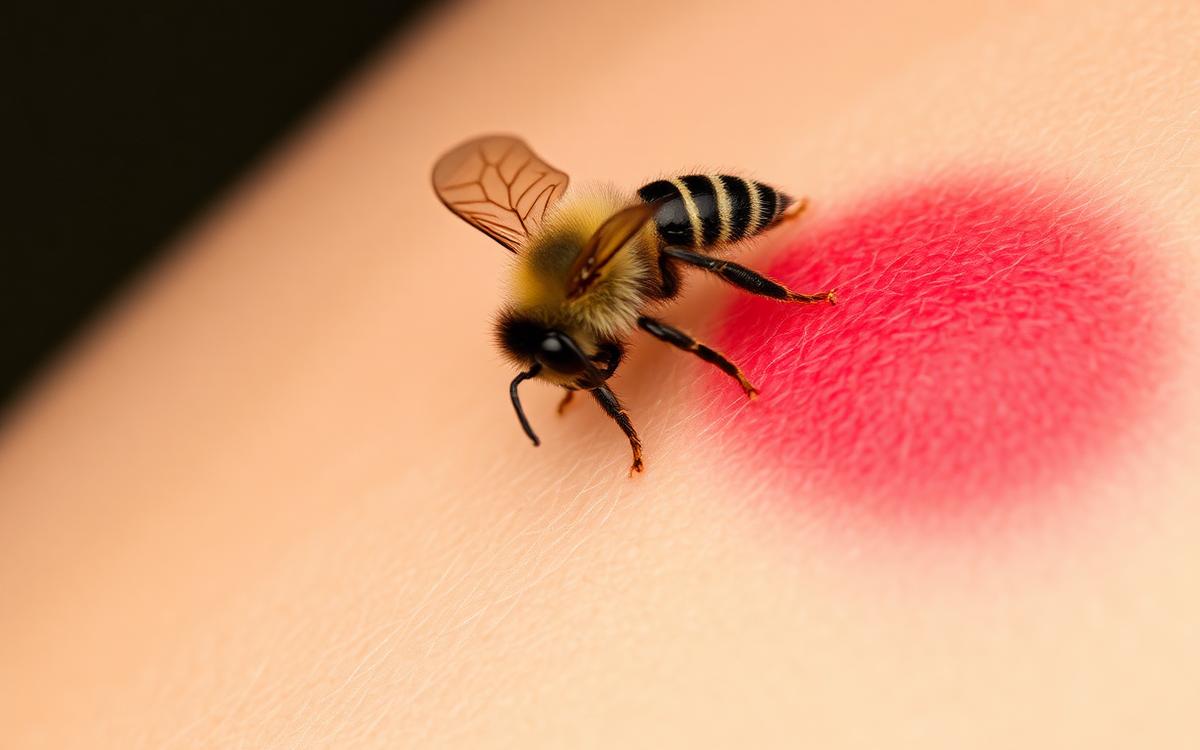
Reviewed against primary toxinology literature and IUCN assessments. This article is educational and is not medical advice — in an emergency contact your local poison centre or emergency services.
Honey bee venom contains a mix of proteins and peptides, including melittin and phospholipase A2, that cause immediate localized pain and swelling in nearly everyone who is stung. For the vast majority of people, this local reaction — pain, redness, and swelling that peaks within 48 hours — is the full extent of the response. But in an estimated 1 to 3 percent of the population, the immune system has become sensitized to bee venom proteins, and a subsequent sting can trigger anaphylaxis, a rapid, whole-body allergic reaction that can be fatal without prompt treatment.
Anaphylaxis from insect stings is one of the leading causes of sting-related death in otherwise healthy people, precisely because it can escalate within minutes. Recognizing the difference between an uncomfortable but normal sting reaction and the early signs of anaphylaxis is a genuinely life-saving skill.
Normal Reaction vs. Allergic Reaction
A typical honey bee sting reaction is confined to the area around the sting: pain, redness, swelling, and itching that may last a day or two. A large local reaction — swelling that spreads to cover an entire limb, for instance — is uncomfortable and can look alarming, but it is still not the same as a systemic allergic reaction and is not usually life-threatening on its own.
- Normal: pain and swelling confined to the sting site, resolving within a few days
- Large local reaction: swelling spreads beyond the sting site but stays in one region of the body, peaking at 48 hours
- Systemic/anaphylactic: symptoms appear away from the sting site and affect the skin, airway, digestion, or circulation simultaneously
Warning Signs of Anaphylaxis
Anaphylaxis usually begins within minutes of the sting, though in rare cases it can be delayed by up to an hour. It typically involves more than one body system at once.
- Skin: hives, flushing, or itching spreading well beyond the sting site
- Respiratory: throat tightness, hoarse voice, wheezing, or shortness of breath
- Cardiovascular: dizziness, rapid or weak pulse, or fainting from dropping blood pressure
- Gastrointestinal: nausea, vomiting, cramping, or diarrhea
- General: a sense of impending doom, confusion, or sudden extreme fatigue
Editor's note: If you or someone nearby shows any combination of these signs after a bee sting, treat it as anaphylaxis and act immediately — do not wait to see if it worsens.
Emergency Response Steps
- Use an epinephrine auto-injector (such as an EpiPen) immediately if one is available, injecting into the outer thigh
- Call emergency services right away, even if symptoms improve after epinephrine
- Have the person lie flat with legs elevated unless they are having trouble breathing, in which case let them sit up
- Give a second dose of epinephrine after 5–15 minutes if symptoms do not improve and additional auto-injectors are available
- Do not rely on antihistamines alone — they act too slowly to stop anaphylaxis and are not a substitute for epinephrine
Why Speed Matters
Anaphylaxis can progress from mild symptoms to airway closure or cardiovascular collapse within 15 to 30 minutes. Epinephrine works by rapidly constricting blood vessels, relaxing airway muscles, and reducing swelling, but its effectiveness depends heavily on being administered early rather than as a last resort.
After an Anaphylactic Reaction
Anyone who experiences anaphylaxis from a bee sting should go to an emergency department even after epinephrine resolves symptoms, because a second wave of symptoms, called a biphasic reaction, can occur hours later in some cases.
Follow-up with an allergist is strongly recommended. Venom immunotherapy — a series of injections that gradually desensitize the immune system to bee venom — has been shown to reduce the risk of future severe reactions substantially and is considered highly effective for people with confirmed venom allergy.
Prevention for At-Risk Individuals
- Carry two epinephrine auto-injectors at all times if you have a known bee venom allergy
- Wear a medical alert bracelet noting the allergy
- Avoid wearing bright floral prints or strong perfumes that can attract bees outdoors
- Discuss venom immunotherapy with an allergist to reduce long-term risk
- Inspect food and drink cans or open beverages outdoors, since bees are drawn to sugary residue
Key takeaways
- About 1 to 3 percent of people are at risk of a severe allergic reaction to bee stings
- Anaphylaxis affects multiple body systems at once and can begin within minutes
- Epinephrine is the first-line treatment; antihistamines are not a substitute
- A large local reaction is uncomfortable but is not the same as anaphylaxis
- Venom immunotherapy can substantially lower the risk of future severe reactions
Frequently asked questions
How quickly does anaphylaxis start after a bee sting?+
Most cases begin within minutes, though onset can occasionally be delayed up to an hour, which is why monitoring after any sting in an at-risk person is important.
Can you become allergic to bee stings later in life even if past stings were fine?+
Yes, sensitization can develop after any sting, so a normal reaction in the past does not guarantee a normal reaction in the future.
Is one dose of epinephrine always enough?+
Not always — up to a third of anaphylaxis cases require a second dose if symptoms persist or return after 5 to 15 minutes.
What is a biphasic reaction?+
It is a second wave of anaphylactic symptoms that can occur hours after the first reaction resolves, which is why emergency observation is recommended even after epinephrine works.
Does venom immunotherapy really work?+
Clinical studies show it reduces the risk of a severe systemic reaction to a future sting to a small fraction of what it would otherwise be, making it a strong option for confirmed venom allergy.