Venomous Insects · Supporting guide
Giant Centipede Bites: Venom From an Ancient Predator
Giant centipedes in the genus Scolopendra can grow over 30 cm long and deliver a bite with venom-injecting forcipules capable of causing severe pain and swelling.
 By Mahmoud OsamaSenior Wildlife Researcher & Editor-in-ChiefPublished 5 November 2025 · Updated 5 November 2025 · 7 min read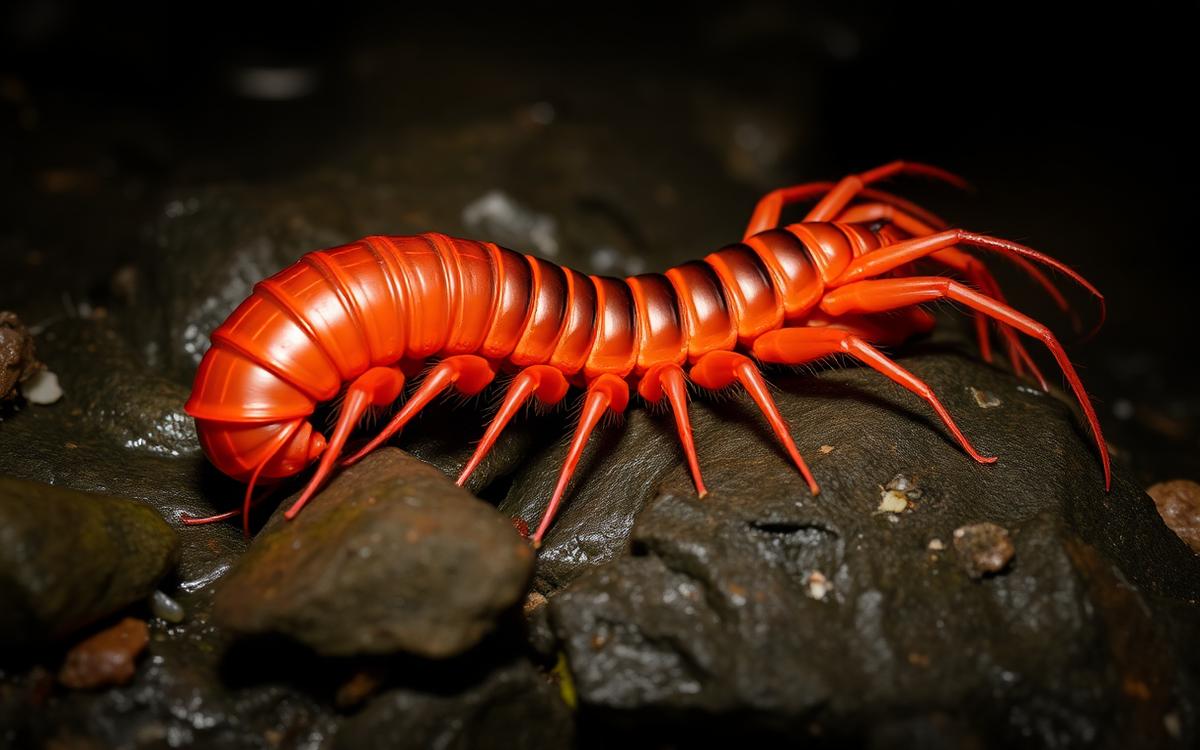
Reviewed against primary toxinology literature and IUCN assessments. This article is educational and is not medical advice — in an emergency contact your local poison centre or emergency services.
Centipedes are not insects — they belong to the class Chilopoda, arthropods that predate insects on the evolutionary timeline by tens of millions of years — but the giant centipedes of the genus Scolopendra are among the most medically significant venomous arthropods people encounter, and they belong in any serious discussion of venomous invertebrates. Some species, such as the Amazonian giant centipede (Scolopendra gigantea), can exceed 30 cm (12 inches) in length.
Unlike insects, centipedes do not bite with mandibles for venom delivery. Their venom is injected through a pair of modified front legs called forcipules, which curve underneath the head and puncture prey (or a human finger) like a pair of hypodermic claws. Bites are rarely fatal to healthy adults but can cause intense, prolonged pain and significant local tissue effects.
How Centipede Venom Delivery Works
Forcipules are not true jaws but modified first-pair legs positioned beneath the head, connected to venom glands. When a centipede seizes prey or defends itself, the forcipules pierce the skin and inject venom directly, a delivery method unique among venomous arthropods.
Larger species deliver deeper, more forceful punctures and larger venom volumes, which is why body size correlates strongly with bite severity across the roughly 3,000 known centipede species.
What's in Centipede Venom
A cocktail evolved for both hunting and defense
Scolopendra venom contains a complex mix of components including cardiodepressant peptides, proteases, histamine-releasing factors, and serotonin, which together produce intense local pain, swelling, and sometimes systemic effects such as nausea, dizziness, and irregular heartbeat in sensitive individuals.
- Serotonin and histamine-releasing compounds driving immediate sharp pain
- Proteolytic enzymes contributing to local tissue swelling and occasional necrosis
- Cardiotoxic peptides identified in some species, relevant mainly in large-species bites
- Individual variation in reaction severity, similar to other venomous arthropod bites
Symptoms of a Bite
Most bites, even from large Scolopendra species, cause intense localized pain lasting hours to a couple of days, redness, swelling, and sometimes lymph node tenderness near the bite. Documented case reports of severe reactions include chest pain, muscle weakness, and in very rare instances cardiac complications, generally associated with the largest tropical species.
Editor's note: Fatalities from centipede bites are extremely rare and almost always involve pre-existing health conditions or very large tropical species.
First Aid and Medical Care
- Clean the bite with soap and water
- Apply ice or a cold pack to reduce pain and swelling
- Take oral analgesics such as ibuprofen or acetaminophen for pain
- Elevate the affected limb if swelling is significant
- Seek medical care for chest pain, difficulty breathing, spreading infection, or symptoms in young children or people with heart conditions
Avoiding Centipede Encounters
Giant centipedes hide under logs, rocks, and leaf litter and are typically nocturnal. Wear gloves when moving debris in known habitat, shake out shoes and clothing left outdoors in warm climates, and use a flashlight when walking through leaf litter at night in tropical or subtropical regions.
Key takeaways
- Giant centipedes (genus Scolopendra) inject venom through modified front legs called forcipules, not through a bite with jaws.
- Venom contains serotonin, histamine-releasing compounds, and proteases that cause intense pain and swelling.
- Bites are rarely fatal but can cause severe pain lasting hours to days, and rare systemic effects in sensitive individuals.
- Ice, elevation, and oral pain relievers manage most bites at home.
- Wearing gloves and shaking out footwear reduces risk in centipede habitat.
Frequently asked questions
Can a giant centipede bite kill you?+
Fatalities are extremely rare and almost always tied to pre-existing conditions, very young age, or exceptionally large tropical species. Most healthy adults recover fully.
How long does centipede bite pain last?+
Intense pain typically lasts several hours to about two days, with swelling and tenderness sometimes persisting longer.
Do centipedes bite or sting?+
They bite using modified front legs called forcipules that inject venom, functionally similar to a sting but delivered through a leg-derived structure rather than a tail.
What is the largest venomous centipede?+
The Amazonian giant centipede, Scolopendra gigantea, can exceed 30 cm (12 inches) and is considered one of the most medically significant centipede species.
Should I try to catch or kill a centipede that bit me for identification?+
It is not necessary for treatment purposes; focus on wound care and seek medical attention if severe symptoms develop.