Reptiles & Amphibians · Supporting guide
Fire Salamander Toxin: The Chemistry Behind Its Bold Colors
The fire salamander's striking black and yellow pattern advertises a genuine chemical defense: a neurotoxic alkaloid called samandarin.
 By Mahmoud OsamaSenior Wildlife Researcher & Editor-in-ChiefPublished 18 December 2025 · Updated 18 December 2025 · 7 min read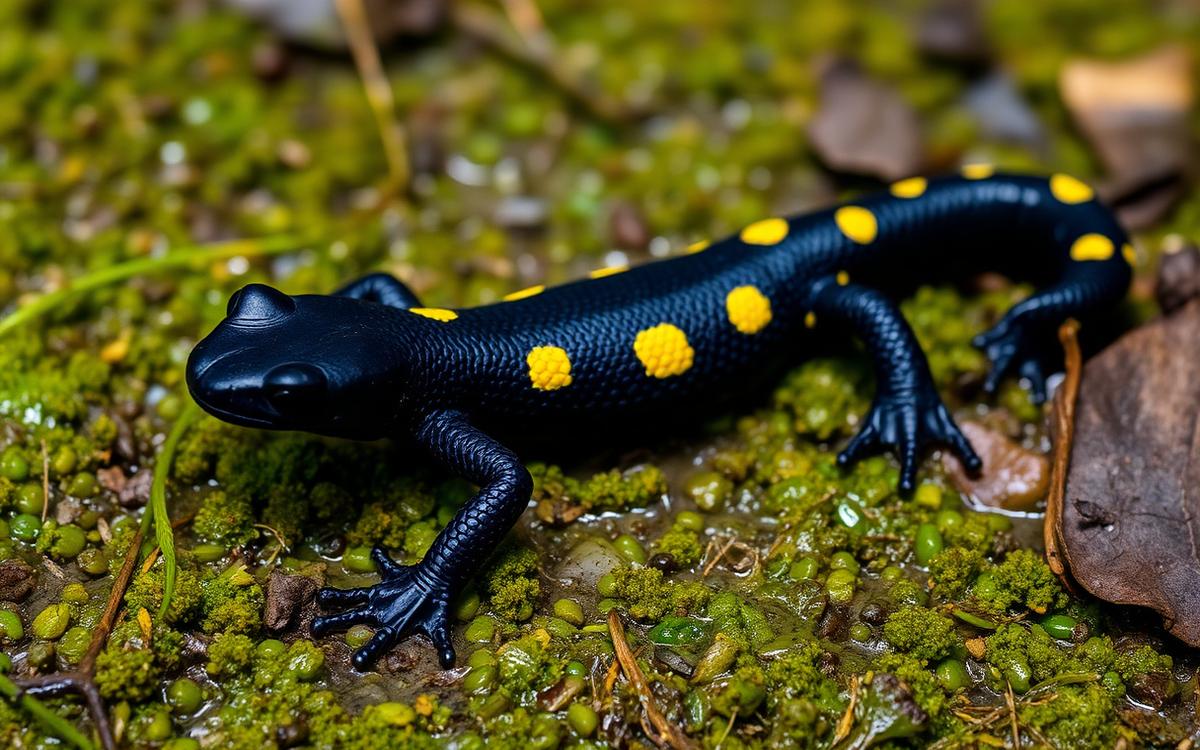
Reviewed against primary toxinology literature and IUCN assessments. This article is educational and is not medical advice — in an emergency contact your local poison centre or emergency services.
The fire salamander (Salamandra salamandra) is one of Europe's most recognizable amphibians, with a glossy black body marked by irregular bold yellow or orange blotches. This is not decoration; it is a warning. Glands concentrated behind the eyes and along the back secrete a milky toxin called samandarin whenever the animal feels threatened.
Found across forested regions of central and southern Europe, fire salamanders have inspired folklore for centuries, including medieval legends that they could survive fire, likely because they were sometimes found emerging from damp logs thrown onto fires. While the salamander cannot withstand flames, its chemical defenses are very real and have been studied extensively by toxinologists.
How Samandarin Affects Predators
Samandarin belongs to a family of steroidal alkaloids unique to true salamanders. It acts on the nervous system by affecting sodium channels and can cause muscle convulsions, elevated blood pressure, and hyperventilation in animals that ingest or mouth a fire salamander.
For most predators, the toxin's strong bitter taste and immediate irritant effect on mucous membranes is usually enough to trigger the animal to drop the salamander before a lethal dose is absorbed, making the warning coloration a highly effective deterrent.
How the Toxin Is Delivered
- Toxin is stored in parotoid glands behind the eyes and in rows of glands along the back and tail
- Glands can actively spray a fine jet of toxin a short distance when the salamander is grabbed or startled
- Human contact typically causes skin irritation, burning, or numbness rather than systemic poisoning
- Toxin entering the eyes or an open wound can cause more significant effects, including temporary vision disturbance
Editor's note: There are no confirmed human fatalities from fire salamander toxin, but medical texts advise treating exposure to the eyes or mucous membranes seriously and rinsing immediately with water.
Where Fire Salamanders Live and How They Behave
Nocturnal, Moisture-Dependent Forest Dwellers
Fire salamanders favor deciduous and mixed forests with abundant leaf litter and nearby streams, where females deposit live larvae directly into slow-moving water rather than laying eggs like most amphibians. They are most active at night and after rainfall, when humidity supports their permeable, unscaled skin.
Their bold coloration means they move relatively unhurried compared to camouflaged amphibians, relying on their toxin rather than speed or stealth to avoid predation.
The Bsal Fungal Threat
Since the 2010s, fire salamander populations across parts of the Netherlands, Belgium, and Germany have suffered dramatic declines due to Batrachochytrium salamandrivorans (Bsal), a chytrid fungus believed to have arrived via the international amphibian trade from Asia.
Bsal attacks the skin, which is critical for the amphibian's respiration and toxin secretion, and has caused local extinctions in some Dutch populations. Researchers and conservation bodies now closely monitor trade in salamanders and newts to slow the fungus's spread to unaffected regions, including North America.
Safe Practices for Observing Fire Salamanders
- Avoid picking up fire salamanders with bare hands, particularly if you have cuts or will touch your eyes afterward
- Wash hands thoroughly after any incidental contact during hikes or citizen science surveys
- Do not transport salamanders or amphibian equipment between regions to help prevent spreading Bsal fungus
- Photograph and observe from a respectful distance rather than handling wild individuals
- If toxin contacts eyes or a wound, rinse thoroughly with clean water and seek medical advice if irritation persists
Key takeaways
- Fire salamanders secrete samandarin, a neurotoxic alkaloid, from glands behind the eyes and along the back.
- The bold black and yellow pattern is aposematic warning coloration advertising this chemical defense.
- Human exposure typically causes irritation rather than systemic poisoning, though eye or wound contact should be treated carefully.
- The species faces a severe emerging threat from the Bsal chytrid fungus in parts of Europe.
- Avoiding unnecessary handling and equipment transport helps limit the spread of Bsal to new populations.
Frequently asked questions
Can a fire salamander poison you by touch alone?+
Simple touch on intact skin usually causes only mild irritation; more concerning exposure comes from contact with eyes, mouth, or open wounds.
Why is the fire salamander associated with fire in folklore?+
Medieval Europeans reportedly saw salamanders emerging from logs placed on fires, leading to myths that the animal was born from or immune to flame, though this is not true.
What is Bsal and why is it dangerous to salamanders?+
Bsal is a chytrid fungus that infects amphibian skin, disrupting essential functions like respiration and toxin secretion, and has caused severe population crashes in parts of Europe.
Are fire salamanders endangered?+
The species as a whole is not globally threatened, but regional populations, especially in the Netherlands and parts of Germany, have suffered severe local declines from Bsal.
Do fire salamanders bite?+
They rarely bite defensively; their primary defense is toxin secretion rather than biting, though any wild animal can bite if it feels cornered.