Reptiles & Amphibians · Cornerstone guide
Golden Poison Frog: The World's Most Toxic Amphibian
A tiny Colombian rainforest frog carries enough batrachotoxin in its skin to kill several adult humans, yet it makes none of that poison itself.
 By Mahmoud OsamaSenior Wildlife Researcher & Editor-in-ChiefPublished 4 September 2025 · Updated 4 September 2025 · 8 min read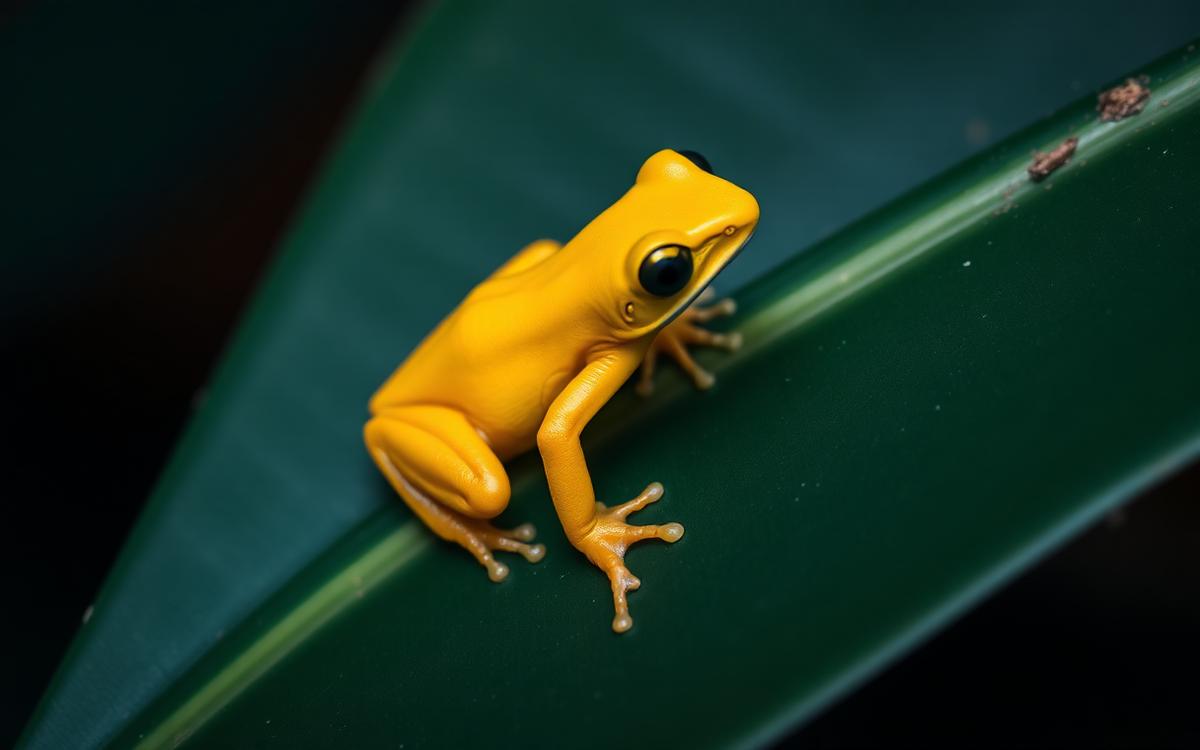
Reviewed against primary toxinology literature and IUCN assessments. This article is educational and is not medical advice — in an emergency contact your local poison centre or emergency services.
Deep in the rainforests of Colombia's Pacific coast lives an amphibian barely five centimeters long that is widely regarded as the most toxic animal on Earth by weight. The golden poison frog (Phyllobates terribilis) does not bite, sting, or inject venom. Instead, its skin is coated in batrachotoxin, an alkaloid so potent that a few micrograms can disrupt the nervous system of any predator foolish enough to touch it.
Despite its fearsome reputation, the golden poison frog is not aggressive and poses little threat to people who simply admire it from a distance. Understanding how it makes its toxin, why captive-raised frogs lose their potency, and how indigenous Emberá hunters historically used the species for blowgun darts reveals a fascinating story about diet, chemistry, and coevolution.
What Is Batrachotoxin and How Does It Work
Batrachotoxin is a steroidal alkaloid that binds irreversibly to voltage-gated sodium channels in nerve and muscle cells, locking them open. This prevents nerves from resetting after firing, leading to uncontrolled muscle contraction, arrhythmia, and eventually cardiac or respiratory failure in a poisoned animal.
It is one of the most potent non-protein toxins known to toxinology, with a lethal dose for an adult human estimated in the range of two micrograms per kilogram of body weight if it enters the bloodstream through a wound or mucous membrane.
Editor's note: Intact human skin generally blocks batrachotoxin absorption, which is why the toxin is dangerous mainly through open cuts, eyes, or ingestion, not casual touch.
A Toxin the Frog Does Not Actually Make
Golden poison frogs do not synthesize batrachotoxin themselves. Research led by herpetologists including John Daly at the NIH traced the toxin's likely origin to small beetles in the family Melyridae that the frogs eat in the wild, along with other arthropods that sequester similar alkaloids.
- Wild frogs accumulate toxin gradually by eating specific invertebrates in their native habitat
- Captive-bred frogs raised on crickets and fruit flies are essentially non-toxic within a generation
- This diet-dependent toxicity is called toxin sequestration and is shared by many poison frog species
- Zoos and reptile keepers can therefore handle captive frogs with far less risk than wild ones
Traditional Use by Indigenous Communities
The Emberá Chocó people of western Colombia have long used the golden poison frog to tip blowgun darts for hunting. Traditionally, hunters would carefully rub a dart tip against the frog's back, since a single frog can coat dozens of darts, without needing to harm the animal.
This practical relationship, documented by anthropologists and museum ethnobotany collections, is the origin of the family name 'poison dart frog' applied loosely to many species, even though only three Phyllobates species are toxic enough for this traditional use.
Conservation and Habitat Pressures
The golden poison frog is currently assessed as Endangered by the IUCN Red List, primarily due to deforestation, agricultural expansion, and habitat fragmentation in its narrow range along Colombia's Pacific lowlands.
Because the species depends on specific leaf-litter humidity and prey availability, even moderate habitat disturbance can eliminate local populations. Illegal collection for the exotic pet trade adds further pressure, despite most captive frogs losing their toxicity.
Why This Frog Matters Beyond Toxinology
Batrachotoxin has become an important research tool for neuroscientists studying sodium channel function, and understanding poison frog chemistry has informed broader research into pain and cardiac drugs.
Handling Guidance for Keepers and Travelers
- Never touch wild poison frogs in South or Central America with bare hands, especially with cuts on your skin
- Wash hands thoroughly after any contact with amphibians in the wild
- Captive-bred, non-toxic frogs sold legally through licensed breeders are safe for experienced keepers to handle minimally
- Keep all frogs away from children and pets regardless of presumed toxicity level
- Seek medical attention immediately if toxin exposure through a wound or the eyes is suspected
Key takeaways
- The golden poison frog carries batrachotoxin, one of the most potent toxins known, in its skin secretions.
- The frog does not manufacture the toxin itself but sequesters it from specific wild-caught arthropod prey.
- Captive-bred frogs raised on standard feeder insects become essentially non-toxic.
- The species is Endangered due to deforestation and habitat fragmentation in Colombia.
- Intact skin generally protects handlers, but open wounds or mucous membrane contact can be dangerous.
Frequently asked questions
Can you die from touching a golden poison frog?+
Touching one with intact, uninjured skin is very low risk. Danger arises mainly from the toxin entering cuts, eyes, or mouth, which is why wild frogs should never be handled.
Are pet golden poison frogs dangerous?+
Captive-bred frogs raised without access to their natural wild diet lose most or all of their toxicity within one generation, making them commonly kept in the exotic pet trade with basic precautions.
Is there an antidote for batrachotoxin?+
No specific antidote exists; treatment is supportive, focused on managing cardiac arrhythmia and respiratory failure in a hospital setting.
Where does the golden poison frog live?+
It is found only in a small area of rainforest along Colombia's Pacific coast, in the Chocó department.
What eats golden poison frogs?+
Very few predators can tolerate the toxin; one known exception is the snake Leimadophis epinephelus, which appears to have some resistance.