Reptiles & Amphibians · Supporting guide
Sea Snake Venom: Potent Toxins, Rare Human Bites
Sea snakes produce highly potent neurotoxic venom, but their docile temperament and small fangs make serious human bites surprisingly rare.
 By Mahmoud OsamaSenior Wildlife Researcher & Editor-in-ChiefPublished 27 November 2025 · Updated 27 November 2025 · 7 min read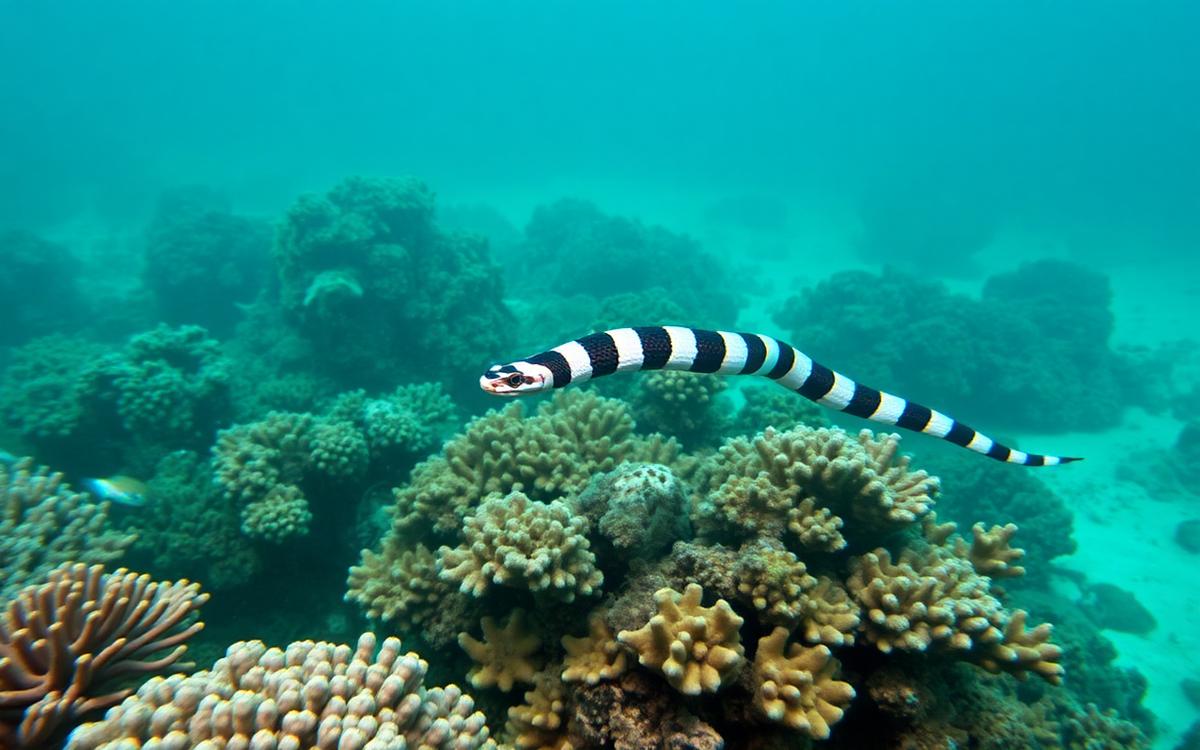
Reviewed against primary toxinology literature and IUCN assessments. This article is educational and is not medical advice — in an emergency contact your local poison centre or emergency services.
Sea snakes, a group of roughly 60 to 70 species found mostly in the warm coastal waters of the Indian and Pacific Oceans, are often cited in lists of the world's most venomous reptiles. Species like the beaked sea snake and Belcher's sea snake produce neurotoxic venom potent enough, drop for drop, to rival many of the deadliest land snakes.
Yet reported human fatalities from sea snake bites are relatively rare worldwide, largely because these snakes are naturally docile, have small fangs poorly suited to piercing wetsuits or thick skin, and typically only bite defensively when handled, stepped on, or caught in fishing nets.
How Sea Snake Venom Affects the Body
Sea snake venom is predominantly neurotoxic, containing postsynaptic neurotoxins that block acetylcholine receptors at the junction between nerves and muscles, similar in mechanism to venom from their closest relatives, the elapids, which include cobras and kraits.
Many species also produce myotoxins that damage skeletal muscle directly, a phenomenon called rhabdomyolysis, which can release muscle proteins into the bloodstream and place severe strain on the kidneys if left untreated.
- Progressive muscle weakness and drooping eyelids (ptosis) are early signs of neurotoxic envenomation
- Difficulty swallowing and speaking can follow within a few hours
- Muscle pain and dark, tea-colored urine can indicate myotoxic muscle breakdown
- Respiratory failure is the primary life-threatening complication in severe untreated cases
Why Serious Bites Are Uncommon
Small Fangs, Calm Temperament
Sea snakes have short, fixed fangs adapted for grasping slippery fish rather than delivering deep punctures, and studies of bite incidents suggest a large proportion are 'dry bites' that inject little or no venom.
Most documented bites occur among commercial fishermen handling nets or catch, rather than swimmers or divers, since sea snakes generally flee rather than confront larger animals in open water.
Who Faces the Highest Risk
Trawler and gillnet fishermen across Southeast Asia and northern Australia represent the population most frequently bitten, often while sorting bycatch by hand. Bites to bare feet or hands while wading in shallow estuarine water are also documented, though less common.
Divers and snorkelers are very rarely bitten, since sea snakes typically show curiosity rather than aggression and retreat when a diver moves away.
Treatment and Regional Antivenom Access
Sea snake antivenom, produced primarily in Australia by CSL Seqirus, is used to treat envenomation and can also cross-neutralize venom from several related species due to shared toxin components across the family.
Supportive care, including mechanical ventilation for respiratory failure and dialysis for severe rhabdomyolysis-related kidney injury, is critical in regions where antivenom access may be delayed, particularly in remote fishing communities.
Sea Snakes and Ocean Health
Several sea snake species face population pressure from trawl fishing bycatch mortality and coastal habitat degradation, and some, like the short-nosed sea snake, are listed as Vulnerable or Data Deficient by the IUCN due to limited monitoring across their range.
Because sea snakes prey heavily on fish and eels, their decline in some reef systems may have knock-on effects for local marine food webs that scientists are still working to fully understand.
Key takeaways
- Sea snake venom is highly neurotoxic and can also cause dangerous muscle breakdown (myotoxicity).
- Small fixed fangs and a generally docile temperament make serious human bites uncommon.
- Commercial fishermen handling nets and catch are the group most frequently bitten.
- Australian-produced sea snake antivenom can treat envenomation from several related species.
- Some sea snake species face conservation concern from bycatch mortality and habitat loss.
Frequently asked questions
Is sea snake venom stronger than cobra venom?+
Gram for gram, some sea snake venoms are more potent than many cobra venoms in laboratory tests, but actual bites deliver far less venom, making real-world danger comparatively lower.
Are divers at risk from sea snakes?+
Bites to divers and snorkelers are extremely rare, as sea snakes are generally curious rather than aggressive and prefer to avoid large animals.
Can you tell if a sea snake bite injected venom?+
Not reliably without medical monitoring; symptoms like muscle weakness or drooping eyelids can take hours to appear even after a venomous bite.
What should I do if bitten by a sea snake?+
Keep the affected limb still, seek emergency medical care immediately, and monitor closely for muscle weakness or breathing difficulty even if the bite initially seems minor.
Do all sea snake species have equally potent venom?+
No, potency varies considerably between species, with beaked sea snakes and Belcher's sea snake among the most studied for high venom toxicity.