Wildlife Safety & First Aid · Supporting guide
Bee Sting Allergy: Recognizing Anaphylaxis and Using Adrenaline Auto-Injectors
For people with severe insect sting allergies, minutes matter. Here is how to recognize anaphylaxis and use an adrenaline auto-injector correctly.
 By Mahmoud OsamaSenior Wildlife Researcher & Editor-in-ChiefPublished 10 October 2025 · Updated 10 October 2025 · 7 min read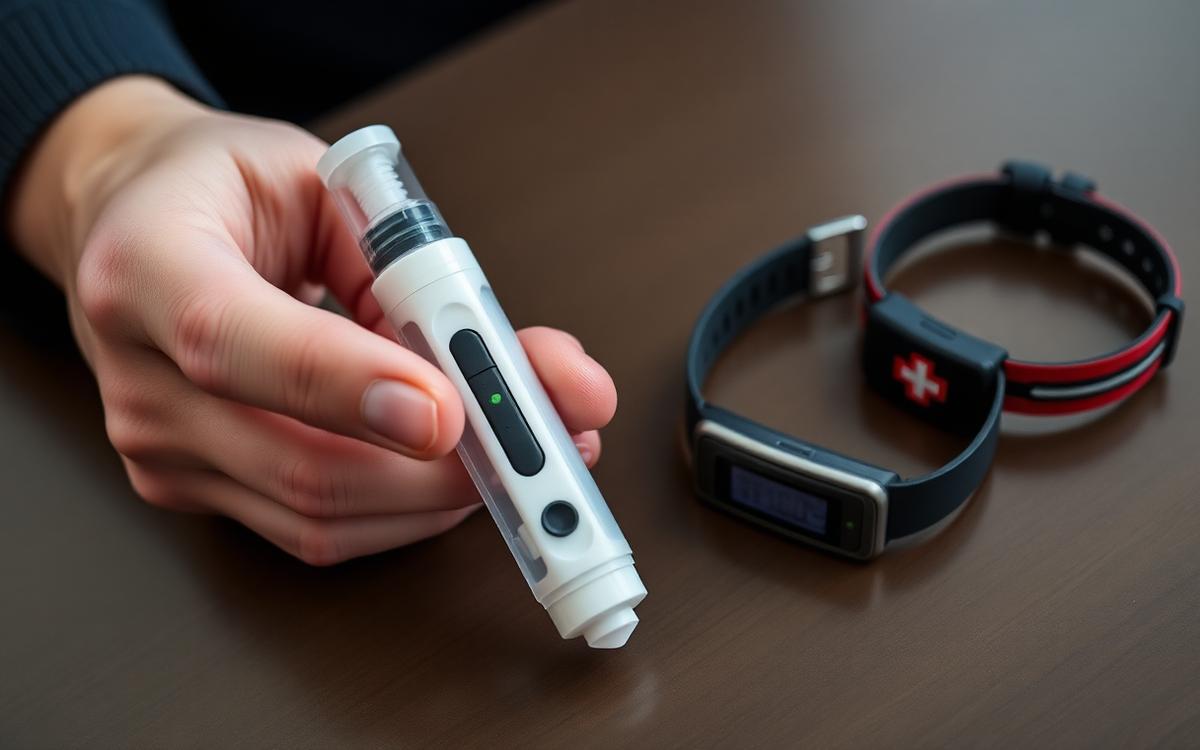
Reviewed against primary toxinology literature and IUCN assessments. This article is educational and is not medical advice — in an emergency contact your local poison centre or emergency services.
Most people who are stung by a bee or wasp experience pain, redness, and swelling that resolves within a day or two. But a minority of people have an immune system that overreacts to insect venom, and for them, a sting can trigger anaphylaxis, a rapid, whole-body allergic reaction that can become life-threatening within minutes.
Knowing the difference between a normal sting reaction and a dangerous allergic one, and knowing how to use an adrenaline auto-injector if one has been prescribed, can be the difference between a scary afternoon and a medical emergency. This guide walks through both.
Normal Reaction Versus Allergic Reaction
A typical sting reaction involves localized pain, redness, swelling, and itching at the site, sometimes extending a few inches beyond it over a day or two. This is uncomfortable but not dangerous for most people.
An allergic reaction is different in scope and speed. It involves the immune system reacting to venom proteins throughout the body, not just at the sting site, and can progress within minutes rather than hours.
- Local reaction: pain, swelling, redness confined near the sting, resolving in a few days
- Large local reaction: swelling that spreads further, sometimes affecting a whole limb, still not life-threatening but worth medical attention if severe
- Systemic allergic reaction: hives, swelling away from the sting site, difficulty breathing, dizziness, or a drop in blood pressure — this is anaphylaxis and is a medical emergency
Recognizing Anaphylaxis
Key Warning Signs
- Hives or widespread itching away from the sting site
- Swelling of the lips, tongue, throat, or face
- Difficulty breathing, wheezing, or a tight throat
- Rapid heartbeat, dizziness, or fainting
- Nausea, vomiting, or abdominal cramping alongside other symptoms
Anaphylaxis can occur within minutes of a sting, though in rare cases it develops somewhat later. Anyone showing these signs needs immediate treatment and emergency medical care, even if symptoms initially seem to improve.
Using an Adrenaline Auto-Injector
People with a known severe insect sting allergy are often prescribed an adrenaline (epinephrine) auto-injector to carry with them. These devices deliver a pre-measured dose of adrenaline into the outer thigh muscle, which helps reverse airway swelling, raise blood pressure, and support breathing.
- Remove the safety cap as instructed by the specific device
- Press the injector firmly against the outer thigh, through clothing if necessary
- Hold in place for the number of seconds specified by the device instructions
- Call emergency services immediately after use, even if symptoms improve
- A second dose may be needed if symptoms do not improve within several minutes, per device and physician guidance
Editor's note: Adrenaline auto-injectors buy time but do not replace emergency medical care. Always seek follow-up treatment after any anaphylactic episode, since symptoms can recur.
Who Should Carry One
Anyone who has previously experienced a systemic allergic reaction to an insect sting is generally advised by allergists to carry an auto-injector and to consider venom immunotherapy, a series of allergy shots that can substantially reduce future reaction severity.
Family members, caregivers, teachers, and coworkers of someone with a known allergy should also learn how to recognize symptoms and use the device, since the affected person may not be able to self-administer during a severe reaction.
Reducing Sting Risk
People with known allergies benefit from practical precautions: avoiding walking barefoot in grass, being cautious around flowering plants and garbage bins, wearing closed shoes outdoors, and avoiding sweet-smelling perfumes that can attract stinging insects during outdoor activities.
Keeping the auto-injector accessible, not expired, and stored at an appropriate temperature is equally important, since a degraded or out-of-date device may not deliver a full, effective dose.
Key takeaways
- Local swelling and pain from a sting is normal; hives, breathing trouble, or dizziness away from the site signal anaphylaxis
- Anaphylaxis can develop within minutes and is a medical emergency
- Adrenaline auto-injectors are administered into the outer thigh and should be followed by an emergency call regardless of improvement
- Anyone with a history of systemic sting reactions should discuss carrying an auto-injector and venom immunotherapy with an allergist
- Auto-injectors must be kept accessible, unexpired, and at proper storage temperature
Frequently asked questions
Can a bee sting allergy develop later in life even if past stings were fine?+
Yes. Allergic sensitization can develop after any sting, so a severe reaction can occur even in someone with a history of mild reactions.
How many times can someone be stung before becoming allergic?+
There is no fixed number. Sensitization varies by individual and can occur after one sting or many.
Is it safe to give a second dose of adrenaline?+
Follow your prescribing physician's guidance and device instructions; a second dose is sometimes recommended if symptoms persist after several minutes, but emergency services should already be en route.
Does venom immunotherapy really work?+
Research shows it significantly reduces the risk and severity of future systemic reactions in most people who complete the recommended course.
Should I go to the hospital even after using the injector and feeling better?+
Yes. Symptoms can return after the adrenaline wears off, a phenomenon called a biphasic reaction, so medical evaluation afterward is important.