Venomous Insects · Cornerstone guide
Africanized Honey Bees: The Truth About "Killer Bees"
Africanized honey bees are not more venomous than ordinary honey bees, but their aggressive defense behavior makes mass-stinging incidents far more dangerous.
 By Mahmoud OsamaSenior Wildlife Researcher & Editor-in-ChiefPublished 4 September 2025 · Updated 4 September 2025 · 8 min read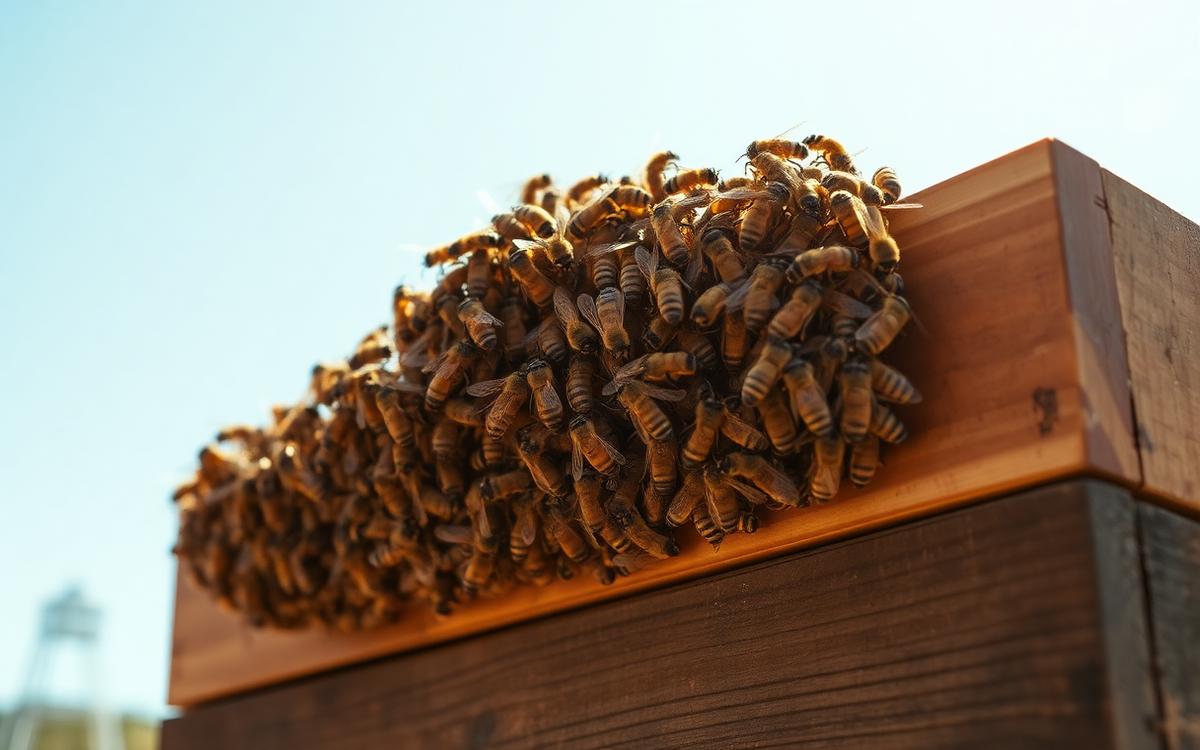
Reviewed against primary toxinology literature and IUCN assessments. This article is educational and is not medical advice — in an emergency contact your local poison centre or emergency services.
"Killer bees" sound like a monster from a B-movie, but Africanized honey bees (AHB) are a real, established hybrid population across the southern United States, Mexico, and much of Central and South America. They descend from East African lowland honey bees (Apis mellifera scutellata) brought to Brazil in 1956 for breeding experiments, some of which escaped and interbred with local European honey bee stock.
The venom of an individual Africanized bee is not meaningfully more toxic than that of a European honey bee. What changed is behavior: Africanized colonies defend their nests more readily, in greater numbers, and over longer distances, which turns a single provoked encounter into dozens or hundreds of stings. That volume of venom, not its potency, is what makes AHB genuinely dangerous.
Where They Came From and How They Spread
Africanized bees have expanded roughly 300 to 500 kilometers per year since their accidental release in Brazil, reaching Texas by 1990 and now occupying most of the southern U.S. sun belt from California to Florida. They readily hybridize with feral and managed European colonies, so genetic testing is usually needed to confirm a colony's ancestry with certainty.
Africanized queens outcompete European queens in many wild settings because their colonies swarm and reproduce more frequently, invest less energy in honey storage, and tolerate hotter, drier climates. This reproductive strategy is precisely why they spread so fast across the Americas.
Why They Are Called "Killer" Bees
Africanized colonies respond to disturbance faster, recruit more nestmates to attack, and pursue perceived threats farther from the hive than European colonies. Vibration, carbon dioxide from breathing, dark clothing, and even loud engine noise near a nest can trigger a defensive swarm.
- Faster alarm response — often within seconds of disturbance
- Larger number of bees recruited to defend the colony
- Pursuit distances of 100 meters or more, versus a few meters for European bees
- Greater sensitivity to vibration and noise near the nest
Because each sting delivers a similar dose of venom, a mass attack can inject a life-threatening cumulative amount even in people without allergies.
Medical Risk: Stings vs. Allergy vs. Toxic Load
Two distinct dangers
The first is classic anaphylaxis, an IgE-mediated allergic reaction that can occur from a single sting in sensitized individuals and requires immediate epinephrine. The second, more specific to Africanized bee encounters, is mass envenomation: enough cumulative stings (rules of thumb cite roughly 10 stings per kilogram of body weight as a rough threshold for serious toxicity) to cause direct venom toxicity — hemolysis, muscle breakdown (rhabdomyolysis), and kidney injury — even in people with no bee allergy at all.
Editor's note: Multiple bee stings (generally more than 10-20 in a short period) warrant emergency medical evaluation regardless of allergy history.
What To Do During an Attack
- Run in a straight line away from the area — do not swat, which releases alarm pheromone and attracts more bees
- Seek shelter indoors or in a vehicle with windows up; bees will linger outside but rarely follow far
- Do not jump into water — bees often wait at the surface for you to resurface
- Once safe, scrape out stingers with a fingernail or card rather than pinching with tweezers, which can squeeze more venom in
- Call emergency services if stung more than roughly 10-20 times or if any sign of allergic reaction appears
Reducing Risk Around Your Property
Have a licensed pest control operator or beekeeper inspect and remove suspected wild colonies rather than attempting DIY removal. Seal wall voids, chimneys, and irrigation boxes where feral swarms often nest, and avoid using lawn equipment near known hive sites.
Key takeaways
- Africanized honey bee venom is chemically similar to European honey bee venom, not more potent per sting.
- Danger comes from defensive behavior: faster, larger, and longer-pursuing attacks that deliver many more total stings.
- Mass stinging (roughly 10+ stings per kg body weight) can cause toxic organ injury independent of allergy.
- Run in a straight line and seek shelter; do not swat or jump into water.
- Professional removal of wild colonies near homes reduces risk of accidental disturbance.
Frequently asked questions
Are Africanized bees more venomous than regular honey bees?+
No. Studies show the venom itself is very similar in composition and potency; the danger comes from far more aggressive colony defense and higher total sting counts.
How far will Africanized bees chase a person?+
Reports document pursuit distances of 100 meters (about 330 feet) or more, compared to just a few meters for typical European honey bee colonies.
Can you tell Africanized bees apart from European bees by sight?+
Not reliably in the field. They are slightly smaller on average, but confirming ancestry usually requires morphometric or genetic analysis.
How many stings are dangerous?+
General guidance treats more than 10 stings per kilogram of body weight as a threshold for potential systemic toxicity, though any large number of stings warrants medical evaluation.
Where in the U.S. are Africanized bees established?+
They are established across much of the southern tier, including Texas, Arizona, New Mexico, southern California, Nevada, and parts of Florida and the Gulf Coast.