Rare & Endangered Animals · Cornerstone guide
The Vaquita: Anatomy of the World's Most Urgent Extinction
Fewer than a dozen vaquitas are thought to remain. The cause is not mysterious — it is one fishing method in one small bay.
 By Mahmoud OsamaSenior Wildlife Researcher & Editor-in-ChiefPublished 14 February 2026 · Updated 30 July 2026 · 10 min read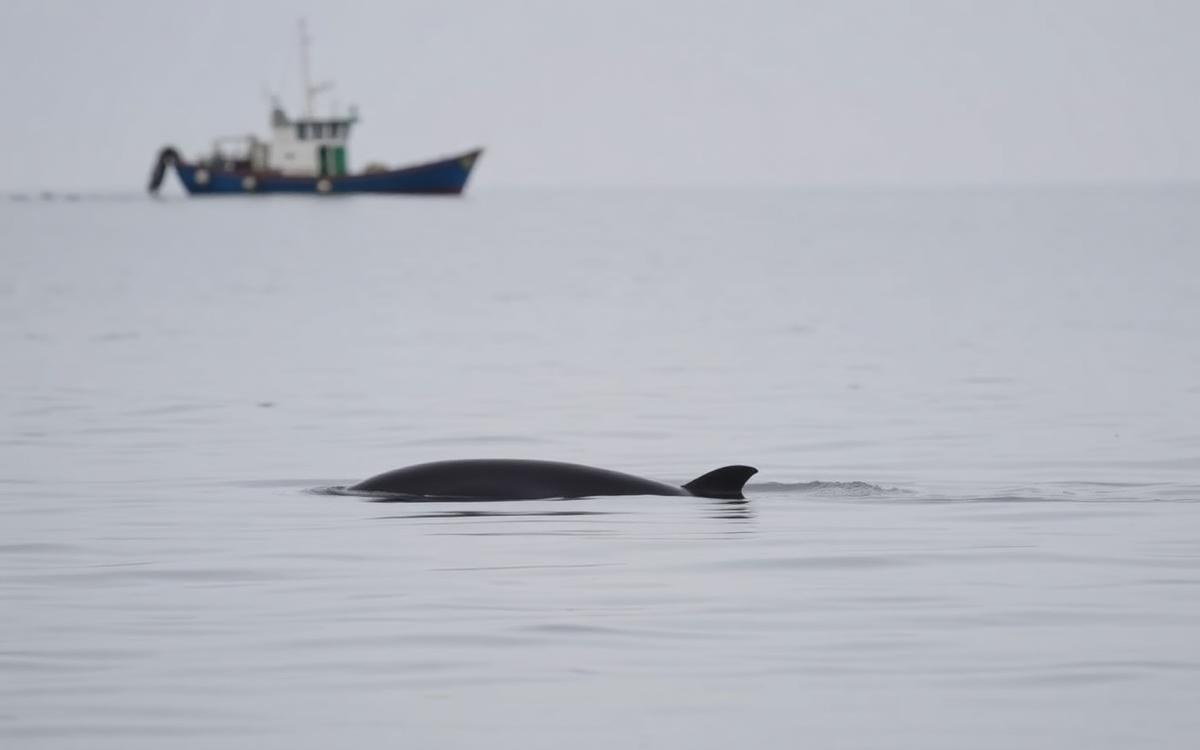
Reviewed against primary toxinology literature and IUCN assessments. This article is educational and is not medical advice — in an emergency contact your local poison centre or emergency services.
The vaquita is the clearest case in modern conservation of a species dying from a single, identifiable and technically solvable cause. There is no habitat mystery, no disease, no climate ambiguity. There are gillnets in one shallow corner of the Gulf of California.
This profile covers the animal's biology, the economics that drive the nets, what population surveys currently indicate, and what the remaining realistic options are.
A porpoise found in one place only
Phocoena sinus is the smallest cetacean, reaching about 1.5 metres. It has dark eye and lip patches that give it a distinctive face, and it lives entirely within a small area of the northern Gulf of California, Mexico — one of the most restricted ranges of any marine mammal.
The species was only formally described in 1958, from skulls found on a beach. It has never been abundant. Endemism at this scale means there is no reservoir population elsewhere to draw on.
One cause: gillnet entanglement
Vaquitas drown in gillnets. The nets are set for shrimp and for totoaba, a large endangered fish whose swim bladder is trafficked to markets where it commands extraordinary prices per kilogram. Vaquitas are not targeted at any point; they are bycatch.
The economics are the hard part. A single totoaba bladder can be worth more than a fishing family earns in months, which sustains illegal fishing in the face of bans, naval patrols and net-removal operations.
- Gillnets are effectively invisible to a porpoise's echolocation at close range.
- The vaquita's entire range overlaps the productive fishing grounds.
- Enforcement has improved in a designated zero-tolerance area but remains incomplete.
- Alternative gear trials exist for shrimp but adoption has been slow and contested.
What surveys show
Acoustic monitoring, using arrays that detect vaquita echolocation clicks, has tracked a steep decline over the last two decades from a few hundred animals to a population most recent surveys estimate in the single digits to low teens.
One genuinely encouraging finding: observed animals appear healthy and calves have been recorded in recent survey seasons. Genetic modelling also suggests the species has historically had low diversity and may be less vulnerable to inbreeding depression than feared. Biology is not the limiting factor. Nets are.
Editor's note: Population figures for the vaquita change with each survey season. Always check the latest CIRVA or IUCN assessment before citing a number.
What has and has not worked
Captive breeding
A 2017 attempt to bring vaquitas into protective care ended after a captured animal died from capture stress. The programme was halted, and the consensus since is that the species cannot be saved ex situ.
Net removal and patrols
Removal of ghost nets and active patrols inside the zero-tolerance zone have measurably reduced net density in the core area. Where enforcement is sustained, detections have stabilised rather than continued falling.
Fishing community support
Compensation and alternative-livelihood schemes have had mixed results, undermined by inconsistent funding and by the extreme profitability of totoaba. Conservation outcomes here depend on demand-side enforcement in destination markets as much as on Mexican patrol boats.
What the vaquita teaches about extinction
Most extinctions are diffuse: many pressures, long timelines, complicated attribution. The vaquita is the opposite, and that is exactly why it functions as a test case. Where a threat is singular, local and known, failure to act is a governance problem rather than a scientific one.
Key takeaways
- The vaquita is endemic to a tiny area of the northern Gulf of California.
- Gillnet bycatch, driven largely by the illegal totoaba trade, is the sole significant threat.
- Recent surveys estimate a population in the single digits to low teens, with healthy animals and observed calves.
- Captive breeding was attempted and abandoned after a fatality; in-water protection is the only route left.
- Enforcement inside the zero-tolerance zone measurably reduces mortality when sustained.
Frequently asked questions
How many vaquitas are left?+
Recent acoustic and visual surveys have estimated roughly six to thirteen individuals, with confidence intervals that overlap between seasons. Check the current IUCN or CIRVA assessment for the latest figure.
Can the vaquita still be saved?+
Scientists working on the species say yes, conditionally. Genetic modelling suggests recovery is biologically possible if gillnet mortality stops entirely and quickly.
Why is totoaba swim bladder so valuable?+
It is traded as a luxury and traditional medicine product in some markets, reaching prices that make illegal fishing worth the enforcement risk.