Wildlife Safety & First Aid · Cornerstone guide
Snakebite First Aid: The First Ten Minutes That Matter
Most snakebite harm caused by bystanders happens in the first ten minutes. Here is the evidence-based sequence.
 By Mahmoud OsamaSenior Wildlife Researcher & Editor-in-ChiefPublished 25 July 2026 · Updated 15 August 2026 · 9 min read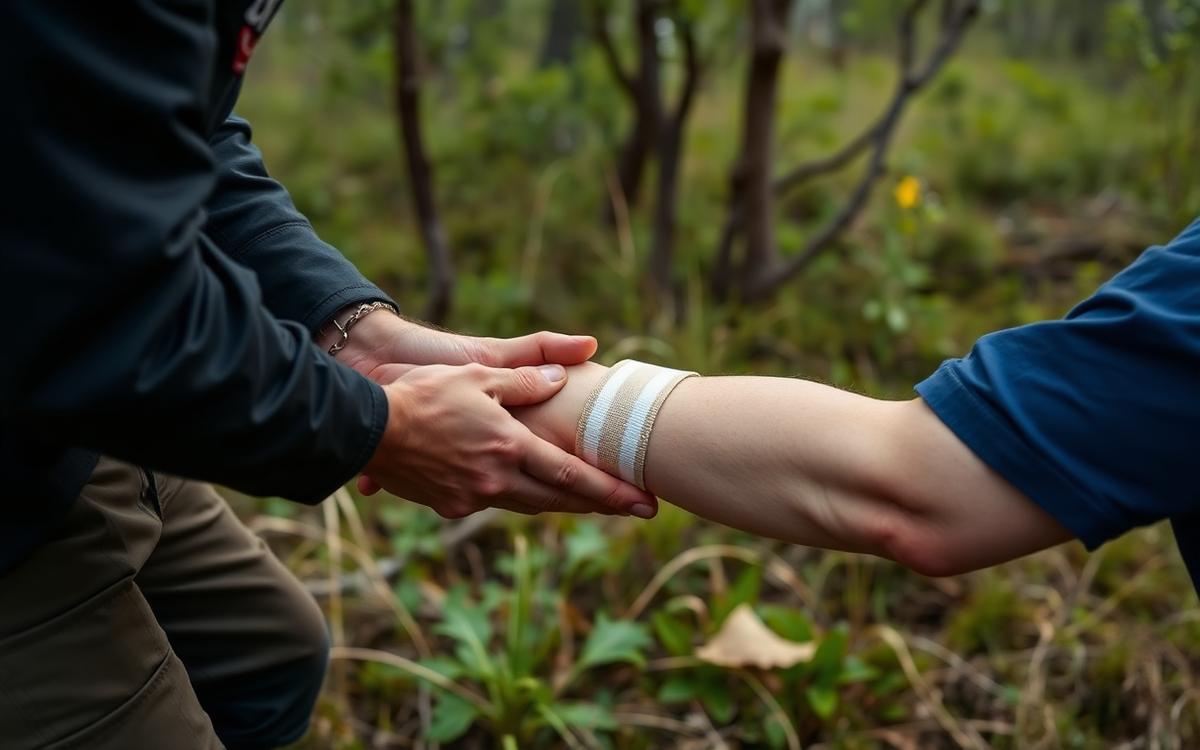
Reviewed against primary toxinology literature and IUCN assessments. This article is educational and is not medical advice — in an emergency contact your local poison centre or emergency services.
Snakebite envenoming is classified by the World Health Organization as a neglected tropical disease, causing well over 100,000 deaths and hundreds of thousands of amputations and permanent disabilities each year. Most of that burden falls on rural agricultural workers.
The interventions that improve outcomes are unglamorous: stay still, immobilise, transport, and reach antivenom. The interventions that cause harm — cutting, sucking, tourniquets, electric shock — remain widespread. This guide covers both.
The correct sequence
- Move away from the snake. Do not attempt to catch or kill it; secondary bites are common.
- Call emergency services or arrange immediate transport to a facility that stocks antivenom.
- Keep the person still and calm. Physical activity accelerates lymphatic and vascular venom spread.
- Remove rings, watches and tight clothing from the bitten limb before swelling starts.
- Immobilise the limb at heart level with an improvised splint.
- Mark the leading edge of swelling with a pen and note the time, repeating every 15 minutes. This gives the treating clinician a progression record.
- Photograph the snake only if it can be done from a safe distance.
When pressure immobilisation applies
Pressure immobilisation bandaging — a broad elastic bandage applied firmly over the bite and along the whole limb, then splinted — is recommended for bites by neurotoxic elapids, principally in Australia and for some sea snakes and kraits.
It is not recommended for most viper bites, where venom causes severe local tissue destruction and trapping it in the limb can worsen necrosis and compartment syndrome. Because regional guidance differs, follow your national poison centre's protocol rather than a general rule.
Myths that cause harm
- Cutting and sucking: removes negligible venom, introduces infection, damages tissue and nerves.
- Arterial tourniquets: concentrate venom, cause ischaemia and are a documented cause of amputation.
- Suction devices: shown in studies to remove essentially no venom while delaying transport.
- Ice: worsens local tissue injury.
- Electric shock: no benefit, real burn and cardiac risk.
- Alcohol or stimulants: alter physiology and cloud clinical assessment.
- Herbal poultices and snake stones: delay definitive care, the single strongest predictor of a bad outcome.
How antivenom works and its limits
Antivenom is made from antibodies raised in animals — typically horses or sheep — immunised with small, escalating venom doses. Purified antibody fragments bind circulating venom components and neutralise them.
- It is species- or region-specific. A polyvalent product covers a defined group of local snakes and nothing else.
- It reverses systemic effects best when given early; established tissue necrosis cannot be undone.
- Adverse reactions, including anaphylaxis and delayed serum sickness, are possible, which is why administration belongs in a facility with resuscitation capability.
- Cold-chain requirements and cost create serious access gaps in exactly the regions with the highest burden.
Prevention where risk is highest
- Wear boots and long trousers when working in fields or walking at night.
- Carry a torch after dark; most bites to the lower leg happen in low light.
- Keep rodent populations down around dwellings — rodents attract snakes.
- Sleep under a tucked-in bed net in krait-endemic regions; night bites to sleeping people are a recognised pattern.
- Clear rubble, thick ground cover and food waste from around buildings.
- Know before you travel which facility in the area stocks antivenom.
Key takeaways
- Immobilise, transport, and get to antivenom — nothing else in the field changes outcomes.
- Pressure immobilisation suits neurotoxic elapid bites, not most viper bites.
- Tourniquets, cutting and suction cause harm and delay treatment.
- Antivenom is region-specific and works best given early.
- Boots, torches and rodent control prevent a large share of bites.
Frequently asked questions
Should I try to catch the snake for identification?+
No. Secondary bites during capture attempts are common. A photograph from a safe distance, or a clear description, is sufficient for clinicians in most regions.
How long do I have after a snakebite?+
It varies enormously by species and dose. Some elapid envenomations progress within an hour; some viper bites evolve over many hours. Treat every bite as urgent.
Are dry bites common?+
Yes. A substantial share of bites deliver little or no venom, but this can only be confirmed by observation in a medical facility, not in the field.