Wildlife Safety & First Aid · Cornerstone guide
Pressure Immobilisation Bandaging: The First-Aid Technique That Slows Venom
Pressure immobilisation bandaging can buy critical time after a suspected elapid snakebite by slowing lymphatic spread of venom until emergency care arrives.
 By Mahmoud OsamaSenior Wildlife Researcher & Editor-in-ChiefPublished 5 September 2025 · Updated 5 September 2025 · 8 min read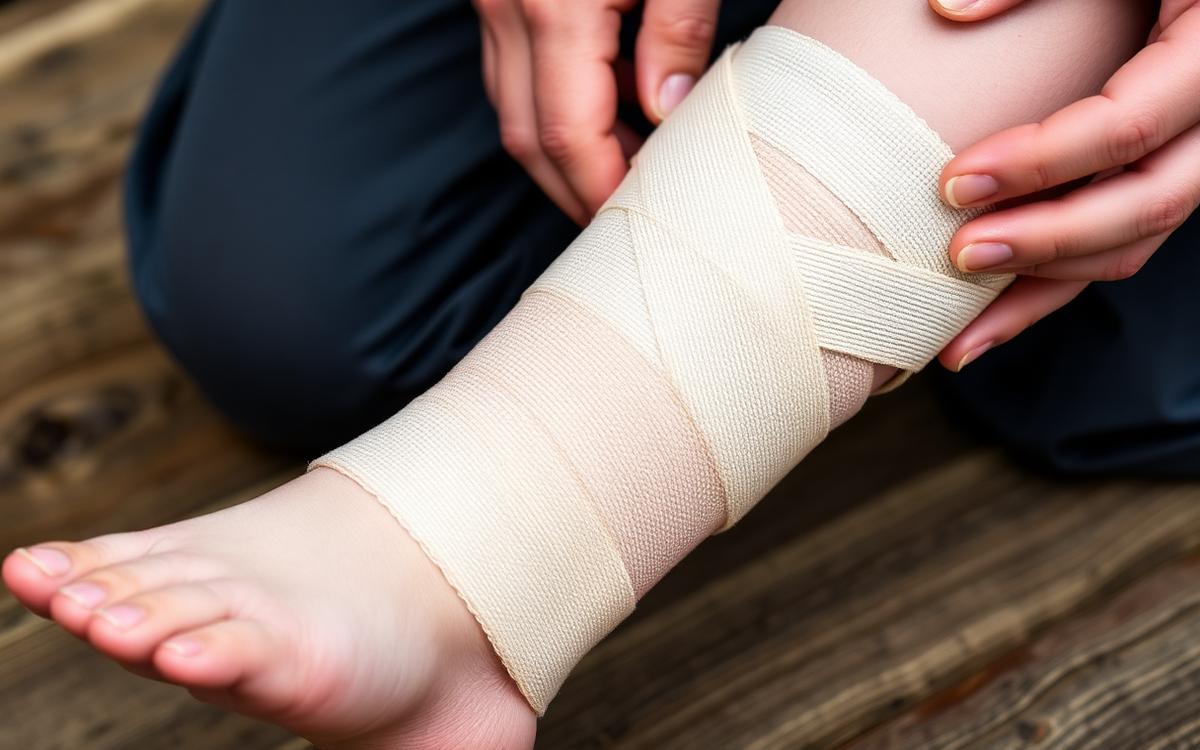
Reviewed against primary toxinology literature and IUCN assessments. This article is educational and is not medical advice — in an emergency contact your local poison centre or emergency services.
When someone is bitten by a snake whose venom acts on the nervous system, the biggest danger is often how quickly toxins move from the bite site into the bloodstream via the lymphatic system. Pressure immobilisation bandaging is a specific first-aid technique developed to slow that process, giving a bitten person more time to reach a hospital before paralysis or other severe effects set in.
The method is not a universal snakebite treatment. It was designed primarily around Australian elapid snakes, such as taipans and brown snakes, whose venoms travel through lymphatics rather than causing rapid local tissue destruction. Understanding when to use it, and when it can actually cause harm, is essential for anyone hiking, camping, or working in snake habitat.
How Pressure Immobilisation Works
The technique combines two actions: applying firm, even pressure over and around the bite with a bandage, and immobilising the affected limb so muscle movement does not pump venom-laden lymph fluid toward the torso. Unlike a tourniquet, it is not meant to cut off blood flow to the limb, which can cause dangerous tissue damage.
The bandage is wrapped starting at the bite site and extending up the whole limb, at a tension similar to that used for a sprained ankle: firm but allowing a finger to be slipped underneath. A splint is then applied to prevent joint movement, and the patient is kept as still as possible, ideally carried rather than walking.
Why Stillness Matters
Muscle contractions in a moving limb act like a pump, pushing lymph and any absorbed venom toward the central circulation much faster than passive diffusion would. Keeping the patient still and the limb splinted slows this dramatically, which is why rescuers are trained to carry victims out rather than let them walk to safety.
When This Technique Applies
Pressure immobilisation is recommended for bites from snakes with neurotoxic venoms that spread via the lymphatic system, most notably many Australian elapids and some other elapid species elsewhere. It is not generally recommended for bites from vipers and pit vipers common in the Americas and much of Asia, whose venoms often cause severe local swelling and tissue damage; trapping that venom under a tight bandage in one area can worsen local injury.
- Use for suspected elapid bites in regions where these snakes are common, such as Australia
- Do not use for most viper or pit viper bites unless local protocols specifically advise it
- Do not use for bites with a lot of visible local swelling, blistering, or bleeding at the site, which suggests a cytotoxic venom
- When in doubt and no clear identification is possible, follow local emergency medical guidance, since regional protocols vary
Step-by-Step Field Application
- Call emergency services or arrange evacuation immediately; do not delay for bandaging
- Keep the victim calm and still, lying down if possible, with the bitten limb below heart level avoided in favor of a neutral position
- Do not wash the bite site, as venom residue can help identify the snake later
- Apply a broad elastic bandage directly over the bite first, then continue wrapping upward to cover the entire limb
- Splint the limb with a rigid object to prevent bending at joints
- Mark the time of the bite and bandage application, and monitor circulation in fingers or toes
Editor's note: This is general education, not medical instruction for an emergency in progress. Always follow the guidance of local emergency dispatchers and get the person to definitive medical care as fast as possible.
Common Mistakes That Undermine the Technique
Many well-meaning rescuers wrap only around the bite itself rather than the whole limb, which does little to slow lymphatic spread. Others apply the bandage too loosely to have any effect, or so tightly it functions as a tourniquet and risks the limb's blood supply.
Another frequent error is letting the patient walk to a vehicle or trailhead after bandaging. Even a short walk can significantly accelerate venom movement. Whenever possible, arrange for the patient to be carried or to wait for evacuation rather than self-transport.
What Happens After the Bandage Is On
The bandage should not be removed until the patient is at a medical facility equipped to manage the potential effects of envenomation and, if needed, administer antivenom. Removing it prematurely in the field can trigger a sudden surge of venom into circulation.
Hospital staff will assess symptoms, run clotting and other blood tests, and decide whether antivenom or supportive care such as ventilation support is needed before the bandage comes off under controlled conditions.
Key takeaways
- Pressure immobilisation slows lymphatic spread of venom; it is not a tourniquet and should not cut off blood flow
- It is best supported for elapid snakebites, not most viper or pit viper bites with prominent local tissue damage
- The whole limb should be bandaged and splinted, not just the bite site
- Keeping the patient still and carrying rather than walking them out is critical
- The bandage should stay in place until removed by medical professionals
Frequently asked questions
Should I use pressure immobilisation for a rattlesnake bite?+
Most protocols in the Americas do not recommend it for pit viper bites due to the risk of concentrating tissue-damaging venom in one area. Follow local emergency guidance and get to a hospital quickly.
Can I use a regular ace bandage?+
Yes, a wide elastic bandage works well. The key is even, firm tension over the entire limb and a splint to prevent movement.
Is cutting the bite and sucking out venom ever helpful?+
No. This outdated method removes very little venom and can introduce infection or damage tissue. It is not recommended by any major medical body.
How long can a pressure bandage safely stay on?+
It should remain until the patient reaches medical care, which is why fast evacuation is essential. It should be checked periodically for circulation.
What if I cannot identify the snake?+
Treat the bite seriously regardless. Note the snake's appearance if safely possible, but prioritize getting the patient to care over identification.