Wildlife Safety & First Aid · Supporting guide
LD50 Explained: Why This Popular Toxicity Metric Misleads
LD50 numbers get thrown around constantly in venom rankings, but the metric was never designed to tell you how dangerous an animal is to a human.
 By Mahmoud OsamaSenior Wildlife Researcher & Editor-in-ChiefPublished 2 October 2025 · Updated 2 October 2025 · 6 min read
Reviewed against primary toxinology literature and IUCN assessments. This article is educational and is not medical advice — in an emergency contact your local poison centre or emergency services.
LD50 — "lethal dose, 50%" — is the number most frequently cited when comparing how dangerous different venoms are. It sounds authoritative and scientific, and in a narrow laboratory sense, it is. But LD50 was designed as a standardized tool for toxicology research, not as a real-world danger scale, and using it that way leads to some deeply misleading conclusions.
This article unpacks exactly what LD50 measures, how it's calculated, and why relying on it alone to judge an animal's real-world threat to humans is a mistake that even well-meaning science communicators make regularly.
What LD50 Actually Measures
LD50 refers to the dose of a substance required to kill 50% of a test population, usually mice or rats, under controlled laboratory conditions. It's expressed in milligrams of toxin per kilogram of body weight (mg/kg). A lower LD50 means less substance is needed to be lethal — so, counterintuitively, lower numbers indicate higher toxicity.
The test was standardized decades ago as a general toxicology tool for chemicals, pesticides, and pharmaceuticals, then later applied to venom research as a convenient way to compare potency across species in a controlled setting.
The Core Limitations
- Species difference: mice metabolize toxins differently than humans; a venom devastating to a mouse's nervous system may act differently on human physiology.
- Injection route: subcutaneous, intravenous, and intramuscular injections produce different LD50 values for the same venom, and studies aren't always consistent about which route they use.
- No account for venom yield: LD50 says nothing about how much venom an animal actually delivers in a real bite or sting.
- No account for delivery efficiency: a venomous animal with poor fangs or a weak stinger may inject far less venom than its potency suggests is dangerous.
- Ignores medical intervention: LD50 doesn't factor in antivenom availability, treatment speed, or supportive care that dramatically change survival odds.
A Case Study in Misleading Comparisons
Toxic in the Lab, Rare in the Clinic
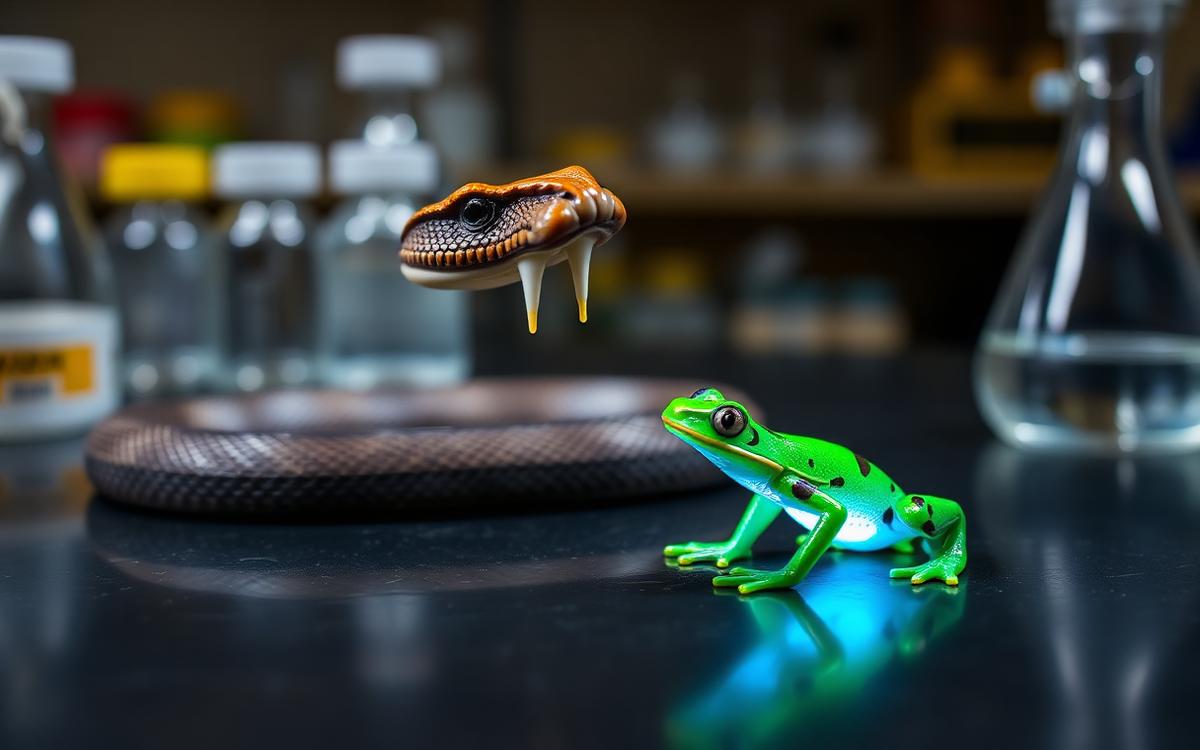
The inland taipan is repeatedly cited as having the "most toxic" venom based on subcutaneous mouse LD50 data. Yet it is a shy, non-aggressive snake living in remote parts of central Australia, rarely encountering humans, and has no confirmed human fatalities on record thanks to prompt antivenom treatment in the rare bite cases that do occur.
Meanwhile, snakes with substantially higher (less toxic-sounding) LD50 values, like certain vipers, cause thousands of deaths annually simply because they live near dense human populations, bite defensively and often, and antivenom is not always accessible in the affected regions.
What Better Risk Assessment Looks Like
Toxinologists increasingly favor combined risk models that weigh venom yield, bite frequency, human population overlap, and healthcare access alongside LD50 data. Some researchers propose a "venom toxicity score" that multiplies LD50 by typical yield to approximate a more realistic danger index, though even this remains an approximation.
The World Health Organization's snakebite envenoming strategy, for instance, focuses on regional death tolls and healthcare access rather than laboratory toxicity rankings, because that's what actually predicts human suffering and mortality.
What This Means for You
If you encounter a "most venomous animal" list online, treat the LD50-based ranking as one data point among many, not a definitive danger scale. Real-world risk depends heavily on where you are, what species live there, and how quickly you can access medical care.
Editor's note: When traveling in venomous-animal habitat, research local species' actual bite/sting incidence and hospital proximity — this tells you far more about your real risk than any LD50 chart.
Key takeaways
- LD50 measures the dose lethal to 50% of a test population, usually mice, not humans.
- Lower LD50 numbers mean higher toxicity, which can be confusing at first glance.
- LD50 ignores venom yield, delivery efficiency, and access to medical treatment.
- The inland taipan's high lab toxicity does not translate to real-world human death tolls.
- Combined risk models factoring in yield and healthcare access are more useful than LD50 alone.
Frequently asked questions
Does a lower LD50 always mean a more dangerous animal?+
Not necessarily to humans in the real world — it means the venom is more toxic per unit of body weight in the tested lab animal, but real danger depends on many other factors like venom yield and encounter rates.
Why do scientists still use LD50 at all?+
It provides a standardized, reproducible way to compare toxin potency in controlled conditions, which is useful for research purposes even if it's a poor stand-alone danger predictor.
Is there a better alternative to LD50?+
Some researchers use combined risk indices that factor in venom yield and delivery efficiency, though no single universally adopted alternative exists yet.
Are LD50 tests still performed on live animals today?+
Regulatory requirements have shifted toward reducing animal testing, and many labs now use refined methods with smaller sample sizes or alternative assays where possible.