Venomous Insects · Cornerstone guide
Giant Hornets: Venom Dose, Real Risk and How to Identify Them
Giant hornets are genuinely dangerous, but for reasons most headlines get wrong. The threat is dose and swarming, not a uniquely lethal toxin.
 By Mahmoud OsamaSenior Wildlife Researcher & Editor-in-ChiefPublished 18 April 2026 · Updated 2 August 2026 · 10 min read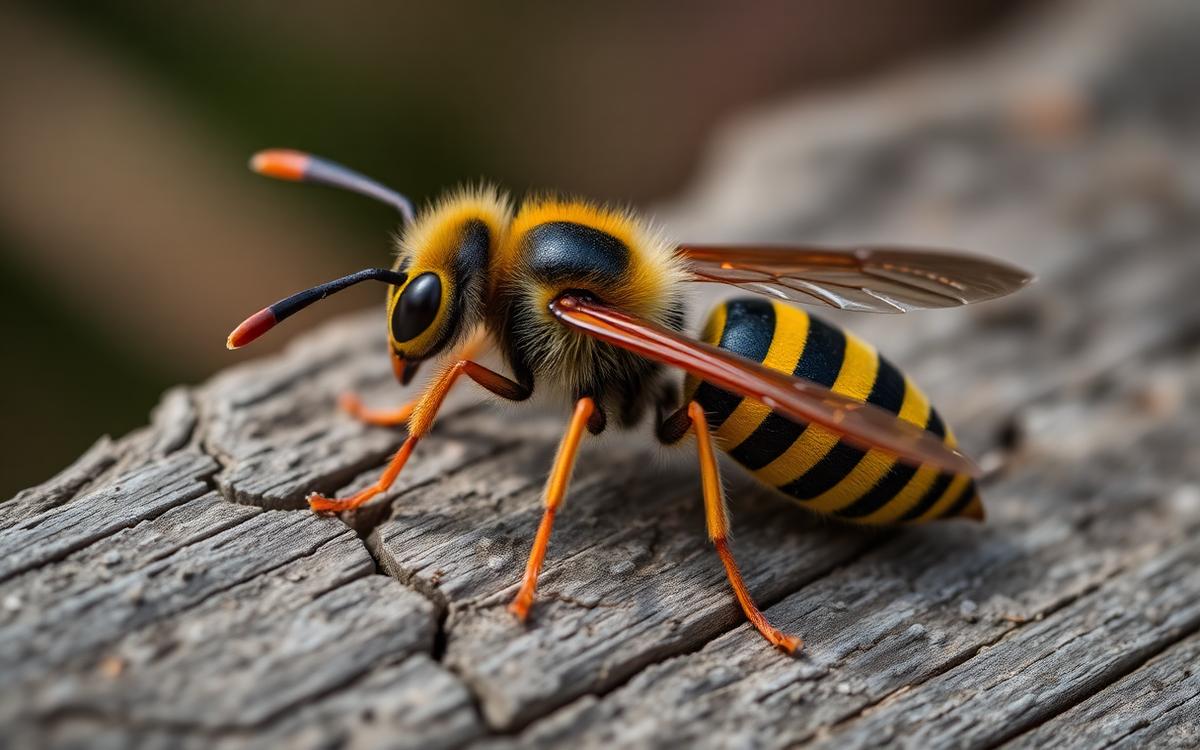
Reviewed against primary toxinology literature and IUCN assessments. This article is educational and is not medical advice — in an emergency contact your local poison centre or emergency services.
When Vespa mandarinia was detected in North America, the nickname murder hornet did more to shape public understanding than any peer-reviewed source. The species is real, the risk is real, and both are frequently misdescribed.
This guide separates verifiable biology from headline framing: what the venom actually contains, why the danger scales with the number of stings, what the fatality data does and does not show, and how to identify large Vespa species without panicking about every big wasp in the garden.
Identifying a giant hornet
Size alone is a poor identifier because European hornets, cicada killers and horntails are all large and commonly mistaken for something worse. Look at the head and the abdominal banding together.
- Vespa mandarinia: 35–45 mm workers, broad orange-yellow head noticeably wider than the thorax, dark thorax, and evenly banded orange-brown abdomen.
- European hornet (Vespa crabro): 25–35 mm, reddish-brown thorax, yellow abdomen with dark teardrop markings, common across Europe and eastern North America.
- Cicada killer wasp: similar length but slender, black with pale yellow bars, solitary, and almost never aggressive toward people.
- Horntail / wood wasp: no waist constriction and no functional sting — the tail spike is an ovipositor.
What the venom contains
Vespa venoms are complex mixtures rather than a single toxin. The main functional groups are phospholipases and hyaluronidase that break down cell membranes and connective tissue, mastoparan-type peptides that trigger histamine release from mast cells, and biogenic amines including histamine, serotonin and acetylcholine that produce immediate pain.
This combination causes intense local pain, rapid swelling and tissue destruction at the puncture. It is not exceptionally potent per microlitre when compared with elapid snake venom; what distinguishes large hornets is delivery volume. A big Vespa can inject several times the dose of a honeybee and, unlike a bee, can sting repeatedly without dying.
The three routes to a serious outcome
- Anaphylaxis: an immune reaction that can follow a single sting in a sensitised person. This is the most common cause of hornet-related deaths worldwide.
- Systemic toxicity from mass envenomation: dozens of stings can produce rhabdomyolysis, haemolysis, kidney injury and clotting abnormalities. This is dose-driven and requires hospital care.
- Airway compromise: stings in the mouth or throat, usually after a hornet is disturbed near food or drink.
Putting the risk in perspective
Hornet and wasp fatalities are concentrated in allergic reactions and in mass-sting incidents near disturbed nests, often during agricultural or forestry work. In most temperate countries the annual death toll from all stinging Hymenoptera combined is measured in single or low double digits.
Reporting that implies random attacks on passers-by misrepresents the animal. Foraging hornets away from the nest are focused on prey and largely indifferent to humans. Defensive behaviour begins within a few metres of the nest and escalates sharply if the nest is vibrated, struck or sprayed inadequately.
Why beekeepers care most
The ecological alarm around Vespa mandarinia concerns honeybees rather than people. A small group of hornets in the slaughter phase can destroy a colony of tens of thousands of European honeybees in hours, decapitating workers and then harvesting brood.
Japanese honeybees evolved a counter-strategy — engulfing an intruding scout in a ball of bees and killing it with heat and carbon dioxide. European honeybees, the backbone of commercial apiculture, have no equivalent defence, which is why detections trigger eradication programmes.
What to do if you are stung or find a nest
- Leave the area quickly and in a straight line; hornets pursue further than wasps and are attracted to swatting motion.
- Wash the site, apply a cold pack and take oral analgesia. Antihistamines help with local itching and swelling.
- Count the stings. Ten or more in an adult, or any significant number in a child, warrants medical assessment even if the person feels well.
- Watch for hives away from the sting site, throat tightness, wheeze, vomiting or faintness — call emergency services immediately.
- Never treat a nest yourself. Report suspected invasive hornet nests to your national plant-health or agriculture authority.
Key takeaways
- Giant hornet danger comes from venom volume and repeated stinging, not a uniquely potent toxin.
- Anaphylaxis causes most sting fatalities; mass envenomation is the second pathway.
- Head width and abdominal banding are the reliable identification cues.
- Foraging hornets are not aggressive; nest defence is where incidents happen.
- Nest removal is a job for trained authorities, not homeowners.
Frequently asked questions
How many hornet stings are dangerous?+
Systemic toxicity generally becomes a concern above roughly ten stings in an adult and fewer in a child, though a single sting can be life-threatening for someone with venom allergy.
Do giant hornets attack humans unprovoked?+
Not typically. Almost all serious incidents involve nest disturbance within a few metres, including accidental disturbance while mowing, harvesting or clearing brush.
Is an EpiPen useful for hornet stings?+
Adrenaline auto-injectors treat anaphylaxis, not venom toxicity. If you have a known Hymenoptera allergy, carry one and still call emergency services after use.