Rare & Endangered Animals · Supporting guide
The Illegal Wildlife Trade: How It Works and Why It Persists
From ivory to pangolin scales, the illegal wildlife trade is one of the largest illicit markets on Earth, and one of the hardest to stop.
 By Mahmoud OsamaSenior Wildlife Researcher & Editor-in-ChiefPublished 20 December 2025 · Updated 20 December 2025 · 8 min read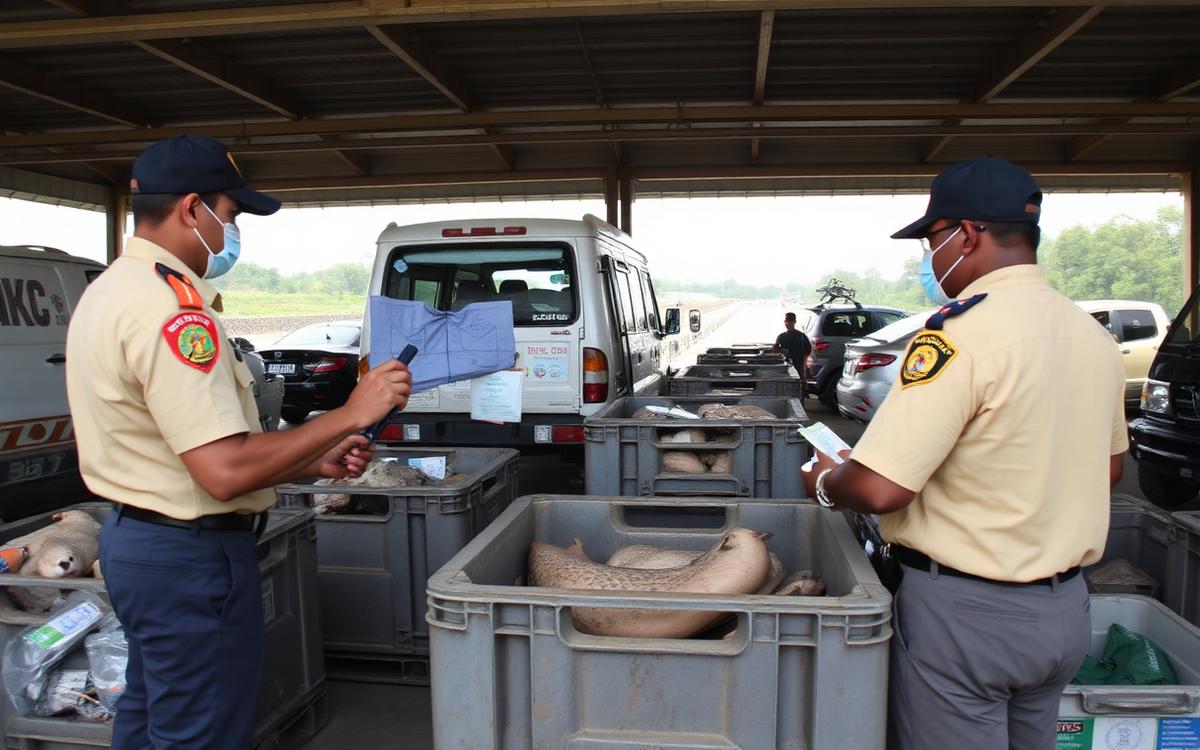
Reviewed against primary toxinology literature and IUCN assessments. This article is educational and is not medical advice — in an emergency contact your local poison centre or emergency services.
The illegal wildlife trade is estimated to be worth billions of dollars each year, ranking among the largest illegal markets in the world alongside narcotics, arms, and human trafficking. It spans everything from elephant ivory and rhino horn to pangolin scales, exotic reptiles, tropical timber, and rare orchids, moving through a sophisticated global network of poachers, middlemen, and buyers.
Unlike drug trafficking, wildlife trafficking often operates partly in the open, hiding within legal trade in similar products, which makes enforcement especially difficult. Understanding how the trade functions, and why demand persists despite decades of international effort, is essential to understanding why so many trafficked species remain in serious decline.
The Scale and Drivers of Demand
Demand for trafficked wildlife products comes from several distinct markets that rarely overlap: traditional medicine markets in parts of Asia, luxury status goods like ivory carvings, the exotic pet trade in North America and Europe, and specialty food markets for products like shark fin and pangolin meat.
Rhino horn illustrates how demand can persist despite being scientifically debunked. It is made of keratin, the same protein as human fingernails, with no proven medicinal effect, yet it continues to command extremely high prices in some markets, driven by status symbolism as much as any believed health benefit.
How the Trafficking Chain Operates
Wildlife trafficking typically moves through a layered supply chain designed to distance buyers from the violence and illegality at its source.
- Local poachers, often operating in poverty-affected areas with few economic alternatives
- Regional middlemen who consolidate and smuggle products across borders
- International traffickers who launder goods through legal trade channels or shell companies
- Retailers, both physical markets and increasingly online platforms
- End buyers, who are frequently unaware of or indifferent to a product's illegal origin
Corruption at border checkpoints and weak penalties in many jurisdictions, where wildlife trafficking convictions often carry lighter sentences than drug trafficking, make the trade comparatively low-risk and high-reward for organized crime groups.
Species Pushed Toward Extinction by Trafficking
Pangolins are frequently cited as the most trafficked mammal in the world, hunted for scales used in traditional medicine and meat considered a delicacy in some markets, despite scale keratin having no demonstrated medicinal properties.
African and Asian elephants continue to be poached for ivory despite international trade bans, while all five rhino species face ongoing horn poaching pressure. Songbirds, tortoises, and reptiles are also heavily trafficked for the exotic pet trade, often suffering high mortality rates during smuggling due to cramped, undocumented transport conditions.
Editor's note: CITES, the Convention on International Trade in Endangered Species, regulates or bans international trade in over 40,000 species, but enforcement capacity varies enormously between member countries.
Enforcement and Prevention Efforts
Modern anti-trafficking work combines several approaches simultaneously, since no single tactic has proven sufficient on its own.
- DNA forensics to trace ivory and horn seizures back to specific poaching regions
- Ranger patrols and technology like camera traps and drones in protected areas
- Demand-reduction campaigns targeting consumer markets directly
- Community-based conservation programmes that provide alternative livelihoods to former poachers
- Stronger judicial penalties and cross-border law enforcement cooperation
Some of the most effective programmes combine anti-poaching enforcement with genuine economic investment in local communities, since poverty and lack of alternative income remain powerful drivers pushing people into poaching in the first place.
The Growing Role of Online Marketplaces
Social media platforms and online marketplaces have become significant venues for wildlife trafficking, particularly for exotic pets and smaller trafficked items like reptile skins and coral. Sellers often use coded language to evade automated content moderation.
Major tech companies have joined coalitions such as the Coalition to End Wildlife Trafficking Online, committing to detect and remove wildlife trafficking content, though enforcement consistency across platforms and languages remains an ongoing challenge.
Key takeaways
- The illegal wildlife trade is estimated to be worth billions of dollars annually worldwide.
- Pangolins are widely considered the most trafficked mammal on Earth.
- Demand persists across distinct markets: traditional medicine, luxury goods, exotic pets, and food.
- CITES regulates trade in over 40,000 species but enforcement varies greatly by country.
- Effective anti-trafficking strategies combine enforcement with community economic alternatives.
Frequently asked questions
What is the most trafficked animal in the world?+
Pangolins are widely cited as the most trafficked mammal, hunted for their scales and meat despite international trade protections.
Does rhino horn have any proven medicinal value?+
No. Rhino horn is composed of keratin, the same protein found in human fingernails and hair, with no scientifically demonstrated medicinal effect.
What is CITES?+
CITES is the Convention on International Trade in Endangered Species, an international agreement regulating or banning cross-border trade in over 40,000 species.
How does poverty relate to poaching?+
In many regions, poaching offers one of the few available sources of income, which is why successful anti-trafficking programmes often pair enforcement with alternative livelihood support.
Is online wildlife trafficking a major problem?+
Yes, social media and e-commerce platforms have become significant venues for trafficking, prompting industry coalitions aimed at detecting and removing such listings.