Rare & Endangered Animals · Supporting guide
Captive Breeding Programmes That Actually Saved Species
Captive breeding is a last resort, but a handful of programmes have turned a handful of survivors into stable wild populations.
 By Mahmoud OsamaSenior Wildlife Researcher & Editor-in-ChiefPublished 25 September 2025 · Updated 25 September 2025 · 7 min read
Reviewed against primary toxinology literature and IUCN assessments. This article is educational and is not medical advice — in an emergency contact your local poison centre or emergency services.
Captive breeding is often described as conservation's emergency room: a place species end up only when the wild population has fallen so low that doing nothing guarantees extinction. It is expensive, slow, and genetically risky, since small founder populations can accumulate inbreeding problems within a few generations. Yet a small number of programmes have defied the odds and rebuilt viable wild populations almost from scratch.
These successes share common ingredients — habitat that was protected or restored in parallel with breeding, rigorous genetic management using studbooks, and reintroduction plans built years in advance rather than as an afterthought. Looking at what worked reveals why captive breeding succeeds in some cases and quietly fails in others.
The California Condor: 27 Birds to a Flying Population
By 1987, every remaining California condor — just 27 birds — had been taken into captivity after lead poisoning, shooting, and habitat loss pushed the species to the brink. It was a controversial decision at the time, criticized by some as giving up on the wild population.
Zoos and breeding centers in California and Idaho used careful pairing to maximize genetic diversity from that tiny founder group. Reintroductions began in 1992, and the population has since grown into the hundreds, with condors flying again over California, Arizona, Utah, and Baja California.
Editor's note: Lead poisoning from spent ammunition in carcasses remains the single biggest threat to reintroduced condors, showing that breeding alone cannot fix an ongoing environmental hazard.
The Black-Footed Ferret: Declared Extinct, Then Found Again
North America's only native ferret species was believed extinct twice. A small population was rediscovered in Wyoming in 1981 when a ranch dog brought one home. Disease then nearly wiped out this last colony before 18 survivors were captured to found a captive breeding programme.
Descendants of those 18 ferrets have since been reintroduced across multiple U.S. states and into Mexico and Canada, though the species remains dependent on ongoing management of prairie dog colonies, its primary food source and the burrows it depends on for shelter.
Przewalski's Horse: Extinct in the Wild, Then Restored
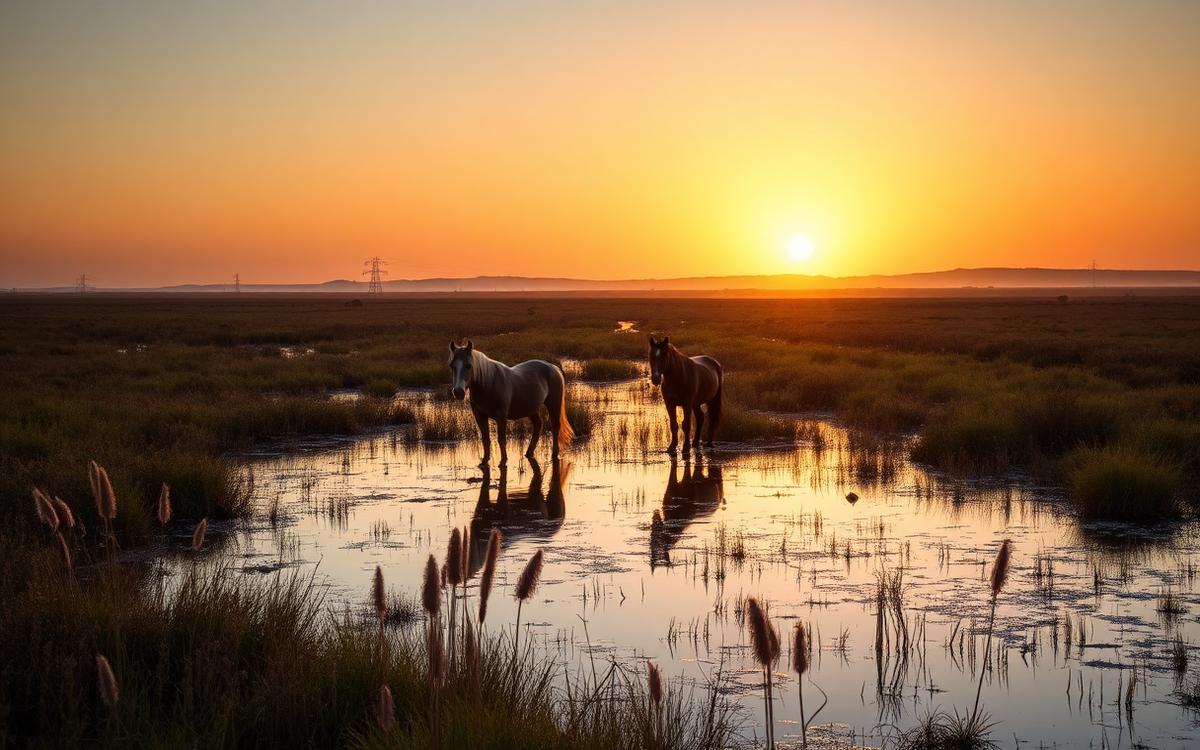
The world's last truly wild horse species vanished from the Mongolian steppe by the late 1960s, surviving only in zoos. Every living Przewalski's horse today descends from roughly a dozen founder animals.
Coordinated international breeding programmes, careful studbook management to limit inbreeding, and reintroductions beginning in the 1990s have restored free-ranging herds to Mongolia, China, and parts of Central Asia — a rare case of a species moving from Extinct in the Wild back into the wild itself.
The Common Threads Behind Success
Comparing these programmes against ones that struggled reveals a consistent pattern of what separates success from failure.
- Genetic management via studbooks that track every individual's ancestry
- Habitat protection running in parallel, not as an afterthought
- Behavioral training so captive-born animals can survive predators and forage
- Long-term funding commitments spanning decades, not single grant cycles
- Post-release monitoring to catch and fix problems quickly
Programmes that skip habitat restoration or release animals without predator-avoidance training tend to see high post-release mortality, underscoring that breeding is only half the equation.
Where Captive Breeding Falls Short
Not every species tolerates captivity well. Some fish, amphibians, and highly specialized insects have specific dietary or environmental triggers for reproduction that are difficult to replicate outside their native habitat.
Cost is also a real constraint: maintaining a genetically viable captive population for large vertebrates can run into millions of dollars annually, meaning only a small fraction of at-risk species can realistically receive this level of intervention.
Key takeaways
- The California condor recovered from 27 individuals to a self-sustaining wild population.
- The black-footed ferret programme began with just 18 surviving animals.
- Przewalski's horse is one of the only species to return from Extinct in the Wild status.
- Success depends on genetics, habitat, training, and long-term funding together.
- Captive breeding remains impractical or impossible for many species due to cost and biology.
Frequently asked questions
Why is captive breeding considered a last resort?+
It is expensive, can reduce genetic diversity, and risks animals losing wild behaviors, so conservationists prefer protecting wild populations directly whenever possible.
What is a studbook?+
A studbook is a detailed genetic and pedigree record of every individual in a captive population, used to plan pairings that minimize inbreeding.
How long do reintroduction programmes typically take?+
Most run for decades, since building a stable, self-sustaining wild population after near-extinction requires many breeding generations.
Do reintroduced animals need training before release?+
Many do. Programmes for condors, ferrets, and other species use predator-avoidance and foraging training to improve survival after release.
Has captive breeding ever failed outright?+
Yes, several programmes for amphibians and fish have failed to replicate natural breeding cues, and some reintroductions have collapsed due to habitat loss continuing in the wild.